Forrester TEI Report: Microsoft Azure AI

Forrester TEI Report: Microsoft Azure AI

With a return on investment of 284% and a payback period of less than six months, organizations across several industries are realizing incredible benefits from implementing Microsoft’s portfolio of Azure AI and machine learning tools. In this report from Forrester, learn how businesses across the energy, retail, and professional services industries are saving time and money by using AI to:

  • Replace costly and labor-intensive legacy systems
  • Reduce maintenance costs through remote asset monitoring
  • Use Azure Machine Learning models to forecast price and demand

Start Your Journey with Sunrise Today!

Whether you’re exploring your options for new business platforms, or ready to get started, we are trusted business partners for some of the world’s most well-known brands. With over 25 years of experience with the Microsoft stack, we can help you understand all the capabilities Microsoft has to offer.

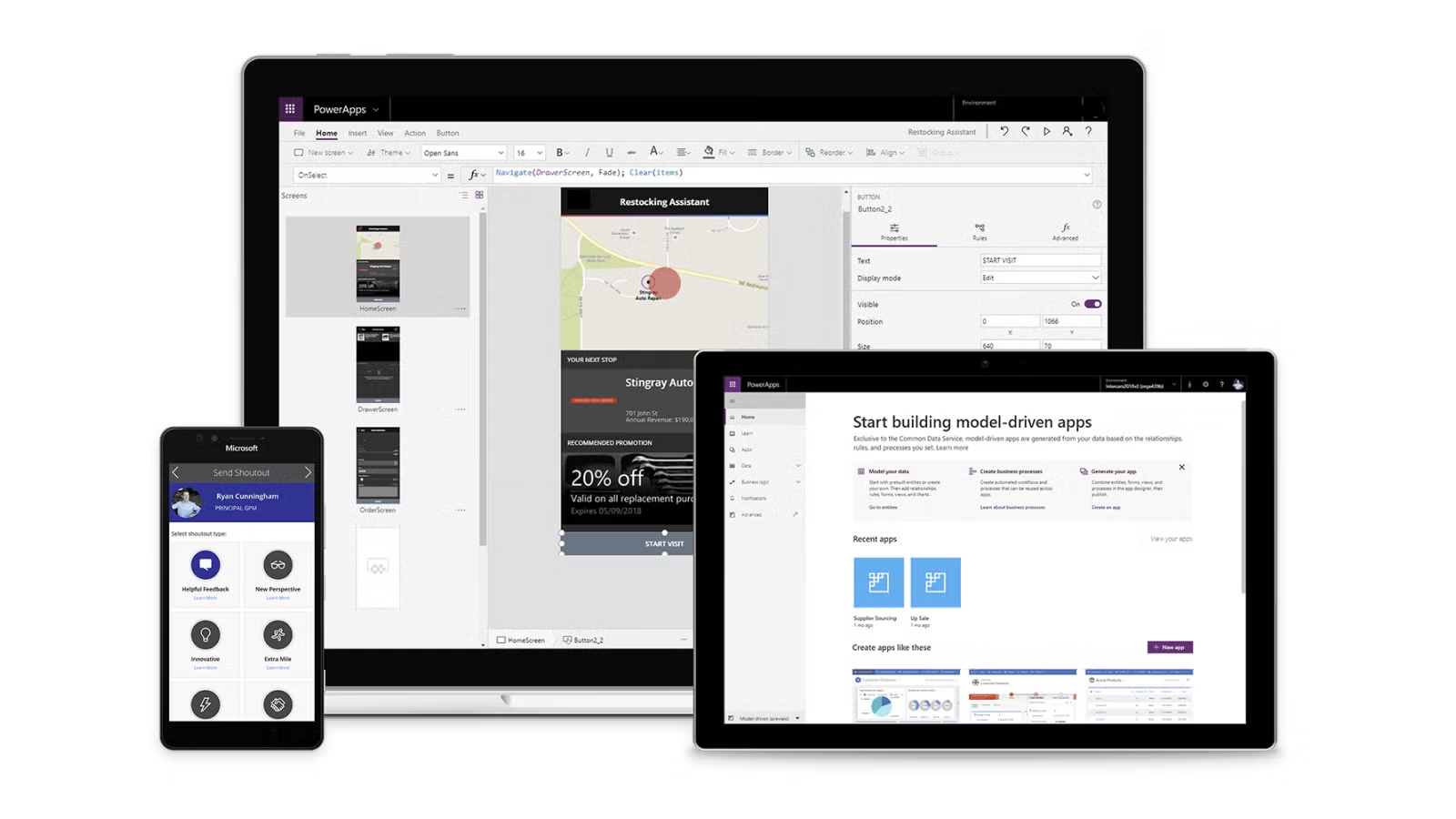
Power Apps vs Power BI: the difference and which is right for you?

Power Apps vs. Power BI: What's the Difference and Which is Best for You?

Microsoft’s low code platform is getting more robust all the time, but the rapid pace of innovation can leave you wondering what’s what.

It’s more important than ever for businesses to rely on data-driven decision-making and to streamline their processes as much as possible. To meet these demands, Microsoft offers a robust set of tools known as Power Platform. The goal of Power Platform is to “accelerate innovation and reduce costs as [businesses] analyze data, automate processes, and build apps, websites, and virtual agents.” While Power Platform has been around since 2018, it is constantly evolving as the umbrella of services underneath it change. Two of its flagship modules, Power Apps and Power BI, share a goal of empowering organizations with data and enhancing productivity, but each tool serves a distinct purpose and audience. Let’s dive into the key differences and similarities between Power Apps and Power BI.

Understanding Power Apps

Power Apps is a low-code development platform that enables users to create customized business applications with ease. It empowers both professional developers and citizen developers to build intuitive apps without extensive coding knowledge. With a drag-and-drop interface and pre-built templates, Power Apps accelerates app development, reducing the time and effort required to create robust solutions.

Unleashing Power BI

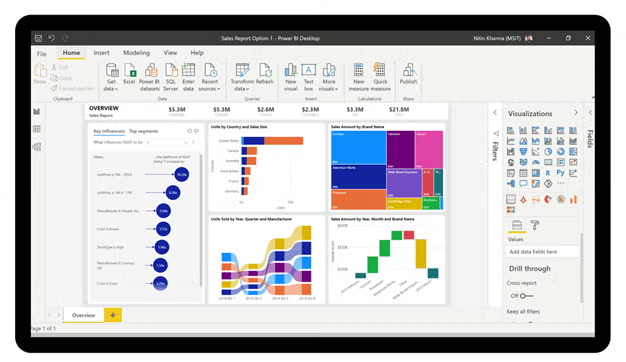
Power BI is, as the name suggests, a business intelligence and data visualization tool. It allows users to connect to various data sources, import, and transform data, and create interactive visualizations and reports. Power BI transforms raw data into meaningful insights, enabling users to make data-driven decisions efficiently. Its robust analytics capabilities and rich set of visualization options make it a popular choice among data professionals.

Key Differences

Purpose and Functionality

  • Power Apps focuses on building customized business applications, while Power BI emphasizes data analysis and visualization.
  • Power Apps enables users to create interactive forms, automate workflows, and streamline business processes, while Power BI facilitates data exploration, reporting, and sharing insights.

Skill Requirements

  • Power Apps requires less coding expertise, making it accessible to citizen developers and non-technical users.
  • Power BI demands a deeper understanding of data modeling, querying languages, and visualization best practices, making it suitable for data professionals and analysts.

Data Manipulation

  • Power Apps primarily deals with data input, storage, and retrieval within the created applications.
  • Power BI focuses on data transformation, cleaning, and modeling to create comprehensive visualizations and reports.

Key Similarities

Integration with the Microsoft ecosystem

Both Power Apps and Power BI seamlessly integrate with other Microsoft tools, such as SharePoint, Teams, and Dynamics 365, providing a cohesive experience.

Data Connectivity

Both tools offer a wide range of connectors to hook into various data sources, including cloud services, databases, and APIs.

Collaboration and Sharing

Power Apps and Power BI both enable users to share and collaborate on apps and reports, ensuring effective teamwork and knowledge sharing.

Get the Most out of Power Apps and Power BI

Power Apps and Power BI are two indispensable tools in Microsoft’s suite of solutions, each catering to distinct needs within an organization. While Power Apps empowers businesses to create custom applications, Power BI enables data analysis and visualization. By understanding their differences and similarities, you can leverage the strengths of these tools to drive innovation, streamline processes, and make data-driven decisions.

Whether you’re seeking to enhance your business operations or unlock the full potential of your data, harnessing the power of both Power Apps and Power BI can lead to transformative results. If you are able to embrace the versatility and capabilities of these tools and you have the opportunity to unlock new possibilities in your journey towards digital transformation.

Ready to learn more? Check out how Sunrise can support both your citizen developers and business analytics power users here.

Start Your Journey with Sunrise Today!

 Whether you’re exploring your options for new business platforms, or ready to get started, we are trusted business partners for some of the world’s most well-known brands. With over 25 years of experience with the Microsoft stack, we can help you understand all the capabilities Microsoft has to offer.
Elevating the shopping experience: How analytics and intelligent store capabilities drive retail innovation

Elevating the Shopping Experience: How Analytics and Intelligent Store Capabilities Drive Retail Innovation

Retail has always been a data-driven business, and data has never been more vital to understanding and improving your customer experience. Discover the transformative power of cutting-edge technologies and innovative strategies that redefine the way your customers shop. Modern data analytics platforms can help you improve processes and provide insights into everything, from inventory planning to customer behavior. In addition to analytics, computer vision and other AI-assisted technologies are turning the customer experience into one that engages them at every turn…but are your systems prepared to deliver such a comprehensive experience?

Enjoy this eBook from IDC and Microsoft, featuring insights from their retail and consumer goods analysts on where brands and retailers are focusing their investments for innovation and digital transformation.

Take steps or get left behind. It may be hard to know where to get started, but the dangers of doing nothing are worse. Retailers must invest in back-end analytics to derive value from all other digital transformation efforts.

— IDC, “Frictionless Customer Journeys: Elevating the Shopping Experience in the Intelligent Store”

Start Your Journey with Sunrise Today!

Whether you’re exploring your options for new business platforms, or ready to get started, we are trusted business partners for some of the world’s most well-known brands. With over 25 years of experience with the Microsoft stack, we can help you understand all the capabilities Microsoft has to offer.

An overview of the inventory visibility add-in for Dynamics 365 Supply Chain

An Overview of the Inventory Visibility Add-in for Dynamics 365 Supply Chain

Omnichannel selling has always been complex, with integrations to multiple systems and data sources making it time-consuming and expensive to get a complete picture of your inventory position. Microsoft’s Inventory Visibility Add-in for Dynamics 365 Supply Chain (also called the Inventory Visibility Service, or IVS) makes it easier to get that real-time, accurate view of inventory, even for high-volume businesses like omnichannel retailers. First introduced in 2021, the Inventory Visibility Service makes integrating multiple source systems and aggregating that data into a single view easy, fast, and flexible. Read on to learn more about the Inventory Visibility Service and get answers to common questions.

What is the Inventory Visibility Service?

The IVS is a microservice that works as an integration system that allows you to aggregate all your inventory data from different systems and use it in near real time. You can combine data from Dynamics 365 with other data sources like third-party order management systems, third-party ERP systems, Point-of-Sale systems, and WMS systems. IVS contains APIs that let you view, adjust, and soft reserve inventory. Inventory Visibility is built on Dataverse, making it easy to extend and use with Power Platform tools.

Does Inventory Visibility change the data in the connected source systems?

IVS primarily functions as a visibility service, exposing the inventory levels of all the connected data sources but without the ability to change them. However, new functionality is being added all the time. For example, Available-to-Promise (ATP) calculations for up to three months in advance were released in 10.0.32, plus the ability to create sales orders directly from soft reservations.

How does the Inventory Visibility Service work?

IVS acts as a middleman between Dynamics 365 Supply Chain, Dataverse, and any external system you want to connect. IVS does its magic through APIs and an in-memory cache. You can access it through a web interface or its data through an analytics tool like Power BI. Integrations with external systems are enabled via REST APIs, that allow you to view, and place soft reservations on inventory. Additionally, IVS allows you to define different physical measures, such as ordered, arrived, allocated, and more. IVS offers extensibility by allowing the addition of new data sources, inventory status measures, and inventory dimensions via the configuration app. The flexibility of IVS empowers organizations to adapt and accommodate changes in their data sources and inventory dimensions. IVS integrates with Dynamics 365 Supply Chain Management and periodically calls the system to retrieve updated inventory levels. The architecture eliminates the need for continuous querying of the back-end ERP system, minimizing the impact on system performance.

Soft reservations help you avoid overselling

The soft reservation concept makes performing high volumes of transactions from multiple source systems easy. Let’s look at an example: say we have an eCommerce system that’s viewing inventory in real time from IVS. When a customer adds an item to their cart, the eCommerce system places a soft reservation on that item so that it can’t be consumed by another system while the customer continues shopping. The eCommerce system gets a soft reservation ID that it will later use when it pushes the sales order to Dynamics 365. When the customer makes a purchase , D365 recognizes the soft reservation ID and converts it to a physical reservation with no worry of double inventory consumption.

Why we love IVS for omnichannel and eCommerce implementations

While IVS is powerful and useful for any organization that has inventory, we’re particularly excited about its use case for eCommerce businesses, especially high-volume eCommerce or selling across multiple sites. The Inventory Visibility Service greatly simplifies the integrations out to those sites, allowing you to manage inventory and orders in real time while removing the load from Dynamics 365 and other external systems.

The roadmap for Inventory Visibility: the future is clear

The Inventory Visibility Service acts as a powerful tool in Dynamics 365 Supply Chain Management, enabling seamless integration, expanded data sources, and near real-time inventory visibility. By leveraging IVS, organizations can enhance their inventory management capabilities, make data-driven decisions, and integrate their supply chain processes with external systems effectively. The roadmap for Inventory Visibility (and Supply Chain in general) looks exciting!

Start Your Journey with Sunrise Today!

 Whether you’re exploring your options for new business platforms, or ready to get started, we are trusted business partners for some of the world’s most well-known brands. With over 25 years of experience with the Microsoft stack, we can help you understand all the capabilities Microsoft has to offer.

Supply chain traceability and Dynamics 365

Supply chain traceability and Dynamics 365

For apparel and fashion brands striving for sustainability, knowing where to start can feel overwhelming.

Supply chain traceability is a hot topic right now. Consumers are more concerned about the environmental and social impact of the products they buy, while brands are under increasing pressure to demonstrate that their supply chains are transparent, ethical, and sustainable. Complex global supply chains, questions around who owns sustainability initiatives in an organization, and a lack of industry-wide standards make demonstrating sustainability difficult. Traceability is one way to inform more sustainable practices and help guide decision-making and technology is a powerful tool for starting your traceability journey.

At Sunrise, our experience working with apparel, fashion, and consumer goods brands has shown us just how vast and overwhelming these industries’ supply chains can be. But we’ve also uncovered small, actionable steps brands can take to start improving supply chain traceability.

What is supply chain traceability?

Supply chain traceability refers to the ability to track the journey of a product or component through every stage of its lifecycle, from raw materials to finished goods. For example, in the apparel industry, this means being able to trace the origin and environmental impact of fabrics, dyes, and other materials, as well as the conditions under which products are manufactured and transported.

Why is supply chain traceability important?

An apparel company might decide to implement traceability measures for several reasons. They might be interested in more responsible sourcing and monitoring where and who they source from. It may stem from a need to maintain compliance with certain regulatory requirements. Or ensuring product quality by applying consistent standards to finished products. Implementing better traceability helps organizations improve their ability to respond to disruptions, better manage risk, and improve the customer experience.

Case Study: Traceability project for apparel

A great example of how Dynamics 365 can enable basic supply chain traceability is through one of our customers, a global, multichannel apparel brand. The organization had a complex supply chain, selling its products in multiple countries online, in stores, and wholesale via 3PL distribution centers. As product regulations vary from country to country, product attributes need to be tracked in greater detail. For example, a jacket with the same SKU could contain materials that are eligible for sale in some countries, but not others. To add even more complexity, most of the customer’s products were seasonal, narrowing the selling window even further. These requirements meant adding additional logic to the customer’s ERP system to ensure goods that are eligible for sale in fewer countries were picked first.

Global supply chains make supply chain traceability complex.

Orchestrating the flow of goods from a manufacturer to the end customer is complicated. The parties involved in making a single t-shirt include farmers, spinners, dyers, finishers, sewists…and that’s just to make a single garment. Once it’s time to ship that t-shirt to a retailer or end customer, the packaging, transportation, and storage for said t-shirt involves a whole new group of vendors. All along the way, there are several dimensions across your supply chain that contain traceable information:

  • Raw materials: where are you sourcing your raw materials from? Do you know if fabrics like cotton or polyester adhere to industry standards?
  • Production: what do you know about the factories and production facilities that you work with?
  • Storage: Do the warehouses you use adhere to any standards regarding emissions and sustainable practices?
  • Transportation: Do your transportation options have a low carbon footprint?

At first glance, trying to track all this data seems overwhelming. The good news is that each of these areas represents a small way to get started, which could involve:

  • Tracing the origin of raw materials.
  • Evaluating the sustainability of the chemicals used to finish fabrics and dyes.
  • Identifying more sustainable packaging solutions or using recycled materials.
  • Evaluating more sustainable transportation practices.

At its most basic, implementing better supply chain traceability is about improved data quality and capture. Traceability lends itself to sustainability initiatives by creating a solid foundation of data.

By gathering data around how your products are sourced, produced, stored, and transported, you are creating a paper trail and a set of proof points for your customers. Traceability can give you a fact-based picture of your supply chain that also supports your sustainability initiatives – and your brand’s promises.

How Dynamics 365 can help you capture traceability data.

As an ERP system, Dynamics 365 is an excellent platform for managing and tracking your product data. It also integrates with existing traceability platforms. Even if you aren’t using a traceability solution or partner, the options for tracking supply chain data in Dynamics 365 can provide a goldmine of specific information you can use to back up your brand’s claims regarding product sustainability, safety, and origin.

Ways to use Dynamics 365 to support supply chain traceability

  • Dynamics 365 includes tracing features to see how an item or raw material moves through its production and sales processes.
  • Place shipping restrictions on items by transaction attributes.
  • Implement shipping restrictions to prevent products with restricted materials being sold in certain countries.
  • Use text fields for serial and lot number tracking of finished goods.
  • Attach documents to vendor master records that prove a vendor is using ethically sourced raw materials, or meets certain industry certifications, or is using recycled materials in their packaging.
  • Purchase orders can reflect that you’re using vendors that have certain industry certifications.
  • For retail sales and returns, a production order or MPO value can be captured as an information code on a retail sales order or return order to facilitate product recalls. The same thing can be done on retail inventory adjustments.
  • Adjust production BOMs to capture substitutions.
  • Record audits can be set up that regularly flag vendors or raw materials that need to be reviewed to check that they are still in compliance with your standards or outside regulations.
  • Power Platform tools like Power Apps and Power BI can make capturing, synthesizing, and distributing data across your organization easy.
  • The interconnected nature of an ERP system like Dynamics 365 means all your product data, from your purchase orders to your BOMs to your vendor information, is in one place and easily accessible.

Every organization is different. Wherever you are on your journey to building a more sustainable brand, there are options to start improving your supply chain and traceability data. While implementing supply chain traceability can be a daunting task, it’s important to remember that every small step towards sustainability counts. By starting with one area for improvement and leveraging technology solutions like Dynamics 365, brands can make meaningful progress towards their sustainability goals.

Start Your Journey with Sunrise Today!

 Whether you’re exploring your options for new business platforms, or ready to get started, we are trusted business partners for some of the world’s most well-known brands. With over 25 years of experience with the Microsoft stack, we can help you understand all the capabilities Microsoft has to offer.
Sunrise supply chain solution for Microsoft Dynamics 365

Sunrise Supply Chain Solution for Microsoft Dynamics 365

Consumer products, retail, and manufacturing companies need to be equipped to handle the complexities of a global supply chain. Sunrise has over two decades of experience solving these challenges and have extended Microsoft Dynamics 365 with exclusive inventory optimization, forecast netting, and soft allocation capabilities in a product called Sunrise 365. This solution is a favorite industry add-on for proactively managing and monitoring a healthy supply chain with gorgeous visual insights.

Learn more in the PDF below and when you’re ready, explore more about how our supply chain solution for Microsoft Dynamics 365 can transform your operations.

Quick Start implementation and project management toolkit

Over fifty percent of ERP implementations fail—it doesn’t have to be that way

For a project as high stakes as an ERP implementation, a strong project roadmap is critical. This factsheet offers a high-level overview of everything that comes packed inside of the Sunrise 365 Quick Start Solution. Add instant value to any Microsoft Dynamics 365 deployment and hit the ground running on day one. Designed to accelerate your implementation, Quick Start is Sunrise’s project management solution designed to align with our implementation methodology. Quick Start comes with pre-configurations to start with a system ready for solution design, a huge business process library, and Power BI dashboards to track key project metrics.

Dynamics AX for apparel and footwear

Why Microsoft Dynamics AX On-Premises Was a Game-Changer...and Why It’s Time to Move to the Cloud

When Microsoft Dynamics AX first hit the market, it was a breakthrough solution for companies looking for a robust ERP system, particularly in apparel, footwear, and manufacturing. With powerful features and the flexibility to manage complex supply chains, multi-channel sales, and global operations, Dynamics AX helped businesses grow and streamline operations. But as technology has evolved, so too has the need for more modern, scalable, and cost-efficient solutions. While Microsoft Dynamics AX on-premises was a great option, it’s time to move to the cloud with Microsoft Dynamics 365.

The Strengths of Microsoft Dynamics AX On-Premises

1. Global Reach and Multi-Channel Capabilities

Dynamics AX allowed businesses to unify operations across multiple regions, thanks to its multi-language and multi-currency features. It made managing global supply chains easier and provided seamless support for both wholesale and retail operations. This capability was essential for brands looking to expand into new markets without overhauling their entire ERP system.

2. Optimized Supply Chain Management

One of the key strengths of Dynamics AX was its ability to simplify complex supply chains. The solution offered enhanced forecasting, inventory control, and SKU management, which allowed businesses to respond quickly to market demands and scale their operations. This level of precision and visibility helped companies minimize costs and improve operational efficiency.

3. Embedded Business Intelligence

Long before data-driven decision-making became a buzzword, Dynamics AX embedded business intelligence tools that enabled companies to turn raw data into actionable insights. The integration of Power BI into the system meant that businesses could easily visualize trends and uncover hidden opportunities across their sales and operational data. This feature empowered leaders at all levels of the organization to make smarter, faster decisions.

4. Customization and Control

Because Dynamics AX was hosted on-premises, businesses had full control over the infrastructure and could customize the system according to their specific needs. This control was particularly appealing to large organizations with complex IT environments, as they could configure the solution to meet their exact business processes and requirements.

The Challenges of On-Premises Hosting

However, while Dynamics AX was a powerful solution, its on-premises hosting model came with several challenges. For one, companies were responsible for maintaining their own IT infrastructure, which required significant investment in hardware, software, and personnel. This not only increased operational costs but also made scaling difficult, as businesses had to invest in more infrastructure to support growth.

Moreover, on-premises systems can’t offer the same level of agility as cloud-based solutions. Updates and upgrades to the software had to be managed internally, often leading to downtime or delayed adoption of new features.

Enter Microsoft Dynamics 365: The Evolution of ERP

Microsoft recognized the limitations of the on-premises model and introduced Microsoft Dynamics 365, a cloud-hosted solution that takes the best of AX and brings it into the future.

1. Scalability and Cost Efficiency

With Dynamics 365, businesses no longer need to worry about maintaining their own servers or infrastructure. The cloud-based model allows companies to scale their operations up or down as needed, without the overhead of on-premises maintenance. This also results in significant cost savings, as companies only pay for the resources they use, rather than investing in infrastructure that may sit idle.

2. Continuous Innovation

One of the biggest benefits of moving to Dynamics 365 is the ability to access the latest features and updates without any disruption. Because the solution is hosted in the cloud, Microsoft can continuously roll out updates, meaning businesses always have access to the most current capabilities without having to manage upgrades themselves.

3. Seamless Integration with Other Microsoft Tools

Just like AX, Dynamics 365 is integrated with Power BI, but it also has native connections to other Microsoft tools like Teams, the Power Platform, and Azure. This makes it easier for businesses to leverage a complete ecosystem of productivity, collaboration, and development tools, all within the same cloud environment.

4. Enhanced Security and Compliance

Dynamics 365 benefits from Microsoft’s world-class cloud security and compliance standards. This is especially important for companies operating in regulated industries or those expanding into global markets, as the solution ensures that data remains secure and compliant with various local and international regulations.

Why It’s Time to Upgrade

While Microsoft Dynamics AX on-premises was a highly successful ERP system for many years, the business landscape has evolved. Companies need solutions that are agile, scalable, and cost-effective—and Microsoft Dynamics 365 delivers on all fronts. It’s the next step for businesses that want to continue growing and innovating without the burdens of maintaining complex IT infrastructure.

Upgrading from Dynamics AX to Dynamics 365 will not only improve operational efficiency but will also enable businesses to take advantage of modern features like AI-driven insights, advanced analytics, and enhanced cloud capabilities that weren’t possible with on-premises systems.

Ready for the Next Step?

Schedule a call with one of our industry experts today. We work with brands, retailers, manufacturers, and distributors to streamline and modernize their operations on a single platform—Dynamics 365.

How inventory visibility can tame retailers’ toughest pains

How Inventory Visibility Can Tame Retailers’ Toughest Pains

Start Your Journey with Sunrise Today!

Whether you’re exploring your options for new business platforms, or ready to get started, we are trusted business partners for some of the world’s most well-known brands. With over 25 years of experience with the Microsoft stack, we can help you understand all the capabilities Microsoft has to offer.
Microsoft Dynamics 365 localization and global availability guide

Microsoft Dynamics 365 Localization and Global Availability Guide

Microsoft Dynamics 365 is localized, translated, and supported by Microsoft and made generally available in the countries listed in this guide. Translation is the process of adapting the software and/or documentation to meet the language requirements of a particular country. For any given language, some, all, or none of the user interface may be translated. Localization is the process of adapting software to meet country-specific laws or regulations. Many of Sunrise customers manage sites in North America, Europe, and Asia so out-of-the-box global capabilities make Microsoft Dynamics 365 a great option for global companies.