Dynamics 365 financials

Dynamics 365 Financials

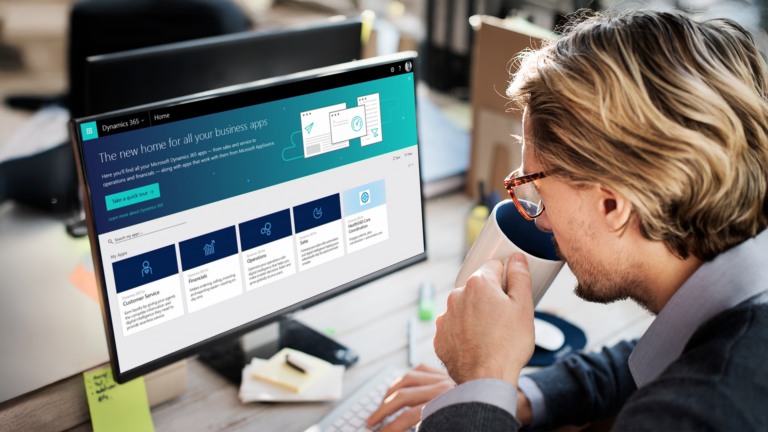
Modern finance leaders need to monitor the pulse of their business with a holistic view of all important information in a single place. Microsoft Dynamics 365 Finance, formerly called Dynamics AX, can collect data from various sources like Excel spreadsheets, web analytics, databases, and CRM systems and bring that data to life in seconds through personalized dashboards, workspaces, mobile apps, and reports. Combined with business intelligence tools like Microsoft Fabric, Azure Machine Learning, and Power BI, employees at all levels of the organization gain deeper business insights and the ability to anticipate business needs.

Start Your Journey with Sunrise Today!

 Whether you’re exploring your options for new business platforms, or ready to get started, we are trusted business partners for some of the world’s most well-known brands. With over 25 years of experience with the Microsoft stack, we can help you understand all the capabilities Microsoft has to offer.

Dynamics 365 FAQs

Dynamics 365 FAQs

What is Dynamics 365?

Dynamics 365 will bring together the best of Microsoft’s CRM and ERP cloud offerings into one cloud service with specific, purpose-built apps for business functions like Finance, Sales, Customer Service, and Supply Chain Operations—with built-in insights, intelligence, and workflow. The apps are designed so they can be easily and independently deployed, which means you can start with the business area you need and scale as the business demands. All Dynamics 365 apps, plus the larger portfolio of cloud solutions like Office 365, will share a common data model so it will be a breeze to adopt additional capabilities.

Why the name change?

Dynamics 365 is Microsoft’s next generation of business apps in the cloud that bring together the full power of Microsoft productivity, advanced analytics, Power BI, Azure IoT, and a new common data model platform. As such, two worlds are coming together: structured business processes and unstructured productivity. The move is quite significant and warranted a name that reflects this completely fresh approach to business applications in the cloud. Dynamics 365 Enterprise Edition combines the products formerly known as Dynamics AX and Dynamics CRM along with PowerApps, Power BI and Flow into one common platform that you can mix and match or purchase as a plan with significant cost savings.

How does Dynamics 365 benefit customers?

It can’t be understated how gorgeous, modern, and familiar the user experience will be for employees — just like Office 365 — and here are 4 reasons why you’ll love it.

  • Start with what you need. Dynamics 365 business apps fit specific roles so you can start with what you need (like finance and then supply chain operations or customer service) and grow at your own pace. Traditionally you’d have to purchase the entire ERP or CRM together but with this decoupled approach, you can start where you want, and pay only for what you need.
  • Productivity where you need it. By connecting the structured workflow of business applications and processes with the unstructured work of collaboration and productivity, employees will be empowered with a merged world that reduces task/screen switching. The common data model makes it easier to surface context across Office 365, Dynamics 365, Power BI and more.
  • Gain insights from built-in intelligence. Everyone wants dashboards and dreams of predictive and prescriptive analytics. By infusing business applications and processes with big data, advanced analytics, and IoT out-of-the-box, the tools can proactively guide employees and customers to optimal decision making and outcomes. With the power of the cloud and machine learning, you can connect what matters and transform insights into action.
  • Be ready for growth. Organizations can reimagine their business models with a consistent, flexible, and extensible platform. These nimble applications will let them compose, modify and extend processes in real-time. You can deploy true unified commerce at a global scale and continue to grow and evolve the business software for a lifetime — all without the cost, complexity, and inflexibility of other solutions.

Do Dynamics 365 apps really work together seamlessly ?

With a common data model across Office 365, Power BI, Cortana Analytics, ERP (formerly Microsoft Dynamics AX), CRM and many other cloud business applications, it will be so much faster and easier than ever before to deploy and integrate solutions. Basically, all of Microsoft’s intelligent business apps will align to the new common data model, and an extensibility model, that combines existing tools with PowerApps (an app builder) and Flow (a trigger based workflow builder like Zapier and IFTTT). This evolution eliminates historical boundaries created by business applications like CRM and ERP.

What does it mean to have intelligence built-in?

All of the Microsoft Dynamics 365 applications have built-in insights, predictive intelligence, and workflow optimization, which will be delivered through simple, easy-to-use, mobile and web-based experiences with offline capabilities. Power BI and Cortana Intelligence will be natively embedded to help customers achieve their business goals with predictive insights, prescriptive advice, and actionable next steps. Dynamics 365 will also have connected experiences to Microsoft PowerApps and Microsoft Flow which provide application extensibility and share a common data model.

What is the common data model and what role does it play with Dynamics 365?

The common data model is a cloud-resident business database, built on years of experience with Microsoft enterprise customers. It will come with hundreds of standard business entities spanning both business process (Dynamics 365) and productivity (Office 365). The beauty of this approach means it will be far easier, faster, and cheaper to deploy and integrate apps than ever before with a consistent schema under the hood.

How many users can Dynamics 365 support?

There are two editions of Dynamics 365 – Enterprise and Business. Microsoft Dynamics 365 Enterprise Edition is optimized for large organizations over 250 employees. Microsoft Dynamics 365 Business Edition is designed for organizations up to 250 employees. Of course, the size of your organization does not necessarily dictate the version that is the best fit for you. The Enterprise version will include operations (ERP), customer service, marketing, sales, field service, and project service automation modules (basically all the decoupled pieces of CRM plus Dynamics AX for financials and supply chain). The Business version has Financials, Sales, and Marketing drawing from the new features of Project Madeira, NAV, and a lite version of CRM. It won’t have full global, omnichannel ERP capabilities like the Enterprise Edition so consumer brands and retailers (regardless of size) that are more multi-brand, multi-channel, multi-product, and multi-country should look to the Enterprise Edition (known today as Dynamics AX).

How much will Dynamics 365 cost?

The business application industry has traditionally presented customers with a range of siloed applications. With the Dynamics 365 launch, Microsoft has given customers new choices. While the traditional approach allows customers to license Dynamics 365 by application (Financials, Operations, Sales, Marketing, etc.), they will also be able to license heavy users using a “Plan” or light users as “Team Members”. Both options provide significant savings for an organization. The new plan-based approach will give customers the flexibility they need to support modern, agile, and diverse employee roles – enabling them to access full functionality across all applications within Dynamics 365 with full read/write capabilities. While Team Members are considered ‘light users’ the functionality granted to them is by no means light, with nearly the same range of capabilities as a Plan user. Tiered pricing options are also available for select plans and Team Member licenses. For more information on the different licensing options, please see our Licensing Page.

The full Enterprise Edition of Dynamics 365 will be available worldwide November 1, 2016. The Business Edition will be available on the same date, but will only launch with the Financials app. The Sales and Marketing applications, as well as plan-based licensing for the Business Edition, will be released Spring 2017.

How will Dynamics 365 be licensed?

Not only is the product strategy evolving, but Microsoft has also reinvented its approach to pricing and packaging – liberating customers from traditional business application licensing.

Dynamics 365 customers have a greater degree of flexibility in choosing the licensing approach that not only works for their organization, but achieves the highest use of the product for the lowest cost.

There are currently three licensing options available. Organizations have the capability to mix-and-match to achieve the perfect blend for their business’ needs and budget, and all licenses will be on a single monthly bill.

  • Application-Only: Available upon launch in both the Enterprise Edition and the Business Edition, licensing by application is a more traditional approach. Those with application specific licenses still have access to embedded business intelligence and app specific extensibility. While application licenses are competitively priced, the potential for cost-savings decreases steadily with each standalone license purchased. Those individuals who need access to multiple applications should consider available plans for their edition.
  • PlansAvailable upon launch of the Enterprise Edition, with a roll out planned for the Business Edition once the Sales and Marketing applications are released in 2017. Plans are one of the new ways Microsoft is offering greater accessibility and flexibility to businesses. Designed for heavy or “Full Users” plan licenses cross multiple applications, allow for full read/write permissions, and offer a greater level of extensibility. There are currently two plans available for the Enterprise Edition. Plan 1 covers every application previously found in Dynamics CRM while Plan 2 encompasses everything found in Plan 1 + the Operations app (which includes all the functionality previously found in Dynamics AX). Select plans will also be eligible for tiered pricing. For the Enterprise Edition, there must be a minimum of 20 named users on either Plan 1 or Plan 2.
  • Team Members: Available upon launch in both the Enterprise Edition and the Business Edition. Team Members (or ‘light users’) have significant functional capabilities at a significantly lower price point. The primary difference between Team Members and Full Users on a plan are read/write permissions, with Team Members having more limited capabilities. Organizations that select Dynamics 365 Enterprise Edition are eligible for tiered pricing for Team Member seats, and do not have a seat limit. Business Edition Team Member seats do not qualify for tiered pricing and have a limited number of seats available.

All licenses include embedded intelligence and extensibility (the extent of which is determined by license type). These exciting developments change the speed and affordability of business applications since you only pay for what you need, when you need it, with this new, flexible licensing approach.

Microsoft wants customers to have the choice to start where they want (whether that’s by business line or implementing the whole kit-and-caboodle). To date, the Dynamics AX and CRM solutions have been licensed by application, requiring cross-functional buying committees and large capital investments. But Gartner estimates that by 2017, 50% of all IT spending will be outside of the CIO’s control, shifting to line of business executives. Therefore, the market demands a new approach and this is where Microsoft is creating a unique advantage, giving line of business leaders the power to start with one business function and expand as the business demands. The new licensing model means growth and scale will be easy when all apps share a common business platform and data model.

What impact does Dynamics 365 have on ROI?

The flexible licensing of Dynamics 365 improves ROI as companies pay for access to the capabilities they need regardless of which application it resides in. This is unique in a market where most software vendors require customers to buy licenses for different applications and modules – resulting in 2-3x increased cost. And where other vendors fall short, Dynamics 365 Enterprise licensing includes built-in analytics with Power BI, and full usage rights to PowerApps and Microsoft Flow to compose new apps and easily extend, modify, and integrate with existing ones.

Will Dynamics 365 be available on-premises?

Yes. Dynamics 365 is a cloud service and Microsoft licensing allows for on-premise or private cloud deployments. Microsoft will continue to innovate Dynamics AX on-premise solutions and offer connectors for customers who wish to use a hybrid of on-premise and cloud solution. The on-premise version is Dynamics AX 2012 R3 and it is a completely different code base that will soon be called Dynamics 365 On Premise but be advised that it will not stay current with the latest feature releases. Our recommendation is to look to Dynamics 365 Enterprise or Business editions in the cloud as the last ERP you’ll ever need. You’ll always stay fresh and never need to invest in major upgrades down the road again.

Should customers invest in Dynamics AX today, or wait for Dynamics 365?

From our point of view, and based on the information provided by Microsoft, the Operations component of Dynamics 365 is really just a rebranding of the full Microsoft Dynamics AX product as we are implementing it today. If an organization would like to add on the additional applications (Customer Service, Sales, Field Services, etc.) once Dynamics 365 is released, Microsoft has already indicated that there will be a clear path to do that. So, why wait to leverage the power of Microsoft’s proven, cloud-based business applications when you can get started on the project today?

Where do you find industry extensions and apps for Dynamics 365?

As a business user, sourcing apps tailored to your role, your business, and your industry can be challenging. That’s where Microsoft AppSource will help you discover solutions and content packages from Microsoft-certified partners like Sunrise, including those built on top of Dynamics. Here you can find pre-built industry solutions like the Sunrise Supply Chain Solution for Apparel & Footwear industries so you can hit the ground running with best practices built on top of the Dynamics platform.

How is AppSource different from Microsoft’s other marketplaces and destinations for apps?

AppSourceLine of business SaaS apps
Office StoreExtensions to Office
Azure MarketplaceServices for building apps on Azure and IT solutions templates for Azure
Windows StoreWindows 10 apps and games

Does Microsoft AppSource support the purchase of apps?

No. Currently, you can only discover Microsoft-certified partner solutions. Some are small apps that can be tried independently, and others are so deeply embedded in ERP and CRM functionality that they require a demo. From AppSource you will be able to contact a partner to engage in next steps.

Does Dynamics 365 work for apparel, footwear, consumer goods, manufacturing, and retail companies?

Yes. Microsoft’s industry strategy has not changed. They have created a cloud platform on top of which partners like Sunrise can create added value specific to micro verticals. Sunrise has long been a leading, award-winning partner for these verticals and offers pre-built extensions and implementation accelerator toolkits that will meet your specific business needs and allow you to hit the ground running.

I’ve heard references to Dynamics 365 for Operations and Dynamics 365 for Financials — what’s the difference?

Dynamics 365 for Operations and Dynamics 365 for Financials are just another way to describe applications found in the different editions of Dynamics 365. Dynamics 365 for Operations falls under the Enterprise Edition and encompasses everything previously found in Dynamics AX – including financial functionality. Dynamics 365 for Financials is only found in the Business Edition and is based on Project Madeira – a new cloud-based financial solution which was modeled after Dynamics NAV.

Once you determine which edition is the best fit for your organization, you can trust that you’ll have robust financial functionality, no matter what.

Start Your Journey with Sunrise Today!

Whether you’re exploring your options for new business platforms, or ready to get started, we are trusted business partners for some of the world’s most well-known brands. With over 25 years of experience with the Microsoft stack, we can help you understand all the capabilities Microsoft has to offer.

Microsoft’s vision for the future of Cloud ERP

Microsoft's Vision For Cloud ERP

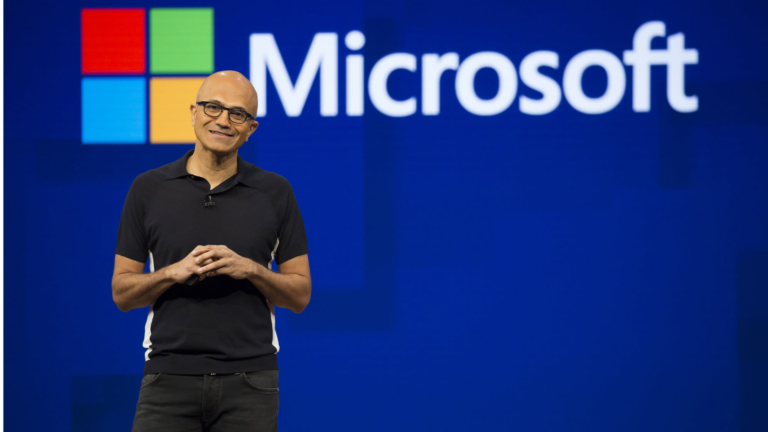
Ceo satya nadella explains

For consumer brands, manufacturers, and retailers keeping up with the pace of change is both critically important to survival and tremendously difficult to do with monolithic, outdated, siloed point applications.

Your future growth and survival depend on enabling expansion through acquisitions and organic growth through the addition of new product lines, channels, and global markets. The old way of deploying business applications isn’t going to cut it in the future. Your survival requires a fresh approach that promotes intelligence, productivity, collaboration, flexibility, and growth.

This is Microsoft’s dream…helping companies do and achieve more with an intelligent cloud of business apps.

With finite resources, productivity is critical for businesses to scale. According to the American Psychological Association, 40% of a worker’s productivity time is lost switching between tasks and screens. This costs the global economy $450B per year.

Companies aren’t looking to just automate their business processes with tools like ERP and CRM. They want to embed productivity tools directly into business processes to save time and get more productivity from employees.

Employees should be able to execute structured (ERP and CRM) and unstructured productivity and collaborative processes (Office 365 and Skype for Business) without switching screens.

In Microsoft CEO Satya Nadella’s own words:

Digital transformation won’t happen with another bolted-on cloud app or a giant implementation of monolithic and closed business application packages that take half a decade to customize and deploy, and another for employees to begrudgingly learn how to use.

Digital transformation requires systems of intelligence that are tailored to each industry, each company, each micro-task performed by each person. Systems that can learn, expand and evolve with agility as the world and business changes.

Each system of intelligence needs to be centered around a person and encompass anything that the person needs to do in the context of their role. This means removing the impedances that exist between the business solutions people work across today; breaking down barriers between productivity, collaboration and business processes; and creating a new customer-centric business model aligned to the realities of these roles today.

You can’t have this kind of uber-productivity without rethinking the entire platform and approach to business applications (which is why the announcement of Dynamics 365 changes everything).

Achieving this dream has been an incredibly important initiative for Nadella in this mobile-first, cloud-first world. Last year he made the decision to bring the Dynamics business into the mainstream engineering, marketing, and sales teams at Microsoft–ranking it as high in importance as Office 365 and Microsoft Azure.

Satya’s passion for this vision and reasons for making this strategic decision are abundantly clear:

The momentum Microsoft has gained toward this vision is incredible. As usual, the company is thinking differently than any other on the market–coming at the problem from the bottom up by developing a unified platform that pulls from a common data model (CDM). This is in direct contrast to ‘the other guys’ who continue to market Frankenstein systems disguised as a single interface. Although pretty on the outside, under the surface lies a mishmash of systems acquired over decades, pulling from a variety of databases. With Microsoft, a customer and a product exist in one database with one business logic.

It is clear that the days of piecemeal ‘solutions’ are numbered. As businesses continue to grow in complexity, they will no longer be able to justify being slowed down by clunky integrations. The expectation, like many of the tools we use today, will be for business applications to “just work”. And they will — with Dynamics 365.

Sunrise is ready for this new future. We were one of the first Microsoft Partners to be recognized as a Gold Certified Cloud Services Provider in addition to our Gold Certification in ERP. Additionally, our Supply Chain Solution was one of the first partner solutions that was accepted to be included in Microsoft’s new marketplace, AppSource, and is now a featured app. Frankly, we can’t wait to see all the possibilities that Dynamics 365 will bring!

Start Your Journey with Sunrise Today!

 Whether you’re exploring your options for new business platforms, or ready to get started, we are trusted business partners for some of the world’s most well-known brands. With over 25 years of experience with the Microsoft stack, we can help you understand all the capabilities Microsoft has to offer.

Forrester: The evolution of finance demands technical capabilities to match

5 fast facts: Why Sunrise Technologies is the Microsoft partner for you

Why Partner With Sunrise?

5 reasons you can trust us to implement the last ERP and CRM with embedded BI you’ll ever need

Is a new ERP like Microsoft Dynamics 365 in your future? Consider this…your mother was right…picking the right partner is important. Basing your technology and implementation selection on budget or location alone, without considering industry experience and pre-built solutions, can have you headed straight towards an over budget, overly customized, headache of a deployment.

At Sunrise, we believe that every morning’s sunrise is an invitation for relentless improvement that will support a brand’s growth into new product lines, channels, and global markets. Challenging business as usual with a fresh approach to ERP, CRM, and business intelligence on a single platform requires us to go far beyond just making technology work.

It is critical that we deliver our clients real solutions that can help you:

  • Grow your business globally
  • Tighten the links of your supply chain
  • Expand across multiple channels
  • Lower your overall costs

Microsoft has recognized our achievements and ability to deliver real industry solutions with a number of awards. We have been Retail Partner of the Year, Distribution Partner of the Year and members of the Microsoft Dynamics Inner Circle and President’s Clubs that celebrate the top partners worldwide.

Beyond this proven track record of delivering real industry solutions, here are 5 reasons you can trust Sunrise as your partner for a lifetime.

1. We speak your language

No other partner knows your industry as well as Sunrise. With over 22 years of experience in ERP and BI, and hundreds of successful industry focused go-lives, it’s no wonder we have a reputation for knowing our stuff. You’ll have a more productive system evaluation, deployment, and ongoing support with our team of Microsoft certified specialists. This vertical focus on manufacturing, distribution, and retail offers deep expertise in consumer goods (textiles, apparel, footwear, accessories, home furnishings, furniture, cosmetics) and other discrete products has allowed us to streamline our implementations with our exclusive Sunrise 365TM solutions.

2. Hit the ground running

With an industry partner, you’ll get to value faster with less customizations. You’ll be able to start with a system that’s ready to go with industry solutions built for Dynamics 365. Our exclusive Sunrise 365 solutions immediately deliver industry best practices and speed up implementations with pre-configurations, a business process library, and advanced supply chain capabilities.

The Sunrise 365 solution family is consists of and supported by:

3. Ready for the cloud

Cloud is a strategy to minimize costs and speed up business agility. By 2020, only 10% of business applications will be on premise and our customers are quickly adopting the Microsoft cloud solutions. Many partners are resisting this change but Sunrise is far ahead of the pack and gaining more momentum every day. As a Microsoft Gold Certified Partner and a high performing Cloud Solution Provider with tons of cloud projects underway, we’re ready to handle the future and our industry solutions are ready too. Sunrise has never missed a product update from Microsoft, so we’re able to offer the latest and greatest on day one. In fact, since Dynamics AX moved to the cloud and became Dynamics 365, several version updates have been released from Microsoft and within a week, our solutions were updated as well.

4. Local (but global)

Headquartered in Winston-Salem, North Carolina, Sunrise has regional offices spanning North America, Europe, and Asia. No matter where you are in the world, count on Sunrise to bring industry expertise to the table, everywhere you do business. It’s important that we are a global company because it helps us better serve our global customers. Sunrise is headquartered Winston-Salem, North Carolina with regional offices located in Dallas, Texas; Salt Lake City, Utah; Xi’an, China and Lugano, Switzerland. Most of our team is remote and we even offer internally managed, offshore development services that pass lower costs onto our customers.

5. Pay-as-you-go support

Projects don’t end at go live. Information systems are living and breathing, constantly changing and evolving with the business direction. Why hire freelance consultants or expensive full time staff when you can leverage Sunrise Global Support? This is an a favorite service among our customers because they gain a cost-effective support umbrella with 24×7 coverage across North America, Europe, and Asia. Let our team maximize your investment in Dynamics 365 or Dynamics AX for a lifetime, freeing up your team for more business critical initiatives.

Other Resources
We aim to be your one stop shop for Microsoft cloud solutions with value-added services and products that help reduce the total cost of ownership of business applications. We have been partnered with Microsoft since the beginning because its solutions empower employees to embrace change and enable businesses to thrive with better decision making.

Download the PDF here.

Start Your Journey with Sunrise Today!

 Whether you’re exploring your options for new business platforms, or ready to get started, we are trusted business partners for some of the world’s most well-known brands. With over 25 years of experience with the Microsoft stack, we can help you understand all the capabilities Microsoft has to offer.

Customer video: Atlanco

Customer Video: Atlanco

Start Your Journey with Sunrise Today!

Whether you’re exploring your options for new business platforms, or ready to get started, we are trusted business partners for some of the world’s most well-known brands. With over 25 years of experience with the Microsoft stack, we can help you understand all the capabilities Microsoft has to offer.

The Microsoft Dynamics modern store

Purpose-Built Business Applications: Microsoft Dynamics 365

Transforming business for over 30 years through Microsoft Dynamics 365 and AI innovation.

Start Your Journey with Sunrise Today!

 Whether you’re exploring your options for new business platforms, or ready to get started, we are trusted business partners for some of the world’s most well-known brands. With over 25 years of experience with the Microsoft stack, we can help you understand all the capabilities Microsoft has to offer.

3 success factors in moving to a single global ERP instance for CPG companies

3 Critical Success Factors

When moving to a single global erp instance for consumer goods companies

Written by Cem Item, Vice President at Sunrise Technologies.

Managing multiple ERP instances is common for Consumer Packaged Goods (CPG) companies who inherit a system through business acquisition, or have customized legacy systems for each business unit, channel, location, and or department. As old technologies lose their effectiveness, customizations are made and patches are created to keep the systems working. This can lead to a growing mess.

Companies that are considering consolidating to a unified platform for ERP, CRM, and business intelligence know that the process will be time consuming and costly, but the benefits of global visibility and universal business processes throughout the organization will immediately show a ROI. For many, consolidating and moving to a single instance of a modern platform is key to their very survival and being able to support the solution for the long term and keep it up-to-date. (Want to dive deeper into the reasons? Check out the Top Benefits of Standardizing Global CPG Manufacturing with a Single Instance ERP Solution). 

There are three critical success factors to consider when planning to move to a single ERP instance:


1. Infrastructure Plan and Management
With any ERP implementation, you need to assess your existing infrastructure and make sure you have good plan in place. This should be your starting point. What does your existing infrastructure look like? How will the organization be accessing the solution – in the cloud or from a datacenter? You will need to examine the full range of your IT architecture, including data network equipment, telecommunications, servers and storage, data center efficiency, end-user technology, physical security, and support strategy. Will your current network be able to support the additional demands of the new modern unified platform so that you get the security, reliability, and cost savings you expect? Is it time to consider a cloud strategy that will allow you to always stay fresh on the latest version without the management of infrastructure?

2. Master Data Consolidation and Management
The master data which is spread across various business information systems will need to be consolidated and moved into a single data management hub. Take a look at the entities and processes and create consistency in the way the master data is managed or what is called Global Master Data Management. For example, look at how the company is going to define products, customers, and vendors across the organization and standardize that data up front. You will need to make the global design decisions early in the process and stick to it throughout implementation, as well as after you are up and running. The quality of this data will be a critical driver to the success of the implementation.

3. Process Standardization
You can realize significant cost savings by standardizing processes across the entire global supply chain, whether you own it or not. The goal is to integrate your processes and standardize them as much as possible which will lead to common parameters for comparison, reduction in costs and a single internal view of the organization. Such process standardization is the foundation for enabling shared services across the enterprise. For example, you can standardize key global procurement processes, which can ultimately provide greater transparency, and increased procurement speed and efficiency along the supply chain, by consolidating and managing procurement resources spread around the world under a centrally shared procurement center.

Selecting an ERP application and implementing a global single instance can be challenging, but the benefits and return on investment can be considerable. Be sure to keep these factors in mind as you go through your evaluation process and work with an experienced partner familiar with your industry who can carefully walk you through your options and alternatives.

Start Your Journey with Sunrise Today!

 Whether you’re exploring your options for new business platforms, or ready to get started, we are trusted business partners for some of the world’s most well-known brands. With over 25 years of experience with the Microsoft stack, we can help you understand all the capabilities Microsoft has to offer.

Why Sunrise? 5 reasons you can count on Sunrise

Why Sunrise? 5 Reasons You Can Count on Sunrise

Trust Sunrise to implement the last ERP you’ll ever need. This factsheet outlines 5 reasons you can count on Sunrise Technologies to implement Microsoft Dynamics 365 and support it for a lifetime. In a nutshell, we speak your language and have exclusive industry solutions so you can hit the ground running. Plus you’ll enjoy the affordability and elasticity of the Microsoft Cloud, and a global consulting and support presence. See the backside of the factsheet for a quick overview of our industry solutions.

Sunrise Global Support for Microsoft Dynamics 365 / AX and Power BI