To customize, or not to customize?

To customize, or not to customize?

Establish a framework for deciding whether to customize your software or not

Rizwan Ahmed is a Sr. Technical Architect at Sunrise Technologies and a Microsoft Fast Track Recognized Solution Architect for 2020. Rizwan is a seasoned ERP professional with extensive implementation experience, assisting clients in a variety of industries. 

During an ERP project, no one wants to hear the dreaded c-word: customizations. We often encounter executives and stakeholders who are eager to implement a new system, but with as little customization as possible. There is a rational basis for this fear — old, poorly maintained, or broken customizations are usually one of the reasons companies look for a new ERP system in the first place! While it’s important to use as much of the base functionality as possible, we believe no customizations across the board is the wrong decision, and decision-makers should take a more nuanced approach.


Gap-fit analysis

Pros and cons of each option

Important questions to ask

Frequently asked questions

Gap-fit analysis

This customization issue comes up during early stages of the project. Users document their business processes and compare against the functionality of the new business application. Once this process, known as gap-fit analysis, is complete, project teams must decide how to close the gap. They can either change the business process or change the software to fit the process. There are pros and cons to each approach.

Pros and cons of each option

Asking people to change their process is risky and time-consuming. In an earlier post, we defined ERP implementations as change-management initiatives. During an implementation, old business processes are being replaced, which makes users nervous. People get used to doing things the same way. When users see that a new system is going to change certain aspects of their jobs, they resist.

When met with this kind of resistance from users, customization may be seen as the way to go. In the short term, it’s faster, easier, and makes everyone happy. But using customizations as project shortcuts can cost much more in the long run — they need to be maintained, updated, and unforeseen changes can break things later. There are a lot of contingencies you can’t plan for.

Important questions to ask

So, how do you decide whether to customize a business process or not? A good rule of thumb is to ask yourself, “will this make my business more competitive in the marketplace?”

Here’s why: every company is unique. Your business processes drive this uniqueness. An ERP implementation can make your company more efficient, save on long-term costs, and in many cases, is essential to your company’s growth. But losing some of your key processes due to a no-customization policy isn’t worth it. Strive to maintain what makes you, you. By applying this rule consistently, you can maintain what is unique about your company, while still realizing all the benefits of a modern ERP system.

The good news is customizations are not as invasive as they used to be. With Dynamics 365 and its cloud-based platform, the system architecture makes it much easier to create extensions without harming other code.

Frequently asked questions

While it’s true that excessive or broken software customizations are harmful, throwing out the whole concept entirely isn’t wise. A good implementation partner will have a system and rationale for deciding whether to customize the software.

A process to determine if software meets a business requirement.

Determine if the business process is part of what differentiates your company in the market. In other words, is this essential to the way you do business?

Dynamics 365’s architecture is different from AX. The architecture of Dynamics 365 has made it easier to create extensions to model business processes without touching the core software. You can read more about extensibility here.

Start Your Journey with Sunrise Today!

 Whether you’re exploring your options for new business platforms, or ready to get started, we are trusted business partners for some of the world’s most well-known brands. With over 25 years of experience with the Microsoft stack, we can help you understand all the capabilities Microsoft has to offer.

Can your systems keep your brand’s promises?

Can your systems keep your brand’s promises?

Legacy system woes can hold your brand back

As the Chief Administrative Officer for Sunrise Technologies, Heather Essic is responsible for overseeing Sunrise operations, including finance, marketing, and pre-sales. Prior to being named the Chief Administrative Officer, Heather was Sunrise’s Director of Business Development for Existing Customers, leading extensive sales cycles for Microsoft Dynamics 365 and consulting.

Trust. It’s hard to gain, and easy to lose. And for brands, consumer trust is essential for growth. One of the most challenging parts of growing a company is maintaining your brand’s reputation while expanding into new products, channels, and regions. You may be thinking about different expansion strategies. But have you considered all the ways in which your legacy systems might be affected?


What is a brand promise?
Different expansion strategies
How branching out can affect legacy systems
How a global platform supports your brand
Frequently asked questions

What is a brand promise?

A brand promise is the experience or product your customers can expect to receive every time they interact with your company. Customers need to know you, like you, and then trust you. A person’s connection to a brand is built on trust.

Different expansion strategies

There are three paths companies typically follow as they begin to grow:

  • Products: As a brand becomes more popular, it may branch out into new product categories. For example, a fashion brand may start selling accessories, then handbags, then shoes.
  • Sales channels: Next, that same brand might open brick and mortar retail stores. Conversely, it might start selling online.
  • Locations: Finally, this brand is ready to sell products in new regions or countries. Many companies start by using distributors in other countries before opening international offices or stores.

How branching out can affect legacy systems

The biggest challenge, whether you’re opening your first retail store or your first international office, is keeping the brand promise. The biggest mistake we’ve seen companies make during one of these expansions is installing a legacy business application that serves one strategy but not another.

Let’s say you are an apparel company selling to wholesalers in the U.S. — there are plenty of low-cost apparel management systems for your industry. But that type of system will buckle if you try to expand into new channels, markets, or products.

Or maybe you’re a catalog retailer, branching out into wholesale. Can your current systems handle those types of business processes, like B2B accounts receivables, net terms, cash discounts, or chargebacks?

We’ve heard this story many times: a growing brand chooses a business system (or a few legacy applications) for the business they have right now, but not for the future. Then, as the company grows, their legacy systems are strained. The results are poor customer experience, inventory problems, and other nightmares that frustrate customers and erode their trust. As the brand promise falters, eventually so does the brand.

How a single global platform supports your brand’s promise

Don’t be shortsighted when you select an ERP system. The best thing you can do while you’re still a growing brand is choose a business application that can support different products, sales channels, and regions. A global platform, running on a single database can handle these kinds of processes from the beginning.

Frequently asked questions

They are. But customizing your business applications is a short-term solution. They won’t support your company in the long run.

The ERP industry has evolved over the last few years, especially with the ubiquity of cloud computing. Systems like Dynamics 365 are built for multi-dimensional, global businesses.

You can definitely use a global system like Dynamics 365 with industry-specific solutions. Our customers use Sunrise 365 Supply Chain and Retail Replenishment solutions to get specific inventory, supply chain, and retail functions for their businesses, without customizing their core ERP software code.

Start Your Journey with Sunrise Today!

 Whether you’re exploring your options for new business platforms, or ready to get started, we are trusted business partners for some of the world’s most well-known brands. With over 25 years of experience with the Microsoft stack, we can help you understand all the capabilities Microsoft has to offer.

What kills an ERP project?

What kills an ERP project?

How to set your implementation up for success

As a Project Manager for Sunrise Technologies, Kristin Pehilj brings over 20 years of industry experience to the table and serves as a trusted advisor for apparel, footwear, and consumer goods companies that are in the midst of an ERP replacement.

No one wants to think about it, but your ERP project might fail. And while there’s a wealth of analysis on why ERP implementations fail, we consider one factor to be the difference between an implementation’s success or failure. Executive involvement is key — without it, an ERP project will struggle from the beginning and may not recover.

Change management

The executive’s role

Steering committee meetings

Frequently asked questions

More than just an ERP project

An ERP implementation is really a change management initiative. Just with more software involved. Asking people to change is never easy. It’s up to your company’s leaders to champion the project and guide your employees throughout the process.

Once a project is underway (and starts to get tough), the new system should be the catalyst for business transformation, something people can reference as the driving force behind positive change. You can have the best consultants, but even skilled, friendly, hard-working people face resistance when they’re the outsiders. Members of groups follow their leaders. And this is a good thing! Huge projects only get accomplished when people work together as a team, which is why executives should be prepared make tough decisions, foster consensus, and drive the project forward.

How executives can play a crucial role

Of the thousands of decisions that need to be made during a project, many are going to be controversial. An ERP system touches almost every department in a company. Each department has its own set of processes and distinct personalities. Something like sales order management — which crosses paths with sales, credit, customer service, planning, logistics, accounts receivable — could require days or weeks of meetings. And when people can’t come to an agreement? The process stalls. This is the death knell of your project. This type of deadlock is why executive support is crucial. They can smooth the path and make the tough decisions needed to drive the project forward.

Why meetings are so important

We recommend you form a project steering committee and meet at least once a month. The meetings don’t have to be long, but they should focus on specific asks for executives, rather than just listing project updates. It’s amazing what you can accomplish in a one-hour meeting. The key is to keep requests concise, limit needless updates, and be clear on who is responsible for what. By bringing a list of short, actionable items to the executive team, you can respect everyone’s time and keep them engaged and involved.

Frequently asked questions

Certainly those factors are important, but we consider executive involvement the backbone of a successful ERP implementation. These projects involve change management, which is never easy and relies on a company’s leaders to see it through.

The most basic thing you can do is establish a steering committee and ask key members of the executive team to participate. Getting executives to attend regular meetings might be tough, but a well thought out meeting with an agenda, decisions and next steps will go a long way to keeping them involved. And it will be worth it in the end.

It’s the implementation team’s job to decide who is responsible for what activities, which problems need an executive decision, and which can be solved on their own.

The key to a successful steering committee meeting isn’t just project updates (people can get that information on their own time), it’s bringing up the issues that need executive input. Get in, follow the agenda, assign next steps, and move on.

Start Your Journey with Sunrise Today!

 Whether you’re exploring your options for new business platforms, or ready to get started, we are trusted business partners for some of the world’s most well-known brands. With over 25 years of experience with the Microsoft stack, we can help you understand all the capabilities Microsoft has to offer.
7 factors for success: Everything you need for a successful ERP implementation

7 Critical Factors for a Successful ERP Implementation

Your guide for accelerating your cloud ERP deployment

People often ask us what they can do to ensure a successful ERP implementation. The thing is, ERP implementation strategies and best practices have evolved since the introduction of cloud ERP. To achieve a successful go-live, it’s important to refine and evolve your methodology as industries change. In this blog, we’re sharing some of our secrets for how to pull off a successful ERP implementation.

Over the last 30 years (and 300+ implementations), we’ve encountered every roadblock you can think of. So, we started to wonder: how can we counter those roadblocks? Is there a way to keep everyone on track and accountable while providing quantifiable metrics for a project’s progress? The answer is yes! We built a tool—Sunrise Quick Start 365®—to help smooth the path and ensure implementation success.

You already know that successful ERP implementations don’t just happen. It takes hard work from a lot of dedicated people to get a new system up and running. You might have noticed that we haven’t mentioned software yet. That’s because we understand ERP projects aren’t just about implementing software, they’re about people, and how those people embrace or reject a company’s new ERP system can be the difference between success and failure.

There are several ways to approach the implementation of a new ERP system like Microsoft Dynamics 365, and some approaches work better than others. At Sunrise Technologies, we’ve implemented hundreds of ERP solutions powered by Microsoft for our customers in the apparel, footwear, home furnishings, retail, and manufacturing industries. Along the way, we discovered certain methods and best practices for implementing ERP in these industries. If you’re looking for a guide to making your ERP implementation as painless as possible, you’ve come to the right place.

Based on 30 years of experience, we’ve identified seven critical success factors that influence the outcome of a project:

Executive support

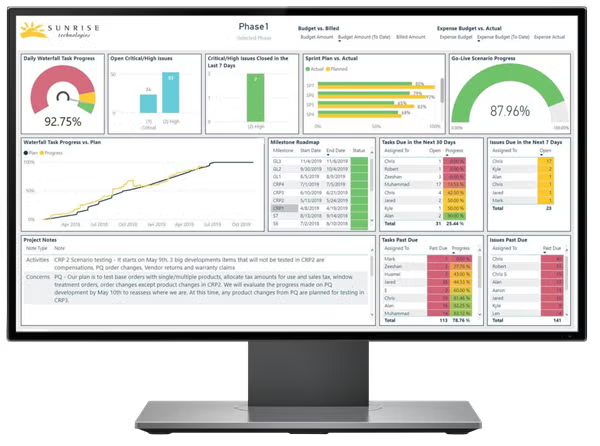
It’s vital that your executive team is on board with your ERP project. We know from experience that projects succeed when everyone is working from a single set of facts, which is why Quick Start data resides in a single database, giving both Sunrise and customers an identical view of a project’s status. Power BI dashboards with almost real-time updates give everyone a bird’s-eye view of the implementation and keep people on the same page. Embedding Power BI into Quick Start has been the biggest game-changer since we launched the tool in 2013. Users have a quantitative view of how a project is progressing, and project managers can spot bottlenecks quickly.


Employee involvement

Your ERP implementation team should be composed of the best employees from across your organization. These are your rock stars, the people who know your current processes inside and out. These internal resources should exhibit the ability to understand the overall needs of the company and be entrusted with critical decision-making responsibility and authority.

Quick Start comes with a library of top-notch workflow processes for your industry which helps take care of the repetitive work so consultants can get down to business. Our methodology combines agile and waterfall methodologies, and sprint-based work so our consultants shadow, interview, design, and leave behind a beautiful set of processes and documents.

Clearly defined project scope

Having a well-defined and written scope of work can mean the difference between a failed project with disastrous results and a highly successful project with huge benefits. Your project scope is the basis for the requirements of the project and the resources that need to be deployed. Don’t skimp on scoping. It pays to spend the time upfront making sure EVERYTHING is documented; plus defining clear expectations and establishing overall goals.

Quick Start is more than a task manager. Our dashboards provide a fact-based, quantitative view of your project’s status. Track progress, see how far you’ve come, compare against budget, and see what’s left to do. Implementations, at their heart, are just thousands of tasks (okay, maybe tens of thousands of tasks. To some of you, it probably feels like hundreds of thousands of tasks.) The idea is simple: have a single location where ALL the project tasks are tracked and make it visible to both the client and project teams.


Plan to optimize business processes

One of the most expensive aspects of an implementation is customization. We’ve heard horror stories of thousands of hours sunken into customizing an ERP system that, in the end, still didn’t work for the customer.

Quick Start saves valuable implementation time by providing standardized processes for the repetitive stuff we encounter in every implementation, and a set of best practices:

  • Datasets pre-configured for apparel, footwear, CPG, and retail companies
  • Abstract process flow guides aligned with best industry practices
  • Visibility into timeline and budgets
  • Tools to facilitate easier instance copying for testing, validation, and migration

We also gave the tool a makeover – now with a modern and simple UI, Quick Start stores everything in the cloud, so users can view a project’s status anywhere, anytime.


Proactive change management

ERP implementations change the way people do their jobs, and no one likes change. It’s important to build in enough time to train people on new systems and processes. After all, you bought a new ERP system to make work easier! Don’t let end users feel like they just swapped an old, clunky headache for a newer, shinier headache.

To make end user training successful, training should start early, preferably before the implementation begins, especially for skills that will help users better implement and utilize the solution. Executives often underestimate the level of education and training necessary to implement an ERP system as well as the associated costs. Top management must be fully committed to incorporating the training cost as part of the ERP budget.

For a successful implementation, you need structured project management, full transparency, and buy-in from users at every level of the organization. We created Sunrise 365® Quick Start to streamline Dynamics 365 projects, by combining methodology, best practices, and quantifiable progress metrics into a single solution. You can get to go-live faster and experience your company’s digital transformation sooner.


Project management tools

Why would we build a specific tool for ERP project management, when we could pull one off the shelf? Because ERP implementations fail for so many reasons: miscommunications, mismatched expectations, an inability to spot problems before they snowball…the list goes on and on. We set out to create a system that minimizes risk and gives everyone a task-oriented, fact-based view of the implementation in real time. Quick Start is tailored to Sunrise’s sprint-driven methodology. We cover this in much more detail in our methodology blog post, but the bottom line is that it works. By leveraging the knowledge we’ve gained from 30 years of experience and over 300 go-lives, Quick Start provides a structured path to success.

A partner that knows your industry

ERP deployments, especially for consumer brand companies, have many moving parts that impact every aspect of an organization. To help monitor and guide your project’s success, we recommend working with a partner who knows your industry as well as they know the software.

Since the original release, we’ve reconfigured the solution to optimize it for Dynamics 365 implementations. Every feature of Quick Start has been included because we encountered it in real ERP projects.  We built this tool from the ground up, and we continue to refine and update Quick Start as our industries change, Microsoft’s software roadmap changes, and new customers go live.

Quick Start: our secret sauce for successful implementations

In 2013 we debuted Quick Start, our Dynamics 365 implementation and project management tool. Since then, Quick Start has become indispensable to our customers and consultants alike. What began as a set of best practices, tips, mappings, datasets, and checklists has evolved into a full-blown, cloud-based project management application, specifically designed for Dynamics 365 implementations. Our customers love Quick Start so much, we wanted to share an updated overview of how Quick Start helps clients save time and money during implementations.

Quick Start saves time and money by packaging our Sunrise implementation methodology with a project management application and embedded Power BI dashboards to track progress. Originally developed for Microsoft Dynamics AX 2012 R3, today Quick Start is built specifically for Dynamics 365 and runs on Microsoft Azure. Power Platform tools like Flow pull data from a single database and Power BI dashboards show project status at a glance.

How to have it all: a blueprint for a successful ERP deployment

There is a solution – we’ve designed Quick Start to ensure your Dynamics 365 implementation is a success. Quick Start is the ultimate blueprint for following the best practices in this blog. And Quick Start is included FREE with every implementation when you partner with Sunrise Technologies.

Ready to See More?

Schedule a personal demo and we’ll show you the ins and outs…the secret sauce…that helps us take clients live on Dynamics 365. You’ll see how Power BI helps monitor project progress, and get the inside scoop on our successful project methodology.

How Frette modernized a heritage brand on Dynamics 365

How Frette Modernized a Heritage Brand on Dynamics 365

Microsoft spotlights Sunrise customer Frette and their Dynamics 365 deployment

This post first appeared on Microsoft’s Dynamics 365 blog. Read the original post here. Image: Frette.

One might think that the world’s oldest brands are least resistant to change—as if innovation and heritage are opposing ideas in business. Instead, we can learn a lot about endurance in modern business from brands that have adapted to change for decades or, in the case of luxury linen maker Frette, for more than 155 years.

Since 1860, Frette has crafted luxury linens found in the world’s most prestigious hotels, private homes, royal palaces—even the Titanic and Orient Express. Now the company is taking a big step to bridge it’s past, built on a tradition of quality and customer service, and its future, as an omnichannel business built on Dynamics 365.

Frette initially set out to update its point-of-sale system in its boutiques across the U.S. and Europe. Behind the scenes, however, the company was struggling to present customers with an omnichannel retail experience. The business operated on over a dozen legacy, outdated systems, so there was a need to unite lines of business across European and North American operations.

As Paolo Fabiocchi, CFO of Frette explains, “We started just by looking for a solution for our stores, but once we learned about Dynamics 365, our vision became having true omnichannel capabilities to better serve our customers. That the solution (Dynamics 365) has global, Tier 1 capabilities but is still so much less complex and costly to maintain was what really put it over the top for us.”

Frette met with Sunrise Technologies, an award-winning Dynamics 365 partner, to help modernize the business. Sunrise focused on solving several key challenges, connecting Frette’s business ecosystem, improving visibility across the organization, and automating manual, error-prone processes.

Unifying operations on a modern cloud platform

For many companies, legacy modernization is a daunting initiative, and Frette’s challenge was no exception. The company has multiple divisions to handle hospitality, wholesale, consultancy, and retail businesses—with divisions segmented across Europe, North America, and Asia. With disjointed systems and databases, customer service agents had limited access to inventory and orders, and customers experienced increased order processing times and wait times to check order statuses.

On Dynamics 365, Frette is unifying international systems and business processes. By dismantling data silos, they now have a single platform to run operations—from production to back office to POS. Best of all, Frette can unlock company data for a holistic, 360-degree view of the business, customers, and employees. For example, they can now follow an order from production in Italy to a boutique in New York, with real-time order and inventory status available to frontline workers. Frette also expects to explore IoT, machine learning, and other emerging technologies that will provide pervasive intelligence to reveal insights and trends across the organization.

Automation, everywhere

With company data like orders and inventory scattered across silos, Frette struggled with highly manual processes and a lack of visibility at every level of the organization, from the call center to the C-Suite. Overstocking was common to ensure popular items were on hand. The B2B hospitality business had increased staff by 30 percent in three years to keep up with manual order entries. Ecommerce orders had to be manually duplicated between the POS system and distribution systems. And returning an ecommerce order in store caused hassles on the back end.

Sunrise Technologies focused on streamlining and automating the business, including implementation of its custom supply chain solution that seamlessly integrates with Dynamics 365. Now Frette has a single platform that eliminates time-consuming, error-prone processes while seeing everything from inventory levels, orders, and allocation scenarios in one place.

The takeaway

Frette’s story shows us what’s possible when ingenuity and foresight are baked into a company’s values and culture. By modernizing its entire operation on future-proof business solutions, the company has ensured its 155-year tradition of first-class customer experiences is preserved for generations to come.

Start Your Journey with Sunrise Today!

 Whether you’re exploring your options for new business platforms, or ready to get started, we are trusted business partners for some of the world’s most well-known brands. With over 25 years of experience with the Microsoft stack, we can help you understand all the capabilities Microsoft has to offer.

Don’t go chasing waterfalls: Comparing ERP deployment strategies

Don't Go Chasing Waterfalls

When it comes time to deploy a new ERP solution, which is best? Waterfall, agile, or something in between?

We all know that ERP implementations are tricky things. From 2012 to 2016, 55% of implementations exceeded their planned budgets and 66% took longer than planned. But…why? ERP isn’t exactly a new concept and you’d think, by now, there’d be a consensus on the best, easiest, and cheapest way to implement. Clearly, that isn’t the case. While there are many possibilities for these troubling statistics, let’s consider one that shows up in nearly every result when you Google “why ERP implementations fail”: project management. And more specifically, how best to approach an implementation timeline. Should you go waterfall, agile, or something in between?

Why Waterfall?

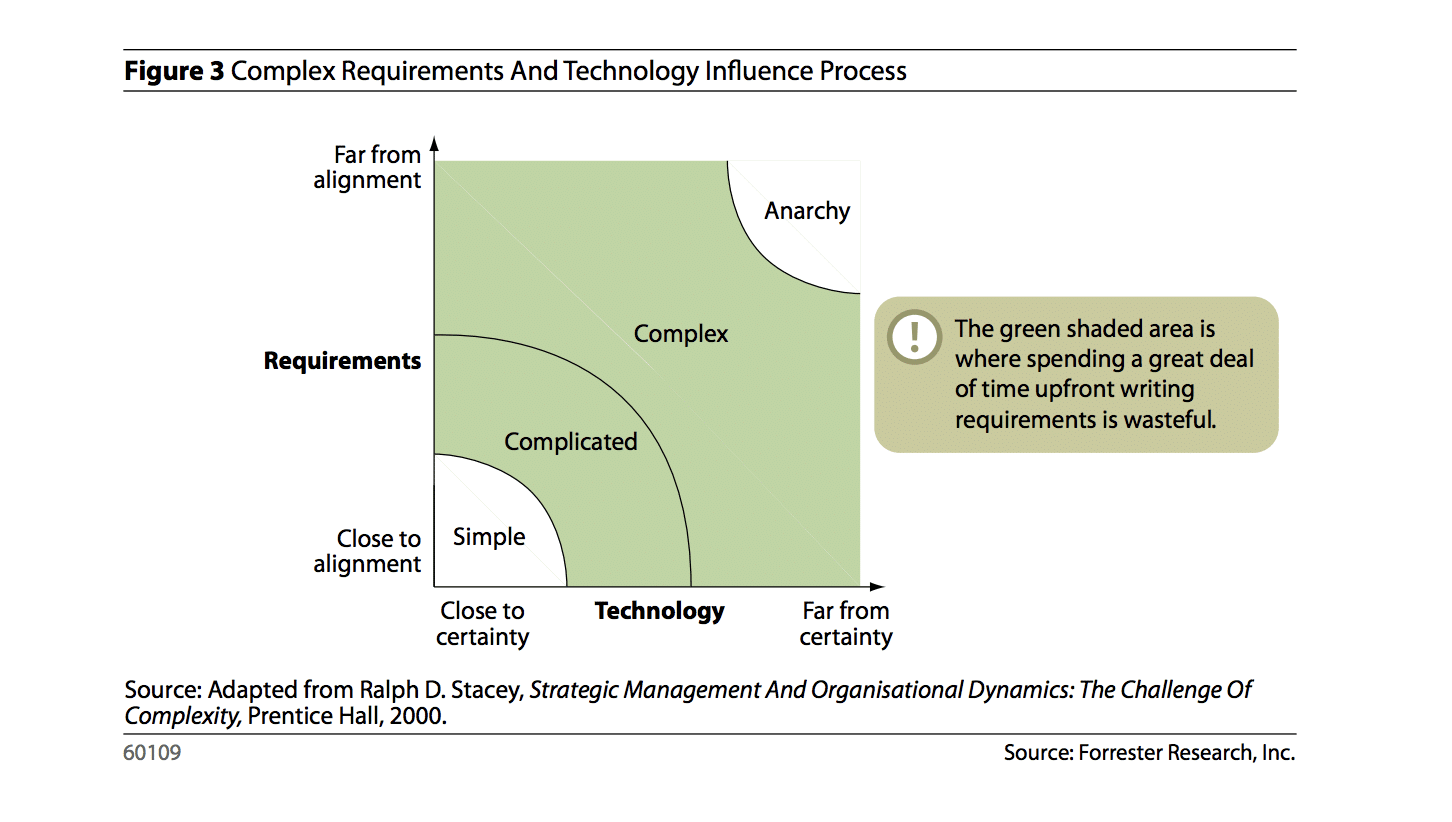
Waterfall approaches have traditionally been favored by companies with simpler, static business practices. It’s easy to see why this concept is alluring. Project owners have a strong belief that they understand how their business works, so why not just get all the planning for each process out of the way and get going already! But, as the name suggests, once you start going down a waterfall, there’s no going back up – at least not without extreme effort and pain. In fact, the more complex a technology project is, the more wasteful it is to write exhaustive requirements upfront.

A waterfall approach also doesn’t handle change very well and issues seem to most often appear at the very end. So, any expansion of scope, any process that didn’t make it into the initial planning, any deviation at all from the original plan is going to end up costing you. You also run the risk of finding out in the CRP (at which point go-live is imminent and most of the budget spent) that there are critical problems with the system that must be addressed. Finally, waterfall processes often assume that both a problem and its solution are contained in the same area. Well, you know what they say about assuming things… This operation-centric approach struggles to encompass multiple divisions involved in any given business process.

Waterfall deployments do have some positive aspects. For one thing, expectations are set early on regarding deliverables, making planning and designing more straightforward. Additionally, there are relatively clear benchmarks to measure progress. Finally, for businesses that don’t have many internal resources or stakeholders that are in different physical locations, after the requirements phase there is little need for input from the client until the very end of the project. But these benefits rarely outweigh the potential risks in moving forward with a waterfall approach.

Agile Deployments Suit More Complex Projects

On the other hand, a traditional agile implementation approaches each business process iteratively and considers how multiple business units may impact any given process. Instead of finding issues at the end, they can be addressed during multiple rounds of testing and design. For a more complex and dynamic business, an agile implementation gives the company more opportunities to ensure that the software accurately represents the business both at the outset of the project and at the end.

An agile approach isn’t without its own challenges. Although it is almost always better to have more input from the business at each stage, traditional agile deployments require a high degree of involvement, someone who is completely dedicated to the project, and teams that are in the same physical space. For many organizations, this is simply not possible for a wide variety of logistical, practical, and who-only-does-ONE-thing-in-their-role-anymore reasons. Additionally, because of the frequent reprioritization of a traditional agile deployment, it’s possible that not every sprint would be complete by go-live and it can be hard to track progress.

Hybrid Deployments = Best of Both Worlds

That leaves us with a hybrid approach that takes the best of both methods. A hybrid method defines the work upfront, borrowing defined phases of development and high-level requirement setting from the waterfall approach. Frequent iteration, testing, and cross-divisional engagement are added from the agile method. Combined, businesses can take advantage of a clear project roadmap with concrete, achievable phases where progress is easy to track, yet still flexible enough to accommodate any unforeseen challenges or changes to the business. All while exposing and engaging end users to the new solution for as long as possible (another well-documented key to implementation success) through frequent, but not all-consuming, check-ins.

This hybrid approach recognizes that any project with the scope and complexity of an ERP implementation is about more than just developing software. It’s about addressing broad operational concerns and transforming the business, so it can tackle challenges today, tomorrow, and years from now.

Ultimately, each method has its own pros and cons and it is up to the organization, along with a trusted partner, to determine which method is the best fit.

Start Your Journey with Sunrise Today!

 Whether you’re exploring your options for new business platforms, or ready to get started, we are trusted business partners for some of the world’s most well-known brands. With over 25 years of experience with the Microsoft stack, we can help you understand all the capabilities Microsoft has to offer.
3 success factors in moving to a single global ERP instance for CPG companies

3 Critical Success Factors

When moving to a single global erp instance for consumer goods companies

Written by Cem Item, Vice President at Sunrise Technologies.

Managing multiple ERP instances is common for Consumer Packaged Goods (CPG) companies who inherit a system through business acquisition, or have customized legacy systems for each business unit, channel, location, and or department. As old technologies lose their effectiveness, customizations are made and patches are created to keep the systems working. This can lead to a growing mess.

Companies that are considering consolidating to a unified platform for ERP, CRM, and business intelligence know that the process will be time consuming and costly, but the benefits of global visibility and universal business processes throughout the organization will immediately show a ROI. For many, consolidating and moving to a single instance of a modern platform is key to their very survival and being able to support the solution for the long term and keep it up-to-date. (Want to dive deeper into the reasons? Check out the Top Benefits of Standardizing Global CPG Manufacturing with a Single Instance ERP Solution). 

There are three critical success factors to consider when planning to move to a single ERP instance:


1. Infrastructure Plan and Management
With any ERP implementation, you need to assess your existing infrastructure and make sure you have good plan in place. This should be your starting point. What does your existing infrastructure look like? How will the organization be accessing the solution – in the cloud or from a datacenter? You will need to examine the full range of your IT architecture, including data network equipment, telecommunications, servers and storage, data center efficiency, end-user technology, physical security, and support strategy. Will your current network be able to support the additional demands of the new modern unified platform so that you get the security, reliability, and cost savings you expect? Is it time to consider a cloud strategy that will allow you to always stay fresh on the latest version without the management of infrastructure?

2. Master Data Consolidation and Management
The master data which is spread across various business information systems will need to be consolidated and moved into a single data management hub. Take a look at the entities and processes and create consistency in the way the master data is managed or what is called Global Master Data Management. For example, look at how the company is going to define products, customers, and vendors across the organization and standardize that data up front. You will need to make the global design decisions early in the process and stick to it throughout implementation, as well as after you are up and running. The quality of this data will be a critical driver to the success of the implementation.

3. Process Standardization
You can realize significant cost savings by standardizing processes across the entire global supply chain, whether you own it or not. The goal is to integrate your processes and standardize them as much as possible which will lead to common parameters for comparison, reduction in costs and a single internal view of the organization. Such process standardization is the foundation for enabling shared services across the enterprise. For example, you can standardize key global procurement processes, which can ultimately provide greater transparency, and increased procurement speed and efficiency along the supply chain, by consolidating and managing procurement resources spread around the world under a centrally shared procurement center.

Selecting an ERP application and implementing a global single instance can be challenging, but the benefits and return on investment can be considerable. Be sure to keep these factors in mind as you go through your evaluation process and work with an experienced partner familiar with your industry who can carefully walk you through your options and alternatives.

Start Your Journey with Sunrise Today!

 Whether you’re exploring your options for new business platforms, or ready to get started, we are trusted business partners for some of the world’s most well-known brands. With over 25 years of experience with the Microsoft stack, we can help you understand all the capabilities Microsoft has to offer.

Are you afraid your implementation will fail?

Are You Afraid Your Implementation Will Fail?

How to avoid ERP implementation failure

Have you been putting off looking for a new ERP system because you don’t want to go through the painful process of an implementation only for it to fail?

CFOs love Microsoft Dynamics AX (now known as Microsoft Dynamics 365 in the cloud) because it saves them money.

CIOs love it because of its ability to adapt to a business means that the implementation will succeed. This adaptability makes it the most implementable ERP system on the market. Why? Because at the end of the implementation process, our customers have more effective information and technology for their business at their fingertips that supports their brand’s growth into new product lines, channels, and global markets.

Start Your Journey with Sunrise Today!

 Whether you’re exploring your options for new business platforms, or ready to get started, we are trusted business partners for some of the world’s most well-known brands. With over 25 years of experience with the Microsoft stack, we can help you understand all the capabilities Microsoft has to offer.