Evolving supply chains (interview with Business of Fashion)

Evolving Supply Chains (Interview with Business of Fashion)

Sunrise Technologies’ VP of Global Business Development Mike Pereira recently sat down (virtually) with Business of Fashion to discuss the future of supply chain management for brands and retailers. Shifts in supply chains have changed the way brands and retailers serve customers. This interview covers new technologies and strategies businesses should embrace as the world emerges from the COVID-19 pandemic, new opportunities within supply chain management, and solutions for both large and small businesses planning a comeback.

Start Your Journey with Sunrise Today!

Whether you’re exploring your options for new business platforms, or ready to get started, we are trusted business partners for some of the world’s most well-known brands. With over 30 years of experience with the Microsoft stack, we can help you understand all the capabilities Microsoft has to offer.
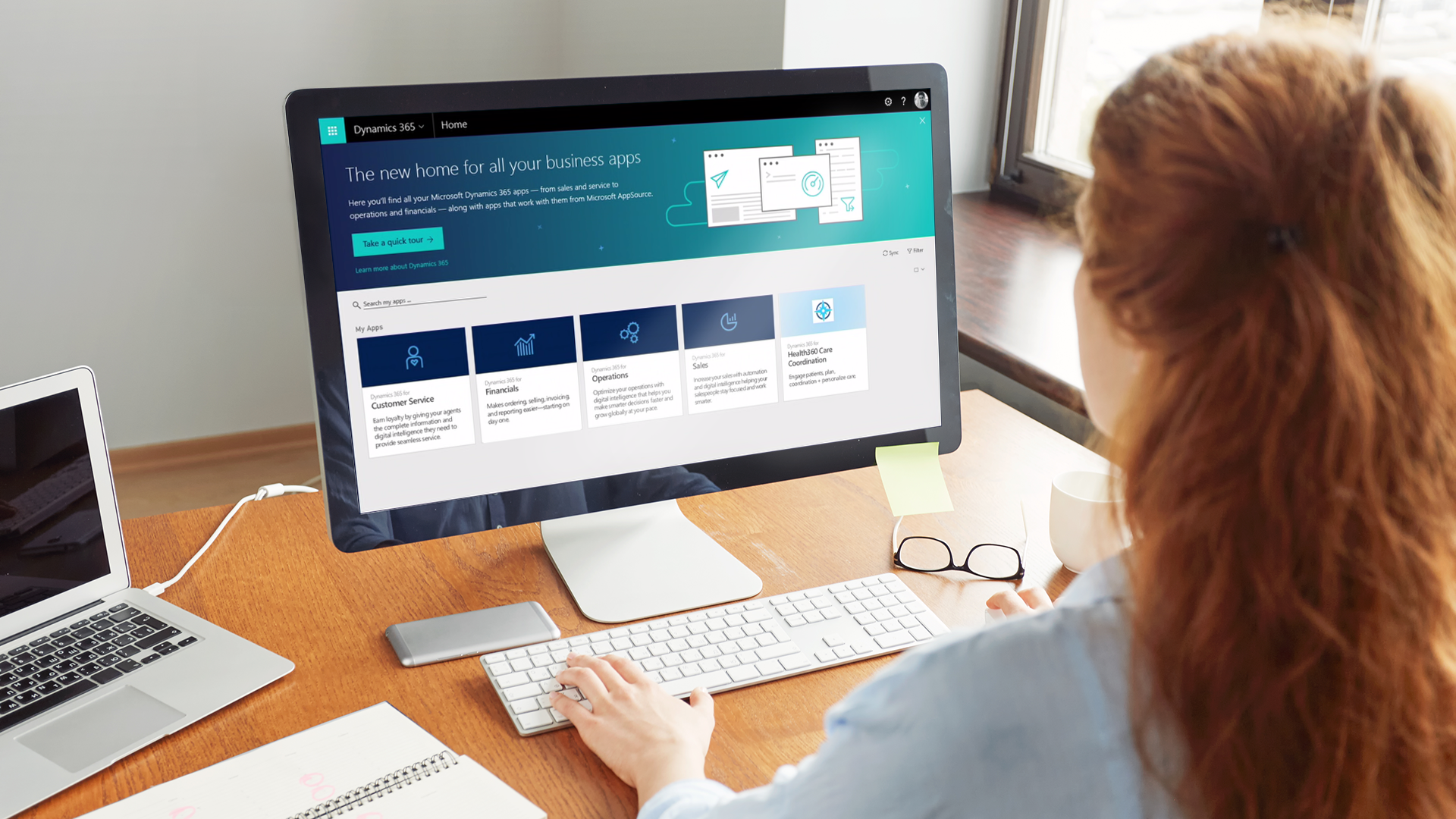
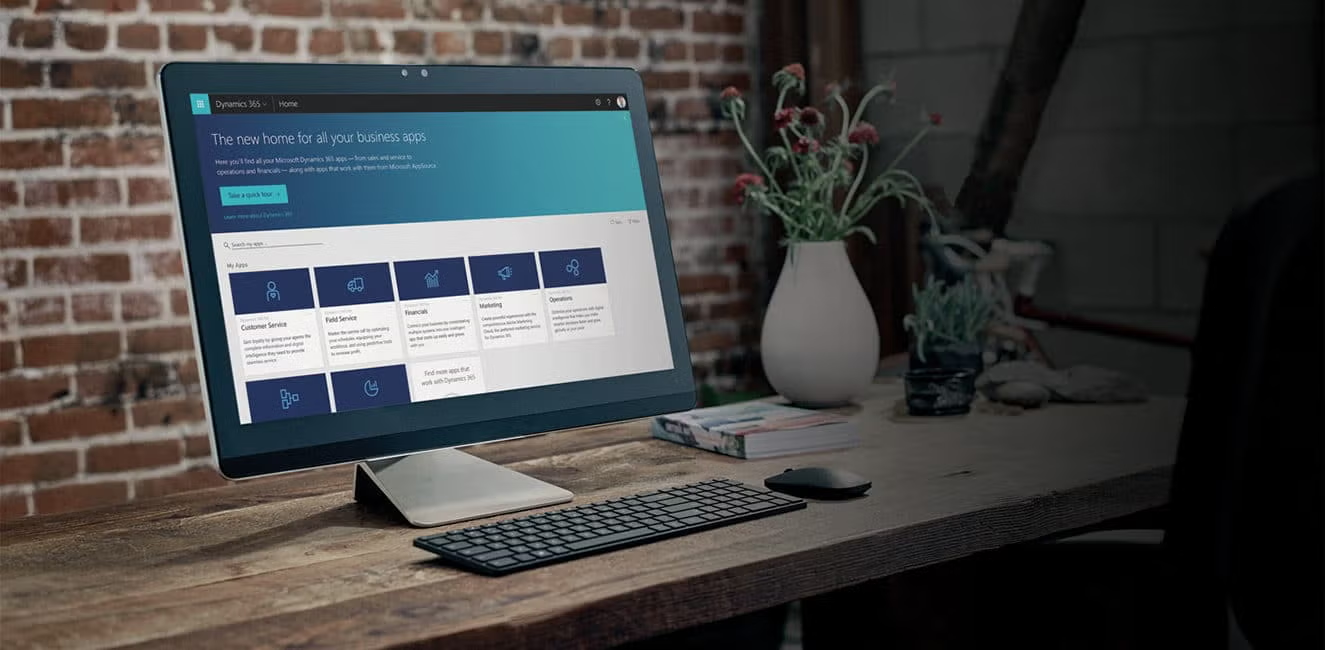
Demos and guided tours of Microsoft Dynamics 365

Microsoft Dynamics 365 Demos and Guided Tours

Start your business transformation

You’re looking for a solution to move your business into the future.
Consider Dynamics 365.

Dynamics 365 Overview: What makes this solution different from the rest…

Part of what makes Dynamics 365 so unique for businesses is that it tears down application silos, and connects everything together. This solution will help save your organization time and money, and will scale with you as your business grows. See for yourself! Please let us know if we can help answer questions.

Now, See Dynamics 365 in Action...

UNIFIED: Financials, Operations, Customer Engagement

ADAPTABLE: Industry Specific, Customizable, Flexible

…And How it's a Perfect Fit for Your Industry

See how to solve the common challenges faced by consumer brands, manufacturers, and distributors:

  • Product variations
  • Multiple channels
  • Scarce goods allocation

The race to become a cloud retailer is fierce. See what a modern and delightful experience looks like in the cloud:

  • Cloud point of sale
  • Retail replenishment
  • Intelligent supply chain

NATIVE ECOMMERCE DEMO

FRAUD PROTECTION

CUSTOMER INSIGHTS

Dynamics 365 has Something for Everyone

No matter what your role is within your organization, Dynamics 365 has functionality to make your life easier and your work more efficient.  If you’d like a tailored demo experience, or to see Sunrise’s exclusive solutions for supply chain and retail, contact us.

There was no question when we selected Dynamics 365. Global supply chain, finance, omni-channel functionality — it was all there right out of the box. Selecting Sunrise was just as easy. We really liked their structured implementation approach and are completely confident in their ability to deliver on-time and on-budget.

Kevin Sonney — Vice President of Global Technology, 5.11 Tactical
Industries
Laser-like Focus and Years of Experience

Our industry experts have been working with companies like yours for years. Solving complex global, omni-channel, supply chain problems takes skill and know-how. Invite us to help advise and guide you to your best industry solution.

Get Your Money's Worth

Save time and gain instant value when you deploy Microsoft Dynamics 365 with Sunrise industry extensions. Contact us today to ask questions or discuss next steps of how to start your project.

Leveraging technology to build a resilient supply chain: A framework for fashion, apparel and footwear companies

Leveraging Technology to Build a Resilient Supply Chain: A Framework for Fashion, Apparel and Footwear Companies

Enjoy this talk from Annie Graziani, Sunrise’s fashion expert, from PI Apparel’s Spotlight session on Supply Chain Transparency and Visibility.

Let’s face it: legacy fashion supply chains are broken. In the wake of the COVID-19 pandemic, it’s become apparent that new models are needed to create a more secure, sustainable, and resilient future for fashion and apparel brands. In this talk, Annie discusses some of the challenges and opportunities inherent in today’s fashion landscape.

Start Your Journey with Sunrise Today!

Whether you’re exploring your options for new business platforms, or ready to get started, we are trusted business partners for some of the world’s most well-known brands. With over 25 years of experience with the Microsoft stack, we can help you understand all the capabilities Microsoft has to offer.

Vera Bradley case study video

Vera Bradley Case Study

Hear from Tonya Ream, VP of Information Technology at Vera Bradley, and Adam Carrick, Project Manager at Sunrise, on how Vera Bradley replaced its ERP and entire omni-channel landscape during a global pandemic. You’ll learn how both project teams adjusted to working remotely and the key factors that ensured Vera Bradley went live on time and on budget. This presentation was recorded at Dynamics 365 UG Summit 2020. You can read more about Vera Bradley here.

Start Your Journey with Sunrise Today!

Whether you’re exploring your options for new business platforms, or ready to get started, we are trusted business partners for some of the world’s most well-known brands. With over 25 years of experience with the Microsoft stack, we can help you understand all the capabilities Microsoft has to offer.

Sunrise 365 Supply Chain Control Tower

Sunrise 365 Supply Chain Control Tower

Global supply chain disruptions can wreak havoc on brands. The Sunrise 365 Supply Chain Control Tower unites all your demand and supply data sources in a single view. See the actual impact on revenue and run what-if scenarios on real-time data to make better planning decisions. Whether you’re facing vendor failures, overstocks, out of stocks, or other sticky situations, the Supply Chain Control Tower helps you identify potential problems before they cause chaos.

Start Your Journey with Sunrise Today!

Whether you’re exploring your options for new business platforms, or ready to get started, we are trusted business partners for some of the world’s most well-known brands. With over 25 years of experience with the Microsoft stack, we can help you understand all the capabilities Microsoft has to offer.

How to stop using multiple applications to get one omnichannel shopping experience

How to Stop Using Multiple Applications to Get One Omni-channel Shopping Experience

Start Your Journey with Sunrise Today!

Whether you’re exploring your options for new business platforms, or ready to get started, we are trusted business partners for some of the world’s most well-known brands. With over 25 years of experience with the Microsoft stack, we can help you understand all the capabilities Microsoft has to offer.
Omni-channel deployment strategies

Omni-channel challenges

Why is this essential capability so hard to deploy?

McKenzi Gebhard is a Senior Supply Chain consultant and Project Manager at Sunrise Technologies. McKenzi has worked with global organizations to implement Microsoft cloud solutions in the luxury furnishings, retail, and consumer goods industries

Customer expectations have never been higher. To meet these expectations fast shipping, resourceful customer service representatives, and extensive return policies are a must to stay relevant. But, while omni-channel retail capabilities are touted as the goal for a truly customer-centric shopping experience. So many people sing the praises of omni-channel, yet few companies do it well. Why? It starts with their systems footprint.


Complexity in the systems footprint
Satisfying customer expectations
Standalone OMS as a solution?
One solution for true omni-channel retail
Frequently asked questions

Complexity in the systems footprint

Most companies have separate eCommerce, POS, and call center systems. The integration required to sync the required information across these systems is an immense amount of work. For many legacy systems, this is quite a tall order. These kinds of “ship from anywhere” policies require both a ton of integration work and an understanding of the sophisticated routing rules for a fully integrated supply chain. Solving these technology challenges usually requires outside help, in which case you need a partner who understands the complex supply chain challenges inherent within retail.

Satisfying customer expectations

Say you’re a company with retail stores, eCommerce, and call centers. In today’s retail landscape, your customers expect you can do the following:

  • Buy online, pick up in store: Customer A places an order online but wants to pick up the product in a retail store. In order to do this, your eCommerce system needs visibility into your retail store’s inventory, plus the ability to send a pickup order to the POS system.
  • Buy in store and have the item shipped to their house: Customer B found an item they liked in the store, but wanted it shipped to their home. For this, your store’s POS needs visibility into the eCommerce system’s inventory, and the ability to send an order to your eCommerce system to fulfill the order. Or, the POS may need visibility into other retail stores’ inventory to fulfill the order from one of those instead.
  • Call a call center and process a return or exchange for an item purchased through another channel: For this, a customer service rep needs visibility into all the inventory channels and the ability to place an order and process a return from any of them.

… repeat for other shopping scenarios, and you can see the amount of work required to integrate all these systems is staggering.

Standalone OMS as a solution?

Some companies have embraced Order Management Systems (OMS) as a layer to smooth these omni-channel challenges. But the efficacy of OMS is questionable. As an integration-heavy product, it’s still a lot of work to get up and running. At best, it can solve your order and fulfillment challenges in the short term. But many retailers have found they spent years installing an OMS, only to realize very little value and a lot of headaches maintaining yet another system.

One solution for true omni-channel retail

The solution for achieving true omni-channel commerce, that is both long-term and cost-effective, is a single platform that keeps track of all your orders and inventory across your entire supply chain. ERP systems like Dynamics 365 operate seamlessly across your entire business, including your retail stores, call centers, and website.

Frequently asked questions

Omni-channel operations require integrations between all your sales channels. The work required for these integrations is expensive and time-consuming.

OMS is expensive, and you still have to do the same integration work to connect all your sales channels. You may find you’ve spent a tremendous amount of money and time on a system that only returns a fraction of your investment.

Dynamics 365 combines supply chain, finance, and retail on a single platform. Say goodbye to patching together integrations between disparate systems, and hello to seamless operations on a single platform, backed by the security of the Microsoft Azure cloud.

Start Your Journey with Sunrise Today!

 Whether you’re exploring your options for new business platforms, or ready to get started, we are trusted business partners for some of the world’s most well-known brands. With over 25 years of experience with the Microsoft stack, we can help you understand all the capabilities Microsoft has to offer.

Forrester total economic impact of migrating from AX to Dynamics 365

Forrester Total Economic Impact of Migrating from AX to Dynamics 365

Get Your Money's Worth

Save time and gain instant value when you deploy Microsoft Dynamics 365 with Sunrise industry extensions.

Can your systems keep your brand’s promises?

Can your systems keep your brand’s promises?

Legacy system woes can hold your brand back

As the Chief Administrative Officer for Sunrise Technologies, Heather Essic is responsible for overseeing Sunrise operations, including finance, marketing, and pre-sales. Prior to being named the Chief Administrative Officer, Heather was Sunrise’s Director of Business Development for Existing Customers, leading extensive sales cycles for Microsoft Dynamics 365 and consulting.

Trust. It’s hard to gain, and easy to lose. And for brands, consumer trust is essential for growth. One of the most challenging parts of growing a company is maintaining your brand’s reputation while expanding into new products, channels, and regions. You may be thinking about different expansion strategies. But have you considered all the ways in which your legacy systems might be affected?


What is a brand promise?
Different expansion strategies
How branching out can affect legacy systems
How a global platform supports your brand
Frequently asked questions

What is a brand promise?

A brand promise is the experience or product your customers can expect to receive every time they interact with your company. Customers need to know you, like you, and then trust you. A person’s connection to a brand is built on trust.

Different expansion strategies

There are three paths companies typically follow as they begin to grow:

  • Products: As a brand becomes more popular, it may branch out into new product categories. For example, a fashion brand may start selling accessories, then handbags, then shoes.
  • Sales channels: Next, that same brand might open brick and mortar retail stores. Conversely, it might start selling online.
  • Locations: Finally, this brand is ready to sell products in new regions or countries. Many companies start by using distributors in other countries before opening international offices or stores.

How branching out can affect legacy systems

The biggest challenge, whether you’re opening your first retail store or your first international office, is keeping the brand promise. The biggest mistake we’ve seen companies make during one of these expansions is installing a legacy business application that serves one strategy but not another.

Let’s say you are an apparel company selling to wholesalers in the U.S. — there are plenty of low-cost apparel management systems for your industry. But that type of system will buckle if you try to expand into new channels, markets, or products.

Or maybe you’re a catalog retailer, branching out into wholesale. Can your current systems handle those types of business processes, like B2B accounts receivables, net terms, cash discounts, or chargebacks?

We’ve heard this story many times: a growing brand chooses a business system (or a few legacy applications) for the business they have right now, but not for the future. Then, as the company grows, their legacy systems are strained. The results are poor customer experience, inventory problems, and other nightmares that frustrate customers and erode their trust. As the brand promise falters, eventually so does the brand.

How a single global platform supports your brand’s promise

Don’t be shortsighted when you select an ERP system. The best thing you can do while you’re still a growing brand is choose a business application that can support different products, sales channels, and regions. A global platform, running on a single database can handle these kinds of processes from the beginning.

Frequently asked questions

They are. But customizing your business applications is a short-term solution. They won’t support your company in the long run.

The ERP industry has evolved over the last few years, especially with the ubiquity of cloud computing. Systems like Dynamics 365 are built for multi-dimensional, global businesses.

You can definitely use a global system like Dynamics 365 with industry-specific solutions. Our customers use Sunrise 365 Supply Chain and Retail Replenishment solutions to get specific inventory, supply chain, and retail functions for their businesses, without customizing their core ERP software code.

Start Your Journey with Sunrise Today!

 Whether you’re exploring your options for new business platforms, or ready to get started, we are trusted business partners for some of the world’s most well-known brands. With over 25 years of experience with the Microsoft stack, we can help you understand all the capabilities Microsoft has to offer.

Post go-live support

You Just Went Live...Now What?

How to care for your new ERP system

Mike Pereira is Sunrise’s Vice President of Global Customer Support and one of Sunrise’s longest-serving employees. Mike has over twenty years of experience and a deep background in apparel and textile management as well as manufacturing supply chain management.

You did it! Breathe a sigh of relief — you made it through go-live, and your new ERP system is up and running. Now it’s time to tackle what to do after go-live. Even though you may want to call this project “done” and move on, the work isn’t over. The first few weeks after going live, it’s critical that you stay vigilant and nip any issues in the bud. Let’s walk through the hyper care process and document some things you should expect…

Data migration: the first wave

Special cases

Helping new users

Avoid the Valley of Despair

Frequently asked questions

Data migration issues — the first wave

People are surprised at how quiet the first week after go-live can be. If you did all your testing and gave yourself plenty of time and CRPs, transactions should be flowing through your system without a hitch. The first thing you might encounter are data migration errors. These usually happen because business users have only interacted with the old, migrated data before, and any issues that existed could throw errors in the new system. It’s important to clear out these data migration errors first, before too many pile up.

Special cases

It’s impossible to test every possible scenario prior to go-live. The second wave of issues you might encounter are the outliers — one-off scenarios you didn’t have time to test. These are to be expected (after all, you have to go-live at some point, right?) As users start adding new master and transactional data, these corner cases become obvious. The intersection of data and business processes can create unique, unexpected situations. If your project team handles these cases as they appear, you should be fine.

Helping new users

You’ve conquered any migration problems and taken care of the corner cases. The last thing to look out for are user errors. We consider these issues the most dangerous because if they aren’t dealt with swiftly, user errors can snowball into an avalanche of problems that affect the whole organization. For example, an employee from merchandising might forget to associate the cost for a new product. The warehouse then receives the product at zero cost, and now the fix requires several financial transactions and lots of time. During this time, speed of resolution is key. If errors are being created faster than resolutions, that’s a problem. Your project team and your organization’s power users should work on clearing out these errors and reinforcing best practices among the rest of the organization.

Avoid the “Valley of Despair”

The Valley of Despair is when your ERP’s performance drops dramatically, shortly after going live. Users might get frustrated, disappointed, and wonder if the project was even worth it. Guiding users around this metaphorical valley of despair is why your project team should stick around a little longer. The real benchmark people should focus on is closing the first financial period in the new system.

Frequently asked questions

Data migration errors, followed by special cases regarding business processes, and user errors are most common.

Closing the first financial period in your new ERP system is a common benchmark to use.

Assessing go-live readiness is an art and a science. Businesses are complex—and it’s impossible to test every single scenario and stay on schedule. It’s to be expected that some special cases will reveal themselves in the first few weeks after go-live.

Start Your Journey with Sunrise Today!

 Whether you’re exploring your options for new business platforms, or ready to get started, we are trusted business partners for some of the world’s most well-known brands. With over 25 years of experience with the Microsoft stack, we can help you understand all the capabilities Microsoft has to offer.