ERP implementation cost calculator

5 Hidden Costs of Doing Nothing

Putting off your on-premise ERP replacement may be costing more than you think

As the SVP of Global Business Development for Sunrise Technologies, Cem Item serves as a trusted advisor to C-level executives running large global enterprises. He conducts corporate business strategy engagements and digital transformation workshops around the world. With over 20 years of consulting experience, Cem specializes in the textile, apparel, footwear, home furnishings, consumer goods manufacturing, and retail industries.

A lot has changed in the few years since cloud computing has become the norm. Very often, we talk to people who are thinking about moving to the cloud, or a new ERP project, but they just can’t wrap their heads around the cost and potential for business disruption. And that’s understandable – an ERP project is a huge undertaking.

But what we wish more people would consider is that the costs of maintaining legacy systems or using outdated business processes is often much higher than an ERP implementation. It’s just tougher to spot these costs. They’re usually so embedded in a company’s way of doing things, that they show up as lost time, lost productivity, and frustrating processes due to outdated technology.

You know your business – but have you quantified all the ways doing nothing is costing your business?

Why Do Organizations Delay Digital Transformation?

Some decision-makers delay digital transformation or spend too much time weighing the pros and cons of cloud computing, thinking their current systems can last for a few more years. But what people may not realize is that the cost of doing nothing – and staying on legacy or on-premise systems – is much riskier in our new world of cloud-based business applications. You could be exposing your business to losses in revenue, security flaws, and system failures.

It may seem like doing nothing is the safest option, but that way of thinking is counterproductive in this new reality of cloud-based infrastructure. Moving to the cloud (and using a cloud-based ERP system) means a company can quickly modify their business models or processes to adapt to changing conditions in their industry. More and more businesses are pursuing growth through acquisition, and folding in newly acquired companies to ancient accounting and supply chain systems can end up costing millions of dollars.

We’re living through a cloud computing renaissance, and companies that don’t adapt are failing. For retail, apparel and fashion companies, the landscape is littered with organizations that have gone out of business, been acquired, or are shadows of their former selves.

All too often, these businesses failed because they couldn’t adapt their business models to serve their customers. And their IT and supply chain systems play a huge role in those failures. Outdated, on-premise, expensive systems that take years of time and millions of dollars to reconfigure to match the new reality – and then the reality changes again. Instead, you could be using a system that is always modern and updated, and ready for whatever twists and turns your industry takes.

Have you thought about the following issues, and considered whether your aging systems are partly to blame?

Losing customers | Losing time | Losing staff | Losing visibility | Losing security

Let’s dig into those 5 areas of your business where the costs of doing nothing might be much higher than you think.

1. Losing customers

If you’re a consumer brand, and you make it hard for consumers to buy your products, they will drop you like a hot potato.

According to Microsoft’s Global State of the Customer report, 66% of US consumers polled ranked customer service as “very important” in their choice of a brand and brand loyalty. But since we know legacy systems don’t easily communicate with CRM and other customer service applications, companies using outdated systems often run into problems.

Everything – from your e-commerce platform to your POS system to your customer service center, right down to your fulfillment center – should create a seamless experience for your customers to buy, exchange, and return products. Look at these warning signs of degrading customer service:

• Complaints about promotional pricing issues

• Complaints about the shopping experience, whether it’s in the store, online, or over the phone

• Delivery issues and shipping delays

• Increase in returns and chargebacks

• Increase in shipping costs

• Purchase histories are spread out across multiple databases

• Your customer service reps’ response time is slowing down; they use multiple systems to answer customer questions.


• Your systems are holding you back from testing new channels like pop-up stores, tradeshows, or wholesale orders online – it’s a huge project just figuring out how you’re going to make those orders work in your system

If you think of every bullet point as an opportunity for lost sales…well, that’s a lot of lost sales.

2. Losing Time

Cliché but true: time is the most valuable resource. And if you are constantly dealing with workarounds and fixes for your outdated ERP system, that’s time you could have spent on revenue-generating projects. On an intellectual level, you know this. In day-to-day operations, though, it’s difficult to quantify lost time. But if your organization is guilty of the following, you’ve got problems:

• Your team members spend more than half the month trying to close out the previous month

• People must ask for reports days or weeks in advance (because it takes days or weeks to create reports)

• People worry about the accuracy of the data they receive, so they hesitate to make decisions

• People are frustrated with the current system, and they come up with their own lengthy workarounds and processes just to avoid using it

• IT is tasked with finding solutions, but not enough budget, and end up buying the equivalent of a box of Band-Aids

Forrester’s Total Economic Impact study for Microsoft Dynamics 365 found that companies who implemented D365 improved operations efficiency by $39 million. When you add in automation, better user experience, reduced rework, and enhanced forecasting, employee productivity increased by $20.6 million.

Look, you can tell yourself it’s fine, or it’s not that bad. But you’re falling behind your competitors. The hours you spend maintaining legacy systems and hardware are hours you could have spent growing the business. Ask your team what projects they would pursue if they didn’t have to maintain whatever dinosaur of a system is back there. How much money are you losing because your employees aren’t innovating, they’re stagnating? Which brings us to….

3. Losing Staff

One of our customers had an interesting problem – their legacy ERP system was still chugging along, but it was getting harder to find IT staff to manage it!

Their system had been around since the early 90s, and several employees were getting ready to retire. All the young, smart IT professionals that this company wanted to hire either had no experience with this green-screen behemoth, or they weren’t interested in working for an organization where their skills would go towards maintaining a dying system.


If your best employees are being lured away to work on new and exciting technology projects, or at the very least, work someplace with technology that isn’t older than they are, it’s way past time for you to think about your long-term strategy. No one wants to jump on a sinking ship.

Not to mention, it’s getting harder for technology vendors to survive. Smaller software vendors are getting gobbled up and on-premise systems are being sunset.

4. Losing Visibility

You can’t trim costs, correct issues, or grow revenue, without control and visibility. But the biggest problem with legacy infrastructure is an inability to control the weakest links of the supply chain. Ask yourself:

• Are inventory and supply chain movements disconnected from the financials, making it impossible to get a real-time view of the business?

• Is one channel hoarding inventory from another channel, leaving excess inventory in one area and shortages in another?

• Do you have trouble completing orders on time and are you unable to provide available-to-promise estimates?


• Are your POS, CRM, and ERP systems already in the cloud, but different clouds with separate vendors and billing cycles that is costing you way more than if they were   consolidated on a single platform?

• Do you lack real-time information to make the best decisions quickly because data is locked in silos?

5. Losing Peace of Mind (Because of Security Risks)

Security risks are frightening. And while it’s true that any business can fall victim to a cyberattack, some setups are more vulnerable than others. Think about what would happen to your brand’s reputation if your company was hacked. Can you quantify (or do you even want to think about) the total dollar amount of lost sales from a security incident? Think of each of these points as a crack in your IT’s foundation, exposing you to cybersecurity risks:

• How much time, effort, and money does it take to maintain your current infrastructure, custom code, and integrations?

• Have you cobbled together a bunch of third-party products to make your processes flow the way you want and have trouble reporting and keeping the system up to date?

• How much capital and resources are sunk into maintaining hardware?

The Hidden Costs of Maintaining the Status Quo

Some people think the cost of doing nothing is…free.

Frankly, those people are wrong.

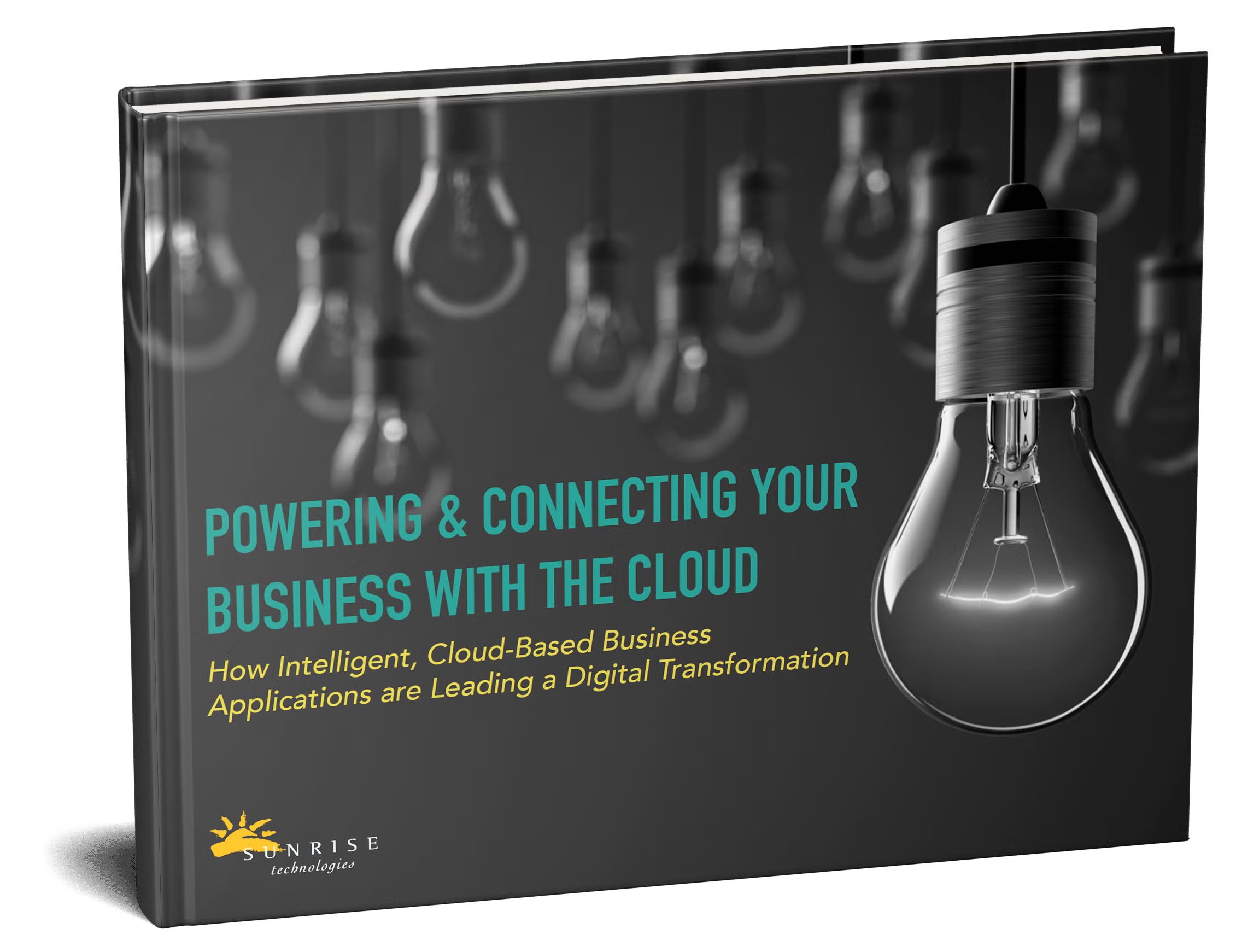
The money you think you’re saving by putting off an ERP or digital transformation project could be slipping away. If your supply chain and underlying technology infrastructure can’t adapt to meet your company’s growth initiatives or customer demand, then your company’s survival in this new, cloud- centric world is at risk. We won’t dive deep into all the advantages of the cloud here. There’s simply too many for this blog post, and that’s why we wrote this cloud eBook.
Ready to See More?

The new landscape of business applications is exciting. It’s possible to get the cloud ERP system of your dreams at a tremendous value, with the industry-specific extensions you need, and without expensive customizations.


If you’ve realized it’s too costly to wait any longer on updating your systems, let’s schedule a digital transformation workshop.


How Frette modernized a heritage brand on Dynamics 365

How Frette Modernized a Heritage Brand on Dynamics 365

Microsoft spotlights Sunrise customer Frette and their Dynamics 365 deployment

This post first appeared on Microsoft’s Dynamics 365 blog. Read the original post here. Image: Frette.

One might think that the world’s oldest brands are least resistant to change—as if innovation and heritage are opposing ideas in business. Instead, we can learn a lot about endurance in modern business from brands that have adapted to change for decades or, in the case of luxury linen maker Frette, for more than 155 years.

Since 1860, Frette has crafted luxury linens found in the world’s most prestigious hotels, private homes, royal palaces—even the Titanic and Orient Express. Now the company is taking a big step to bridge it’s past, built on a tradition of quality and customer service, and its future, as an omnichannel business built on Dynamics 365.

Frette initially set out to update its point-of-sale system in its boutiques across the U.S. and Europe. Behind the scenes, however, the company was struggling to present customers with an omnichannel retail experience. The business operated on over a dozen legacy, outdated systems, so there was a need to unite lines of business across European and North American operations.

As Paolo Fabiocchi, CFO of Frette explains, “We started just by looking for a solution for our stores, but once we learned about Dynamics 365, our vision became having true omnichannel capabilities to better serve our customers. That the solution (Dynamics 365) has global, Tier 1 capabilities but is still so much less complex and costly to maintain was what really put it over the top for us.”

Frette met with Sunrise Technologies, an award-winning Dynamics 365 partner, to help modernize the business. Sunrise focused on solving several key challenges, connecting Frette’s business ecosystem, improving visibility across the organization, and automating manual, error-prone processes.

Unifying operations on a modern cloud platform

For many companies, legacy modernization is a daunting initiative, and Frette’s challenge was no exception. The company has multiple divisions to handle hospitality, wholesale, consultancy, and retail businesses—with divisions segmented across Europe, North America, and Asia. With disjointed systems and databases, customer service agents had limited access to inventory and orders, and customers experienced increased order processing times and wait times to check order statuses.

On Dynamics 365, Frette is unifying international systems and business processes. By dismantling data silos, they now have a single platform to run operations—from production to back office to POS. Best of all, Frette can unlock company data for a holistic, 360-degree view of the business, customers, and employees. For example, they can now follow an order from production in Italy to a boutique in New York, with real-time order and inventory status available to frontline workers. Frette also expects to explore IoT, machine learning, and other emerging technologies that will provide pervasive intelligence to reveal insights and trends across the organization.

Automation, everywhere

With company data like orders and inventory scattered across silos, Frette struggled with highly manual processes and a lack of visibility at every level of the organization, from the call center to the C-Suite. Overstocking was common to ensure popular items were on hand. The B2B hospitality business had increased staff by 30 percent in three years to keep up with manual order entries. Ecommerce orders had to be manually duplicated between the POS system and distribution systems. And returning an ecommerce order in store caused hassles on the back end.

Sunrise Technologies focused on streamlining and automating the business, including implementation of its custom supply chain solution that seamlessly integrates with Dynamics 365. Now Frette has a single platform that eliminates time-consuming, error-prone processes while seeing everything from inventory levels, orders, and allocation scenarios in one place.

The takeaway

Frette’s story shows us what’s possible when ingenuity and foresight are baked into a company’s values and culture. By modernizing its entire operation on future-proof business solutions, the company has ensured its 155-year tradition of first-class customer experiences is preserved for generations to come.

Start Your Journey with Sunrise Today!

 Whether you’re exploring your options for new business platforms, or ready to get started, we are trusted business partners for some of the world’s most well-known brands. With over 25 years of experience with the Microsoft stack, we can help you understand all the capabilities Microsoft has to offer.

7 reasons to migrate to Microsoft Dynamics 365 cloud

7 Reasons to Migrate to Microsoft Dynamics 365 Cloud

Start Your Journey with Sunrise Today!

Whether you’re exploring your options for new business platforms, or ready to get started, we are trusted business partners for some of the world’s most well-known brands. With over 25 years of experience with the Microsoft stack, we can help you understand all the capabilities Microsoft has to offer.

How modern ERP better manages complex operations

How Modern ERP Better Manages Complex Operations

Start Your Journey with Sunrise Today!

Whether you’re exploring your options for new business platforms, or ready to get started, we are trusted business partners for some of the world’s most well-known brands. With over 25 years of experience with the Microsoft stack, we can help you understand all the capabilities Microsoft has to offer.

How modern ERP better manages complex operations

Give Your Business Something Better

How Modern ERP Better Manages Complex Organizations

As the SVP of Global Business Development for Sunrise Technologies, Cem Item brings nearly 20 years of experience in business systems experience in the textile, apparel, footwear, home furnishings, retail, and consumer goods industries. He offers a deep supply chain understanding in manufacturing, distribution, and retail operations with knowledge of ERP, CRM, POS, and BI systems. For Sunrise clients with operations across North America, Europe, and Asia, Cem provides thought leadership and guidance throughout the evaluation process of Microsoft Dynamics 365, business system strategy and a vision for digital transformation.

Over the years, we’ve had hundreds of successful go lives with consumer brands, manufacturers, and distributors. With that many implementations under our belt, we’ve been able to gain a different perspective on how modern, cloud-based, business applications better manage complex operations. Even though our clients have very different products and processes, we see the same industry challenges over and over. The good news is we’re able to solve them with modern ERP and CRM applications. We were inspired to share some of the common challenges we see (and fix) after our recent joint presentation with Ultra Consultants. You can watch the recording here to learn more and see a quick overview demo.

Complex Operations Are Cumbersome to Manage With Outdated Legacy Systems

So why do so many organizations try to battle the same challenges with outdated technology? Nearly all businesses have faced the same evolution of technology over the past few decades. Moving from no packaged software to point applications that couldn’t do it all, companies have ended up with a patchwork of integrations and homegrown solutions. As businesses became more complex and global, the Frankenstein infrastructures continued to get more custom, and more painful to manage. Most commonly, we see these legacy systems have a really hard time managing: 

  • Product Variations
    • Size, color, unit counts, packaging, etc…the list of combinations that cause complexity goes on and on
    • Older legacy systems don’t store these attributes well and the variations can cause a lot of headaches
    • Simple questions become difficult to answer because reporting, planning, and overall inventory management is extremely challenging in these older systems
  • Multiple Channels
    • Once items with a complex product structure begin moving through multiple channels, it becomes dynamic and even harder to track
    • In many cases, the lack of clear visibility into supply leaves organizations scrambling
    • Legacy systems struggle to support the unique aspects of each unique channel (dropship, eCommerce direct to consumer, B2B sales and wholesale, and retail stores)
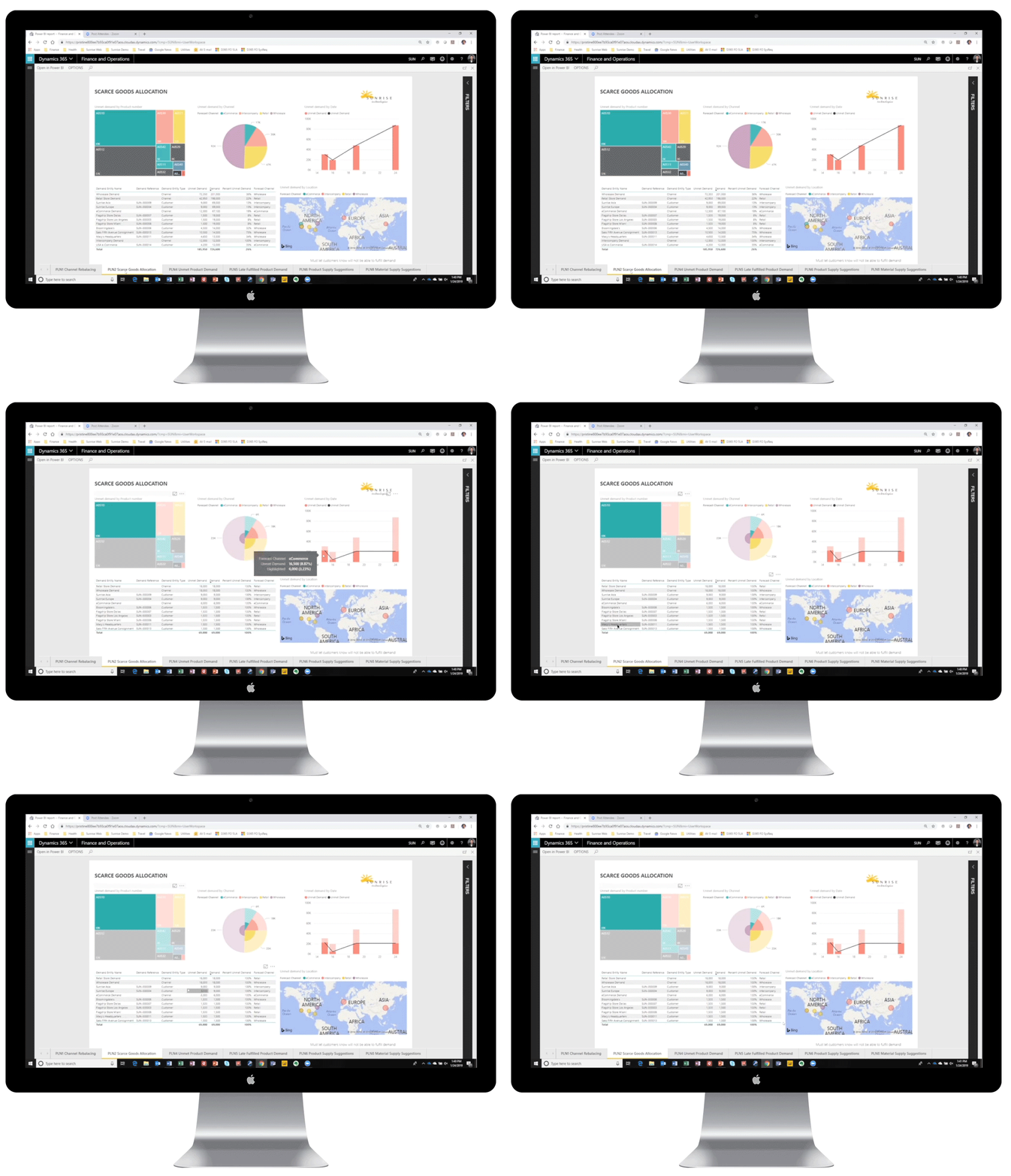
  • Prioritizing Scarce Goods Allocation
    • Older legacy systems take a first-in, first-out approach to orders
    • Often, consumer brands will want to fulfill important orders first (like to their big box store clients) over the eCommerce website, or smaller mom and pop stores
    • Legacy systems require creative workarounds like hiding inventory or virtual warehouses which are difficult to manage and lead to missed sales

Does Your Organization Currently Utilize Technology that Meets Your Operational Needs?
Poll results during the webinar found that 63% of organizations were dealing with friction created by legacy systems. Every organization will likely come to a digital transformation crossroads in which they will be forced to upgrade or implement new enterprise technology to better manage the organization’s complexities. More than 50% are considering the cloud because of the advantages it provides. Curious about how the cloud may benefit you? Check out our cloud eBook for more details.

If you’d like to see a demo of how Sunrise and Microsoft Dynamics 365 can solve some of the challenges outlined above, you can watch the webinar recording here.

Start Your Journey with Sunrise Today!

 Whether you’re exploring your options for new business platforms, or ready to get started, we are trusted business partners for some of the world’s most well-known brands. With over 25 years of experience with the Microsoft stack, we can help you understand all the capabilities Microsoft has to offer.

How home furnishings brands can grow and flourish in 2019

How Home Furnishings Brands Can Flourish in 2019

With all the challenges facing furniture makers today, how can companies stay committed to craftsmanship while growing their brand?

Since Sunrise is headquartered in North Carolina, we are surrounded with reminders of the home furnishings industry. We even have the world’s largest chair. Everyone knows that mid-April and mid-October are terrible times to host out-of-town guests, as every hotel, restaurant, and highway is packed with the 80,000 people attending the High Point Furniture Market (or just “Market” to the locals). And yet, even though the home furnishings industry has such a big role in the economy, both locally and nationally, it is facing increasingly tough challenges.

There are the historical issues, like rising costs, and the ever-present desire to cut costs and increase profitability, but new concerns are working their way into the mix. The effort to keep costs low and profits high has led to increasingly complex, global supply chains.

Changing buyer behavior means potentially expanding into new channels, providing value-added service to brick-and-mortar locations, and an emphasis on exceptional customer service. These challenges are all part of the everyday conversation for furnishings executives – and it’s a lot to keep up with! This is especially true if the organization’s foundational technology is outdated or no longer a good fit for this more complex operational environment.

We’ve compiled nine of these common challenges (and their solutions!) into a new, interactive eBook. Each page addresses an issue that can put a strain on business operations, the underlying technological infrastructure, and ways to address them – before they impact the bottom line. Get your free copy today!

Start Your Journey with Sunrise Today!

 Whether you’re exploring your options for new business platforms, or ready to get started, we are trusted business partners for some of the world’s most well-known brands. With over 25 years of experience with the Microsoft stack, we can help you understand all the capabilities Microsoft has to offer.

Don’t go chasing waterfalls: Comparing ERP deployment strategies

Don't Go Chasing Waterfalls

When it comes time to deploy a new ERP solution, which is best? Waterfall, agile, or something in between?

We all know that ERP implementations are tricky things. From 2012 to 2016, 55% of implementations exceeded their planned budgets and 66% took longer than planned. But…why? ERP isn’t exactly a new concept and you’d think, by now, there’d be a consensus on the best, easiest, and cheapest way to implement. Clearly, that isn’t the case. While there are many possibilities for these troubling statistics, let’s consider one that shows up in nearly every result when you Google “why ERP implementations fail”: project management. And more specifically, how best to approach an implementation timeline. Should you go waterfall, agile, or something in between?

Why Waterfall?

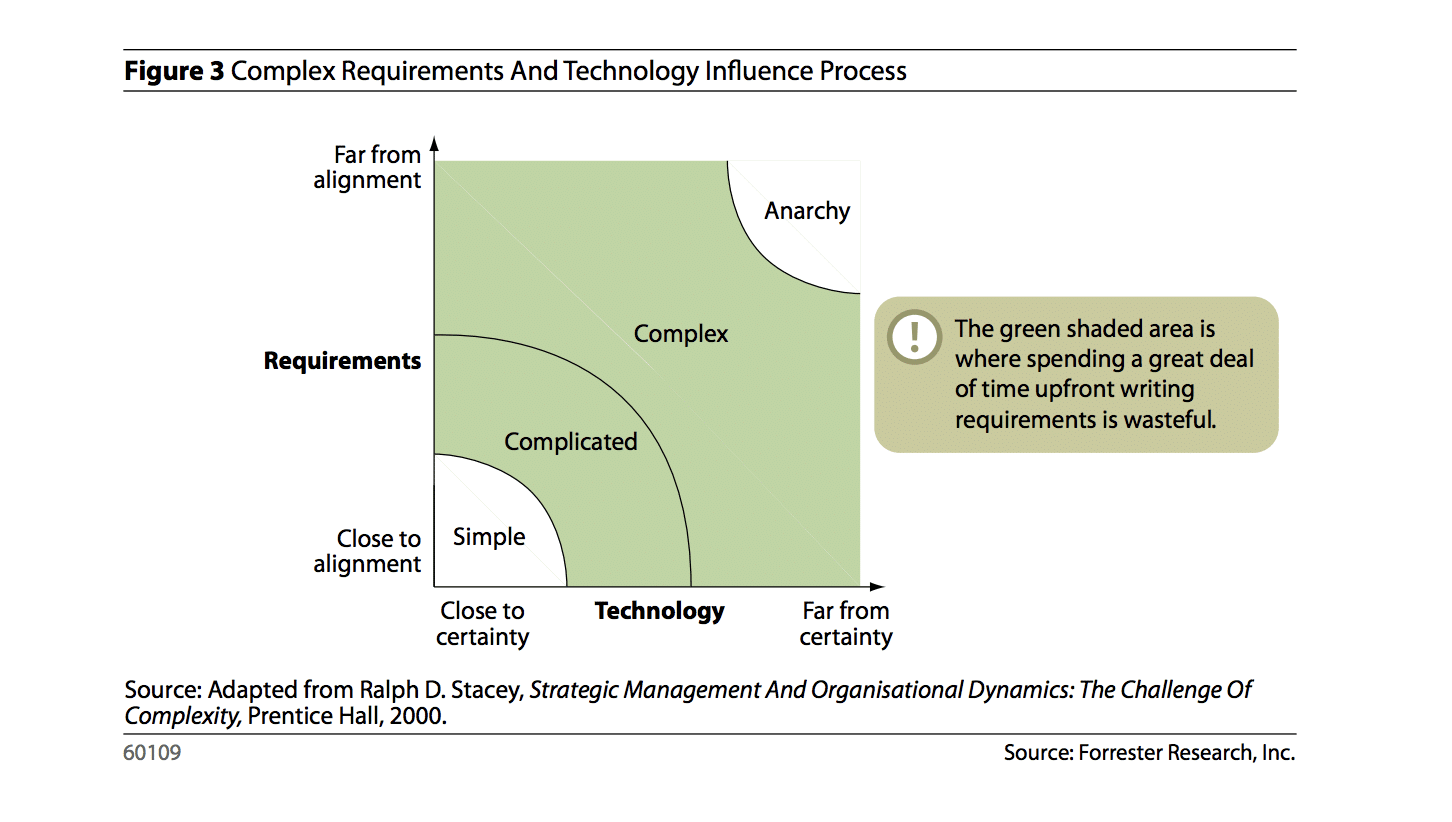
Waterfall approaches have traditionally been favored by companies with simpler, static business practices. It’s easy to see why this concept is alluring. Project owners have a strong belief that they understand how their business works, so why not just get all the planning for each process out of the way and get going already! But, as the name suggests, once you start going down a waterfall, there’s no going back up – at least not without extreme effort and pain. In fact, the more complex a technology project is, the more wasteful it is to write exhaustive requirements upfront.

A waterfall approach also doesn’t handle change very well and issues seem to most often appear at the very end. So, any expansion of scope, any process that didn’t make it into the initial planning, any deviation at all from the original plan is going to end up costing you. You also run the risk of finding out in the CRP (at which point go-live is imminent and most of the budget spent) that there are critical problems with the system that must be addressed. Finally, waterfall processes often assume that both a problem and its solution are contained in the same area. Well, you know what they say about assuming things… This operation-centric approach struggles to encompass multiple divisions involved in any given business process.

Waterfall deployments do have some positive aspects. For one thing, expectations are set early on regarding deliverables, making planning and designing more straightforward. Additionally, there are relatively clear benchmarks to measure progress. Finally, for businesses that don’t have many internal resources or stakeholders that are in different physical locations, after the requirements phase there is little need for input from the client until the very end of the project. But these benefits rarely outweigh the potential risks in moving forward with a waterfall approach.

Agile Deployments Suit More Complex Projects

On the other hand, a traditional agile implementation approaches each business process iteratively and considers how multiple business units may impact any given process. Instead of finding issues at the end, they can be addressed during multiple rounds of testing and design. For a more complex and dynamic business, an agile implementation gives the company more opportunities to ensure that the software accurately represents the business both at the outset of the project and at the end.

An agile approach isn’t without its own challenges. Although it is almost always better to have more input from the business at each stage, traditional agile deployments require a high degree of involvement, someone who is completely dedicated to the project, and teams that are in the same physical space. For many organizations, this is simply not possible for a wide variety of logistical, practical, and who-only-does-ONE-thing-in-their-role-anymore reasons. Additionally, because of the frequent reprioritization of a traditional agile deployment, it’s possible that not every sprint would be complete by go-live and it can be hard to track progress.

Hybrid Deployments = Best of Both Worlds

That leaves us with a hybrid approach that takes the best of both methods. A hybrid method defines the work upfront, borrowing defined phases of development and high-level requirement setting from the waterfall approach. Frequent iteration, testing, and cross-divisional engagement are added from the agile method. Combined, businesses can take advantage of a clear project roadmap with concrete, achievable phases where progress is easy to track, yet still flexible enough to accommodate any unforeseen challenges or changes to the business. All while exposing and engaging end users to the new solution for as long as possible (another well-documented key to implementation success) through frequent, but not all-consuming, check-ins.

This hybrid approach recognizes that any project with the scope and complexity of an ERP implementation is about more than just developing software. It’s about addressing broad operational concerns and transforming the business, so it can tackle challenges today, tomorrow, and years from now.

Ultimately, each method has its own pros and cons and it is up to the organization, along with a trusted partner, to determine which method is the best fit.

Start Your Journey with Sunrise Today!

 Whether you’re exploring your options for new business platforms, or ready to get started, we are trusted business partners for some of the world’s most well-known brands. With over 25 years of experience with the Microsoft stack, we can help you understand all the capabilities Microsoft has to offer.

Ready. Set. Retail. How new technologies and the cloud can help save retail

Future-proof your retail business with the cloud

There are a lot of gloom and doom stories about retailers in the news recently. However, this is just a symptom of changing times and consumer expectations — not a death sentence for existing organizations. With the help of new technology and the cloud, retailers still have a chance to strengthen their brands, increase revenue, and optimize operational efficiency. In this eBook, we cover:


  • Delighting customers with the most unlikely of resources
  • Building brand loyalty with superior customer service (all from one application!)
  • Using effective merchandise management to help expand product lines
  • How embedded BI dashboards can increase speed, flexibility, and visibility

Sunrise Technologies

With the help of new technology and the cloud, retailers can strengthen their brands, increase revenue, and optimize operational efficiency. The cloud is the critical ingredient needed to build a competitive advantage to ensure your retail brand stands the test of time. Fill out the form above to gain access.

61 % of growth-oriented businesses are focused on moving from on-premise to cloud solutions to better engage customers, empower employees, and optimize operations. 

61 % of growth-oriented businesses are focused on moving from on-premise to cloud solutions to better engage customers, empower employees, and optimize operations. 

61 % of growth-oriented businesses are focused on moving from on-premise to cloud solutions to better engage customers, empower employees, and optimize operations. 

Select Retail Customer Stories

Chrome Hearts Store: Apparel and Accessories Trend Setter Grows with Microsoft ERP

Read More >>

FILA: Will Better Serve Apparel and Footwear Customers with Cloud ERP

Read More >>

Vera Bradley: Dynamics 365 at the Heart of Its Digital Transformation

Read More >>

Get Your Money's Worth

Save time and gain instant value when you deploy Microsoft Dynamics 365 with Sunrise industry extensions.

Leading the way to the cloud

Sunrise Leads the Way to the Cloud with Dynamics 365 Upgrade

Sunrise completed a total move to the cloud, including an upgrade from Dynamics AX 2012 to Dynamics 365, and a migration to Azure and Office 365. While there were a number of benefits to making this move, the driving factor for each executive involved in the transition was setting an example for Sunrise’s customers and leading the charge to the cloud. Read the interactive case study to learn more!

The magic of matrices for apparel and footwear brands

Matrix Magic for Apparel and Footwear Business Systems

The must-have ERP requirement every brand needs for a perfect fit

STEP INTO THE MATRIX

If you work in the apparel/footwear industry, then you know the challenges of keeping up with multi-dimensional products — but what do you know about the solution?

If your organization is an apparel and/or footwear company, then it’s a given that you are dealing with multiple sizes, colors, and styles. While these kinds of product attributes can cause complexity (like managing products when you have thousands of SKUs), the solution, a matrix, is a bit harder to come by.

Apparel and footwear companies require a comprehensive, multi-dimensional product structure to accurately model product variants. However, this capability is somewhat of a rarity in both “vertical” fashion ERP software systems and most Tier 1 applications. We’ve often found that so-called vertical ERPs are little more than a glorified inventory management system that’s only tenuously (at best) connected to other business operations. Plus, niche players come with the added risk of questionable longevity – you never really know if they’re going to be around for the long haul.

And while Tier 1 systems certainly have the operational chops, many are too big and unwieldy to easily handle something like a matrix, so they end up requiring heavy customization. In over 20 years of ERP implementations, we’ve yet to meet anyone who was excited about tacking on thousands of extra development dollars just to handle the basic needs of their business.

If you want to really get crazy, think about trying to maintain data on products that are multi-dimensional and configurable in one of these systems. Driven by the consumer’s specific requirements, you’re talking about thousands of possible combinations that all must be intelligently managed to avoid excessive data maintenance on the product variants, their respective BOMs, and production routes.

To find a Tier 1 solution that can easily handle sophisticated, global operations as well as multi-dimensional, configurable items would be a bit like finding a unicorn in your backyard.

Well, meet your unicorn — Microsoft Dynamics 365.

Of the Tier 1 players, Microsoft Dynamics 365 has out-of-the-box style, color, size, configuration, and fit dimensions which can correctly model the inherent complexities of apparel and footwear products. While many other legacy systems have limitations in product hierarchies and multi-dimensional product management capabilities, Dynamics 365 is ready to tackle these challenges, head on, from day one.

Dynamics 365 is flexible enough to handle a matrix with ease while being powerful enough to tackle global, enterprise-level operations. And while this may seem rather magical, Dynamics 365 isn’t powered by fairy dust – it was built specifically for the intelligent cloud, and features deep integrations with other Microsoft tools (which you’re probably already using), along with other solutions like Power BI, Power Apps, and Microsoft Flow which all pull from a common data service.

It’s worth noting that while Dynamics 365 is pretty amazing, just like any other Tier 1 platform it starts out as a horizontal solution. Depending on your unique needs, it may need some industry-specific tweaks.

Now, you may be thinking, “what does Microsoft know about my business?” Well, the truth is, not a whole lot. That’s why they rely on industry partners, like Sunrise Technologies, who live and breathe specific industries to create these unique enhancements and industry-wide needs. For example, for apparel and footwear brands that are considering Dynamics 365 as their next cloud business solution, Sunrise offers a ready-to-go extension that not only gives you the industry functionality you need, but also saves a ton of time and hassle.

How does it work? So glad you asked!

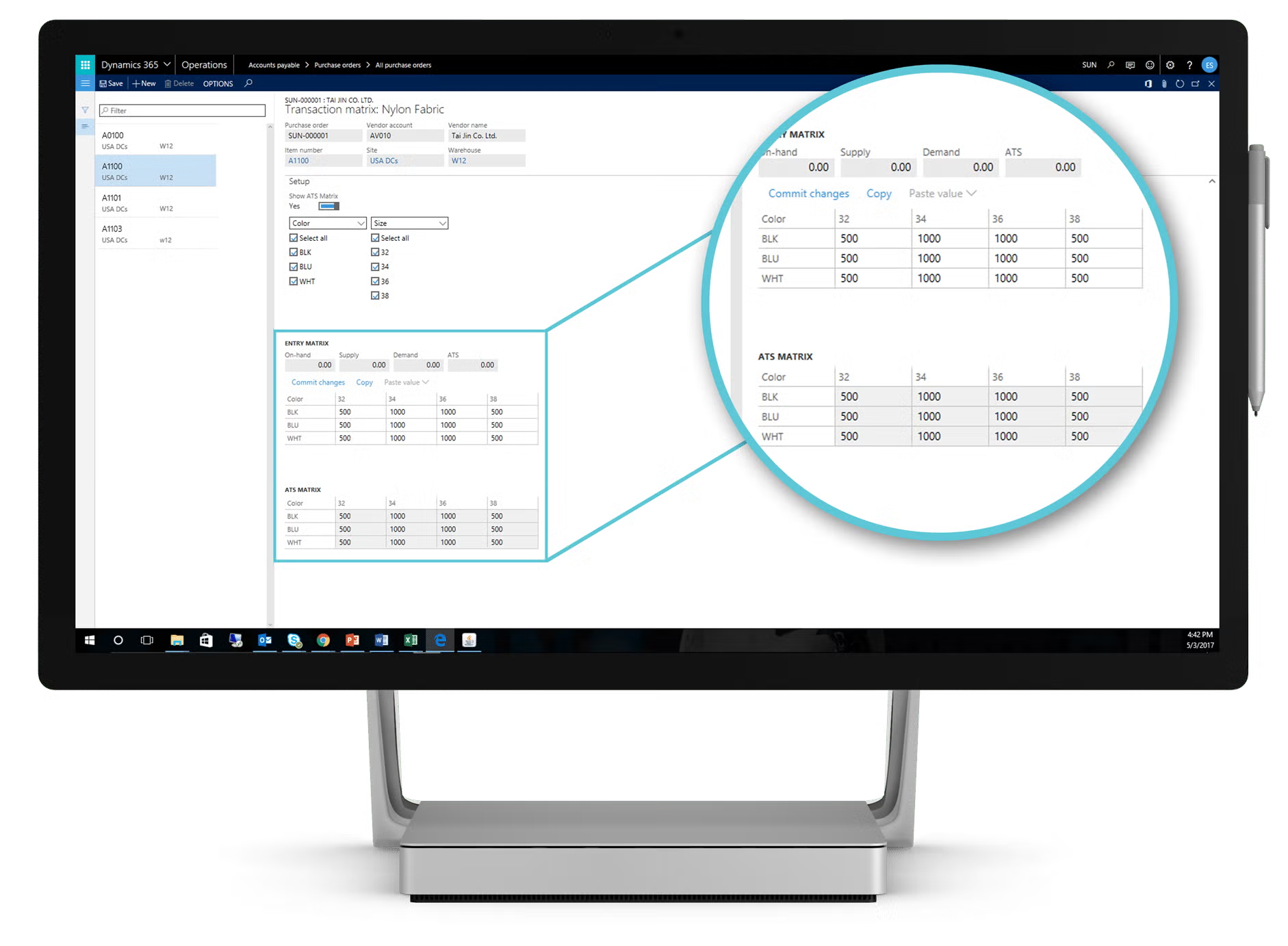
Improves speed of transaction entry with matrices
Improving the speed at which transactions are keyed reduces unnecessary hours that can be used to better the business elsewhere. Because apparel and footwear companies work with finished goods that require color, size, and fit characteristics, transactions of all types typically contain several lines for the same style, but different end SKUs. The transaction matrices for sales, purchase, and transfer orders allow for all lines of a given style/fit combination to be quickly keyed using a color/size matrix.

Improves customer service and order taking
Ensuring a positive experience for your customers is key during phone order entry or a customer service call. In these scenarios, customers will often request information regarding the availability of a given SKU. To ensure that the order taker can quickly access this information, inventory availability is displayed, using matrix entry functionality, while orders are being taken.

Enhances customer-facing documents
While every organization has its own flavor of customer facing documents, a common request from apparel and footwear companies is to provide order details in a concise matrix format by color and size. To help speed the process of refining sales order confirmations, packing slips, and invoices during an implementation, the option has been added to display a configurable matrix on each document.

Finding a Tier 1 business system that’s a perfect fit for apparel and footwear companies can be tough – until you realize Microsoft Dynamics 365 is perfect for the job (with a little help from Sunrise). Only Sunrise 365™ industry extensions improve the automation and usability of Dynamics 365 for apparel and footwear companies. This suite of add-ons and services extends the core functionality and ultimately saves time and costly customizations. And, only Sunrise is an award-winning and well-recognized industry partner crossing Consumer Packaged Goods, Manufacturing, and Retail industries.

Want to see the magic happen in real time? Sign up for one of our retail demos today!

ONE MORE THING...

If you’re wondering how else Dynamics 365 may help your business, then you’ll probably want to check out one of these additional resources.

Start Your Journey with Sunrise Today!

 Whether you’re exploring your options for new business platforms, or ready to get started, we are trusted business partners for some of the world’s most well-known brands. With over 25 years of experience with the Microsoft stack, we can help you understand all the capabilities Microsoft has to offer.