
Supply chain rebound—back on track, but better: 3 ways to improve visibility and agility

Whether you’re exploring your options for new business platforms, or ready to get started, we are trusted business partners for some of the world’s most well-known brands. With over 25 years of experience with the Microsoft stack, we can help you understand all the capabilities Microsoft has to offer.

Strategies and best practices for data migration during ERP projects

As a Director of Consulting for Sunrise Technologies, Jason Wolf has over 15 years of experience implementing Dynamics ERP solutions for apparel, footwear, retail, and consumer goods companies.
Over the years, implementation partners have created methodologies, project management and planning tools to account for every aspect of an ERP implementation. Yet it’s still common to see data migration get left behind during project planning. We believe this is backwards, since without the data, your new ERP system can’t go live. Data migration should be considered at the beginning of an ERP project, while other important design decisions are being made. By taking the time upfront to plan your migration strategy, you can avoid unexpected delays during your project.
Why migration planning is so important
Data migration strategies
Data cleansing
Validation and testing
Frequently asked questions
Migration planning should happen early in the project. Getting a jumpstart on the challenges for each data structure can save tons of time, and safeguard against unexpected hiccups during the project. It also gives the project team a better idea on timelines and resources needed to get from the old system to the new one. The bigger the change to a data structure (especially master data structures like product, customer, vendor, etc.,) the more challenging it will be to move to the new system. Without a plan in place, budgets can run over, timelines run long, or an issue stalls the process late in the project.
The key to a smooth migration is picking the right strategy. One size does NOT fit all, which is why it’s important to spend time early in the project deciding on the best method. Some examples are:
One of the unsung benefits of an implementation is getting a fresh start with clean, well-organized data. You can’t realize all the benefits of a new ERP system if your data is riddled with errors. Take this opportunity to remove redundancies, append missing information, fix typos and errors, and archive what you won’t need going forward. The key is to clean the data before migrating to the new system. Source data should be audited, issues resolved quickly, and controls set up for maintaining data quality and governance in the new ERP system. Much of this data cleansing work is manual, but it’s worth it to get the full value out of your implementation.
The only way to know for sure that the data migrated successfully is to check. The basic process is to start with a small amount of data, load it into the new ERP system, test, add more, and repeat. Once the migration is complete, you can validate it by checking against the source system. For example, say you want to check your open sales orders. You could check the line counts, quantity, and amount against the original source and if the numbers match, you’re good to go.
As early as possible! A data migration strategy should be considered early in the project, while other key design decisions are being made.
There isn’t a one-size-fits-all approach for data migration. Your implementation partner should offer guidance based on their experience. In general, for lower volumes, it might be more efficient to manually enter the data rather than spend time creating an automated script. For very large sets of data that contain complex mapping and business logic, automation may be the way to go.
Clean your data in the source system prior to the migration.
Create a checklist to test what’s in your new system against the legacy data source.
Whether you’re exploring your options for new business platforms, or ready to get started, we are trusted business partners for some of the world’s most well-known brands. With over 25 years of experience with the Microsoft stack, we can help you understand all the capabilities Microsoft has to offer.


As a Project Manager for Sunrise Technologies, Kristin Pehilj brings over 20 years of industry experience to the table and serves as a trusted advisor for apparel, footwear, and consumer goods companies that are in the midst of an ERP replacement.
No one wants to think about it, but your ERP project might fail. And while there’s a wealth of analysis on why ERP implementations fail, we consider one factor to be the difference between an implementation’s success or failure. Executive involvement is key — without it, an ERP project will struggle from the beginning and may not recover.
An ERP implementation is really a change management initiative. Just with more software involved. Asking people to change is never easy. It’s up to your company’s leaders to champion the project and guide your employees throughout the process.
Once a project is underway (and starts to get tough), the new system should be the catalyst for business transformation, something people can reference as the driving force behind positive change. You can have the best consultants, but even skilled, friendly, hard-working people face resistance when they’re the outsiders. Members of groups follow their leaders. And this is a good thing! Huge projects only get accomplished when people work together as a team, which is why executives should be prepared make tough decisions, foster consensus, and drive the project forward.
Of the thousands of decisions that need to be made during a project, many are going to be controversial. An ERP system touches almost every department in a company. Each department has its own set of processes and distinct personalities. Something like sales order management — which crosses paths with sales, credit, customer service, planning, logistics, accounts receivable — could require days or weeks of meetings. And when people can’t come to an agreement? The process stalls. This is the death knell of your project. This type of deadlock is why executive support is crucial. They can smooth the path and make the tough decisions needed to drive the project forward.
We recommend you form a project steering committee and meet at least once a month. The meetings don’t have to be long, but they should focus on specific asks for executives, rather than just listing project updates. It’s amazing what you can accomplish in a one-hour meeting. The key is to keep requests concise, limit needless updates, and be clear on who is responsible for what. By bringing a list of short, actionable items to the executive team, you can respect everyone’s time and keep them engaged and involved.
Certainly those factors are important, but we consider executive involvement the backbone of a successful ERP implementation. These projects involve change management, which is never easy and relies on a company’s leaders to see it through.
The most basic thing you can do is establish a steering committee and ask key members of the executive team to participate. Getting executives to attend regular meetings might be tough, but a well thought out meeting with an agenda, decisions and next steps will go a long way to keeping them involved. And it will be worth it in the end.
It’s the implementation team’s job to decide who is responsible for what activities, which problems need an executive decision, and which can be solved on their own.
The key to a successful steering committee meeting isn’t just project updates (people can get that information on their own time), it’s bringing up the issues that need executive input. Get in, follow the agenda, assign next steps, and move on.
Whether you’re exploring your options for new business platforms, or ready to get started, we are trusted business partners for some of the world’s most well-known brands. With over 25 years of experience with the Microsoft stack, we can help you understand all the capabilities Microsoft has to offer.

Both are essential for efficient supply chain management
As the SVP of Global Business Development for Sunrise Technologies, Cem Item serves as a trusted advisor to C-level executives running large global enterprises. He conducts corporate business strategy engagements and digital transformation workshops around the world. With over 20 years of consulting experience, Cem specializes in the textile, apparel, footwear, home furnishings, consumer goods manufacturing, and retail industries.
Allocation (the point where supply meets demand) is one of the most important pieces of the supply chain. So many critical business processes— customer service, inventory, sales — start hinge on smart allocation. Among supply chain professionals, software vendors, and other stakeholders, different words and terms get thrown around and people get confused. Here’s our point of view on hard and soft allocation, and challenges within each.
Very simply, hard allocation means the commitment between supply and demand cannot be changed. It’s been finalized, agreed upon, and now items are ready to go. Soft allocation, on the other hand, has a little wiggle room. Supply can shift as needed. Both practices play an important role in the supply chain, but typically we expect allocation to start out soft. Over time, as conditions change, allocation should get harder. During the planning process, hard and soft allocation can even be tied together.
Planning usually starts with a forecast. Over time, orders are placed and users compare them to the forecast and adjust. The type of business can dictate how planning is handled. For example, wholesale businesses that gradually firm up demand over time may have semi-firm demand like a bulk or blanket sales order. For retail or eCommerce businesses, demand is never locked in until a customer places an order. Things get really complex for companies with multiple channels – retail, ecommerce, and wholesale, for example. Every channel requires different demand planning, from forecasting to bulk orders to placing actual orders.
Meanwhile, you also have planned purchase orders or production orders. Over time, these planned orders are scheduled, or goods are produced and delivered, and placed in inventory. All along the way, a company is juggling many types of supply (planned orders, in-progress orders, inventory, etc.) alongside many types of demand (the forecast, sales orders, standing bulk sales orders, etc.) And it’s the supply chain’s job to strike the delicate balance between the two.
Let’s say you’ve just begun a new season, or otherwise in the beginning of the planning cycle. At this point, few orders are confirmed. You have a forecast, but products are still on order or in production, or something in between. This is the worst possible time to start hard allocating supply against the demand. You’ll encounter both inventory headaches from all the effort to re-organize and re-plan when orders are canceled or rescheduled, and you’ll have a bunch of customer service problems, too. This is the time when you should go with the flow. This is where soft allocation is your superstar.
If hard allocation is the hammer and nails of supply chain, soft allocation is like magnets and a whiteboard. While orders are being placed, you should be able to shift supply to demand as priorities change. Seeing the big picture — whether that’s by channel, customer, product, vendor, or other entities — is key to understanding and managing your supply chain for the best results.
Hard allocation comes into play when you’re ready to execute. At this point, you’re dealing with the firmest supply and demand (inventory and sales orders). Releasing the orders might be constrained by fulfillment rules, like no partial shipments, or at least fifty percent of line level is satisfied, or similar. Challenges at this stage are implementing these fulfillment rules while maximizing the amount of inventory that ships. The right allocation solution lets you set up and edit these constraints quickly and easily.
Whether you’re exploring your options for new business platforms, or ready to get started, we are trusted business partners for some of the world’s most well-known brands. With over 25 years of experience with the Microsoft stack, we can help you understand all the capabilities Microsoft has to offer.

Having a strategy (and extra help) for ERP software updates can smooth the path

Scott Hambright is Sunrise’s Director of Global Customer Support. Prior to joining the Global Support Team, Scott was a Senior Technical Architect for Sunrise, assisting clients on ERP implementations in the apparel, retail, consumer goods, and manufacturing industries.
The continuous update model has been one of the biggest shifts in modern ERP over the past few years. In the past, companies would spend millions of dollars and go through intensive upgrade projects to migrate to the newer version of whatever ERP they were using.
ERP upgrades used to be expensive and time-consuming, but no more. Instead, companies have replaced one anxiety for another – continuous updates. Dynamics 365, and cloud-based infrastructure, means software updates can be pushed automatically. But this makes people nervous. Since an ERP system handles so many functions within a business, users are wary to just accept the latest updates. But they’re essential for keeping your business humming along. So, you need a strategy for handling continuous updates in a way that maximizes their value and minimizes impact on your business.
When it comes to updates to your ERP system, focus on maintaining business continuity. Before you start testing, define the most important processes — the ones that you have to get right to keep the lights on. Being able to get orders out the door is far more important than posting a fixed asset depreciation journal. Get your team together and make a list. Plus, it’s easier to define success when you have criteria to refer to.
There are generic ERP software functions, and then there are your functions — the customizations and extensions that make your business unique. Get your software vendor to handle testing the basics, like creating sales orders, receiving a purchase order, etc. And if your software vendor can’t or won’t do this for you, find a vendor who will. This testing phase is your opportunity to make up scenarios to ensure your customizations are good to go.
Integrations are the most fragile part of your system, so spend the most time making sure those connections are solid. Luckily, you only have one aspect to test – your connection, not the external system. Here’s one way to do it:
Most cloud solutions will come with tools to help you test updates. This is where automation comes in handy. You can save significant amounts of time by setting up automated functional and integration testing. There are a lot of options – you can build functional scripts to run through your customizations. You can take data snapshots for use in inbound and outbound integration testing. Obviously, you’ll need a separate software environment to test everything, and a human to oversee this testing process.
We recommend that you aim to make testing your software updates as fast and automated as possible (so if there is a problem, you can devote time to fixing problems, not boring rote work).
- Define the most important business processes and prioritize testing those first.
- Create test scenarios for your system’s customizations and extensions. Leave the standard functionality testing to your vendor
- Spend the most time on testing integrations – these are the areas that are most unique to your system footprint.
- Consider automated testing for functional and integration updates.
Are you interested in learning more inventory best practices? Would you like to a see a modern, streamlined allocation solution that gives you both flexibility and accuracy? Contact Sunrise today!

Ask yourself: what are you really tracking with a season code?
As the SVP of Global Business Development for Sunrise Technologies, Cem Item serves as a trusted advisor to C-level executives running large global enterprises. He conducts corporate business strategy engagements and digital transformation workshops around the world. With over 20 years of consulting experience, Cem specializes in the textile, apparel, footwear, home furnishings, consumer goods manufacturing, and retail industries.
Whether you’re exploring your options for new business platforms, or ready to get started, we are trusted business partners for some of the world’s most well-known brands. With over 25 years of experience with the Microsoft stack, we can help you understand all the capabilities Microsoft has to offer.

Should you use intelligent numbers in your product data setup?

As a Senior Supply Chain Consultant for Sunrise Technologies, Melissa Welhelmi brings over 20 years of industry experience to the table and serves as a trusted advisor for apparel, footwear, and consumer goods companies that are in the midst of an ERP replacement.
Like we’ve discussed before, product is the heart of your brand. And since product structure is such an integral part of your business, how you number (or don’t number) those products matter. A lot.
Intelligent numbering is very common in the industries we work with. This is when a product’s number or ID contains meaningful information. For example, a fashion brand might have a jacket label WJF20S123-BLK-S. In the style name, “W” means Women, “J” means Jacket, F20 means Fall 2020 season, S123 means the sequential style number. “BLK” is the color black and “S” stands for small size. The style numbers can get really detailed.
At first, intelligent numbering makes a lot of sense, especially for quick analysis. At a glance, users can see the most important attributes. Especially with companies using legacy inventory management systems, users may rely on those product numbers packed with meaning for reporting and analytics.
Businesses change. Employees leave and take their institutional knowledge with them. New staff members have to learn and maintain the product numbering schema. Because humans maintain these numbers, mistakes happen. Eventually, you may find that no one understands what your company’s product numbers mean anymore, but you have to maintain it for the sake of not having a better alternative.
In many ways, intelligent numbering is an outdated practice that should be left behind with legacy systems. There are many downsides:
Intelligent numbering isn’t just a human problem, it’s a systems problem. Especially for consumer brands, once they start adding new product categories, additional information must be added to the product master data setup. The extra business logic that comes with this work adds another layer of complexity to something as simple as numbering products.
We’ve discussed this in detail in some of our other blogs — there’s a better way!
Business applications today are built to handle multidimensional products without complex naming schemes. Data entities like dimensions, hierarchies, attributes, categories, and assortments can be used to create a new master data model for a company that is easy to maintain, without intelligent number schemes.
Legacy systems often lack this capability, so we understand why organizations struggle with intelligent product numbering.
Adding new products is quick and easy.
They can use other dimensions in the ERP system for search and reporting.
Multiple users can work with products in the system, and they don’t have to ask someone what the numbers mean.
Has your brand expanded into dog beds, home furnishings, or hair products? No problem. Configuring new dimensions is easier and faster than rethinking your numbering schema for your entire product catalog.
If product information changes, the number doesn’t have to.
Product catalogs from different companies or acquisitions can be merged without losing information.
Advanced reporting like data mining, automated queries, and business analytics is easier to do with simple product IDs.
A new systems implementation is a complete paradigm shift for your business. Like we discuss in product attributes, an ERP project is an opportunity for you to cleanse your data and setup a new master data structure that works for you. Changing these data entities is a big deal and requires a solid change management strategy.

In the news, analyst reports, and discussions
The ERP Value Matrix reflects the continued shift to the cloud, with vendors seeing accelerated adoption rates. Microsoft continues in its Leader position with Microsoft Dynamics 365 for Finance and Supply Chain, Enterprise Edition. All the enterprise capabilities in Microsoft Dynamics for Finance and Supply Chain, Enterprise edition are underpinned by Microsoft’s global delivery strategy that includes 36 geographies and over 60 language localizations. Additionally, the Microsoft business application platform delivers capabilities such as Power Apps, Power BI, Power Automate, and the Microsoft Dataverse (formerly Common Data Service), helping customers better collect and analyze their data as well as build applications to automate manual tasks.

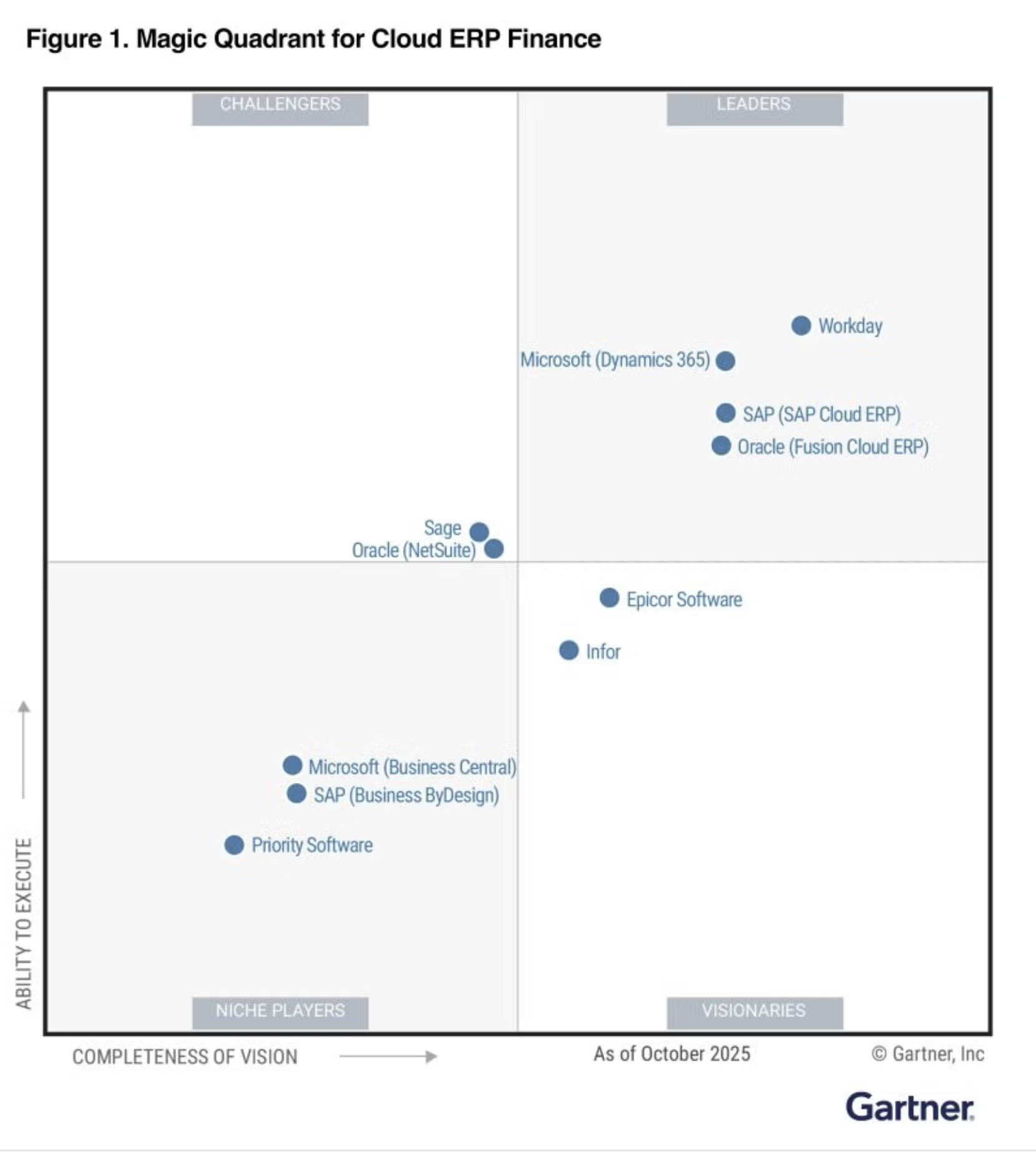
Product-centric organizations are increasingly adopting cloud ERP platforms to standardize operations and drive intelligent automation. The 2025 Gartner® Magic Quadrant™ recognizes Microsoft as a Leader for its ongoing innovation and proven ability to support scalable, composable transformation across finance and operations.
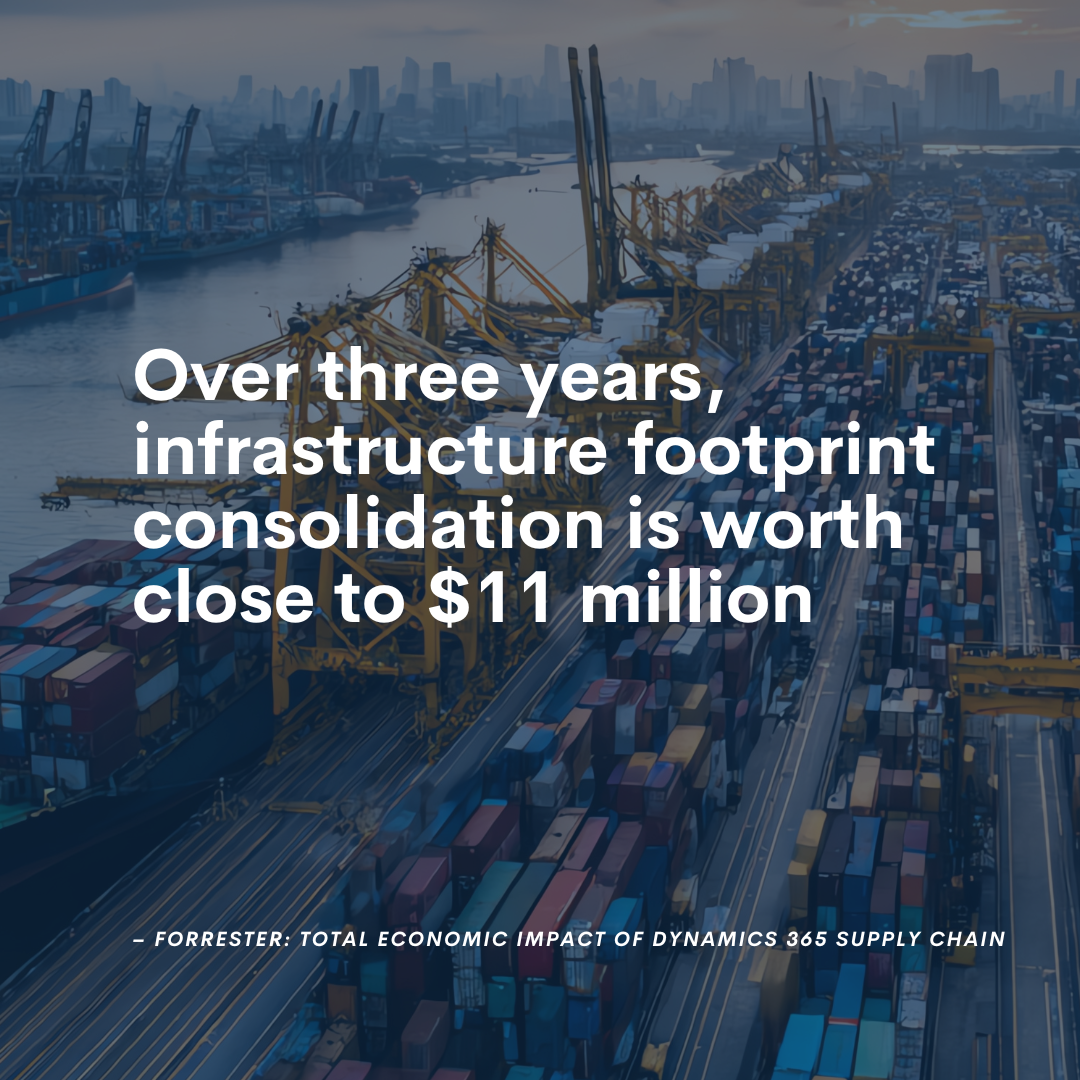
Microsoft Dynamics 365 Supply Chain Management addresses key supply chain challenges. These include limited visibility, adapting to changing customer demands, outdated systems, and disruptions. The solution enhances visibility across the supply chain network, enabling better planning, agility, and asset uptime optimization, ensuring smooth operations even during disruptions. Forrester Consulting conducted a Total Economic Impact™ (TEI) study to assess the potential ROI of deploying Dynamics 365 Supply Chain Management. The investment led to significant benefits, including:
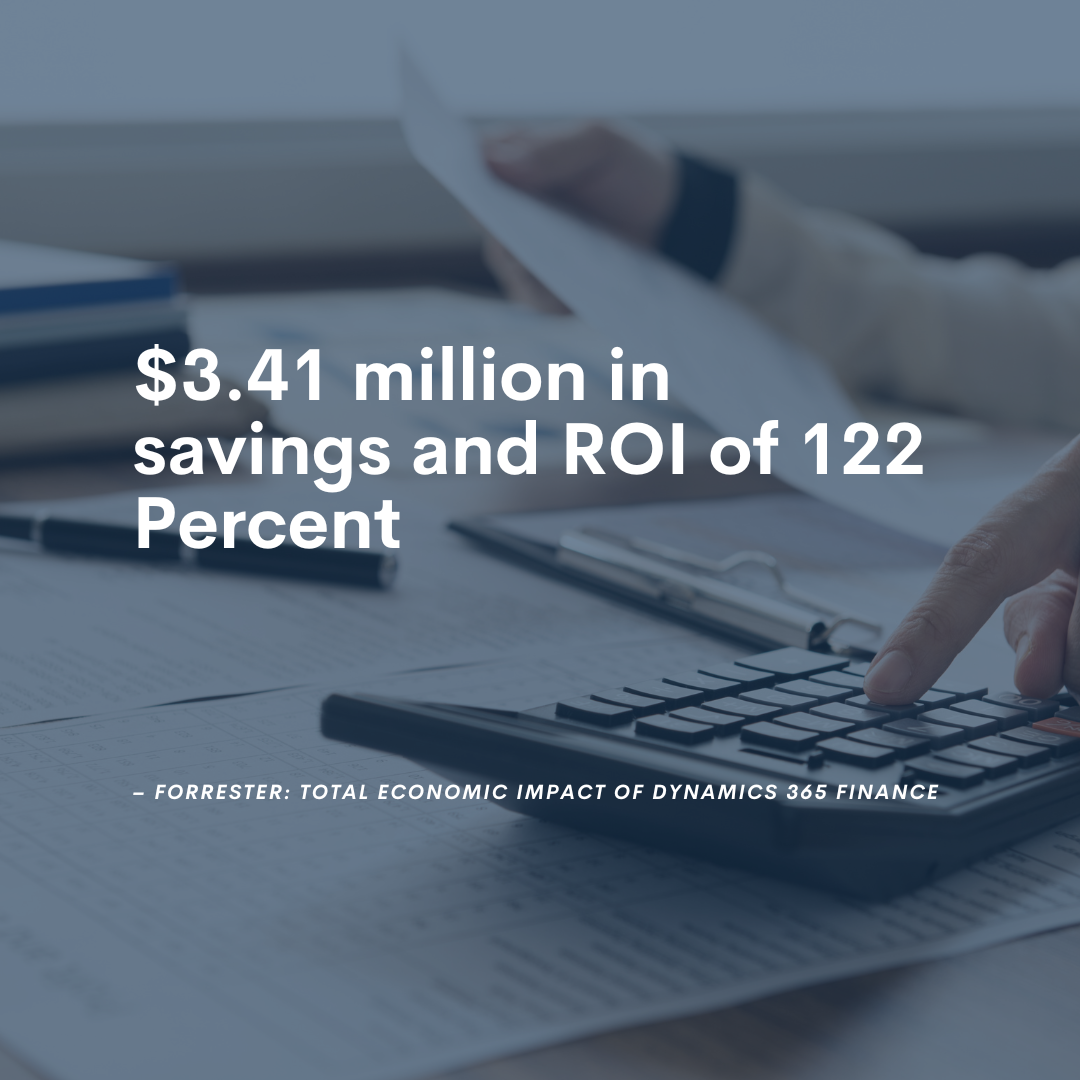
Microsoft commissioned Forrester Consulting to conduct a Total Economic Impact™ (TEI) study and examine the potential return on investment (ROI) enterprises may realize by deploying Microsoft Dynamics 365 Finance. The purpose of this study is to provide readers with a framework to evaluate the potential financial impact of Dynamics 365 Finance on their organizations.
To better understand the benefits, costs, and risks associated with this investment, Forrester interviewed four representatives with experience using Dynamics 365 Finance. For the purposes of this study, Forrester aggregated the interviewees’ experiences and combined the results into a single composite organization that is a retail and wholesale organization with 120 finance personnel and revenue of $750 million per year.
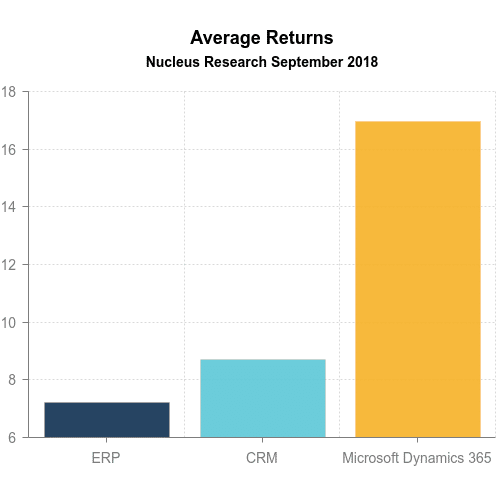
In analyzing the results of Microsoft Dynamics 365 deployments, Nucleus found that for every dollar spent, companies realized an average of $16.97 in returns. This is significantly higher than the average for both enterprise resource planning (ERP) and customer relationship management (CRM), which deliver, on average, $7.23 and $8.71 respectively. Nucleus found that companies taking advantage of Microsoft’s investments in cloud and usability, as well as integration and analytics, were able to achieve significant returns by increasing productivity and revenues and reducing costs. Microsoft’s integration of business capabilities such as ERP, CRM, and HCM with Office 365, Power BI, Power Platform, and Azure offer even greater value than the industry averages and as Microsoft makes further investments in integration and innovation, customers will benefit from the additional value provided by the cloud platform.
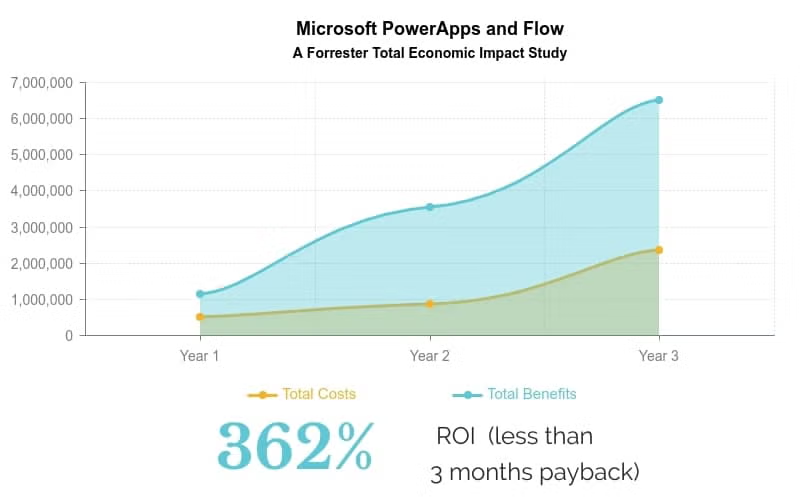
Adopting Power Apps can transform a company’s IT function from a blocker to an enabler. One interviewee in the Forrester Total Economic Impact Study said: “We can now build once and deploy to different places….We can now make changes on the fly and support a very dynamic business.” Benefits included:
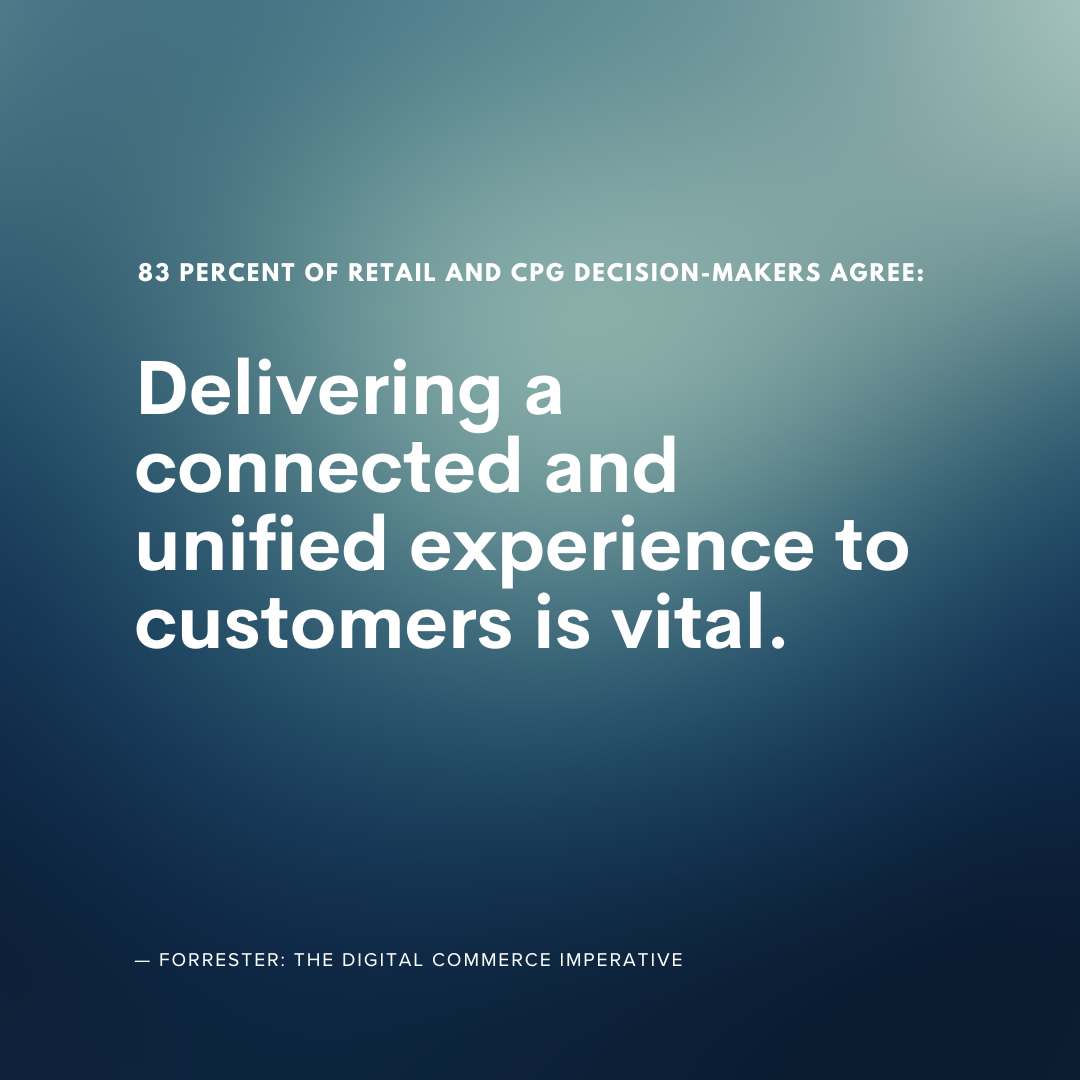
A staggering seventy-six percent of retail and CPG decision-makers agree that improving digital commerce capabilities is their most urgent business priority. And yet for many organizations running on legacy or disparate systems, this goal is far out of reach. Microsoft commissioned Forrester to evaluate how retail and CPG companies are approaching digital commerce improvements today. In this thought leadership report, read key insights about the state of the retail and CPG industries in a post-pandemic world, and how technology leaders plan to invest to make true unified commerce a reality.
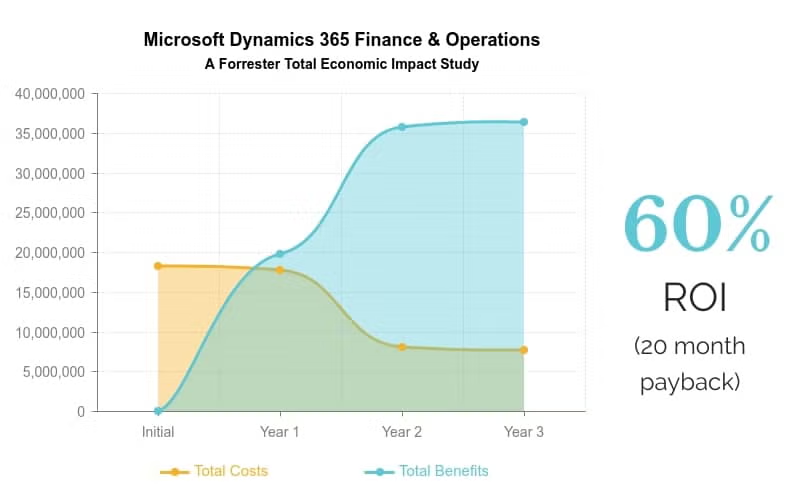
Cloud simplicity, gained agility, improved user adoption, and enhanced security were a few of the benefits of Microsoft Dynamics 365 Finance and Operations. The quantitative benefits over a three year period included:
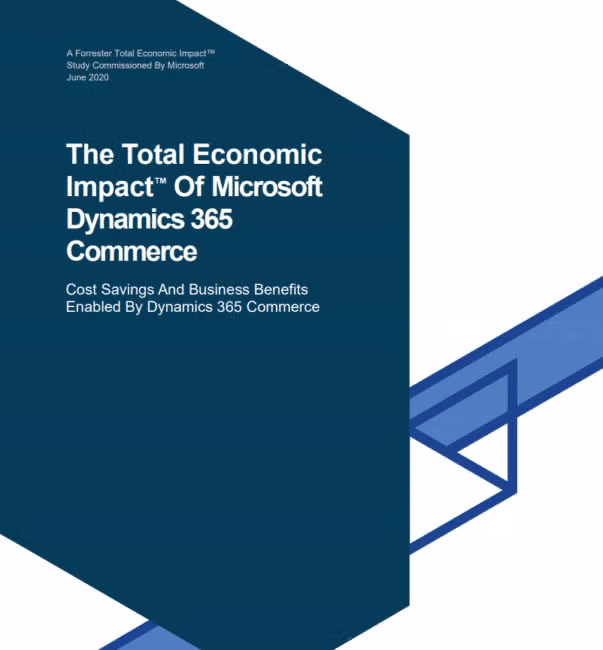
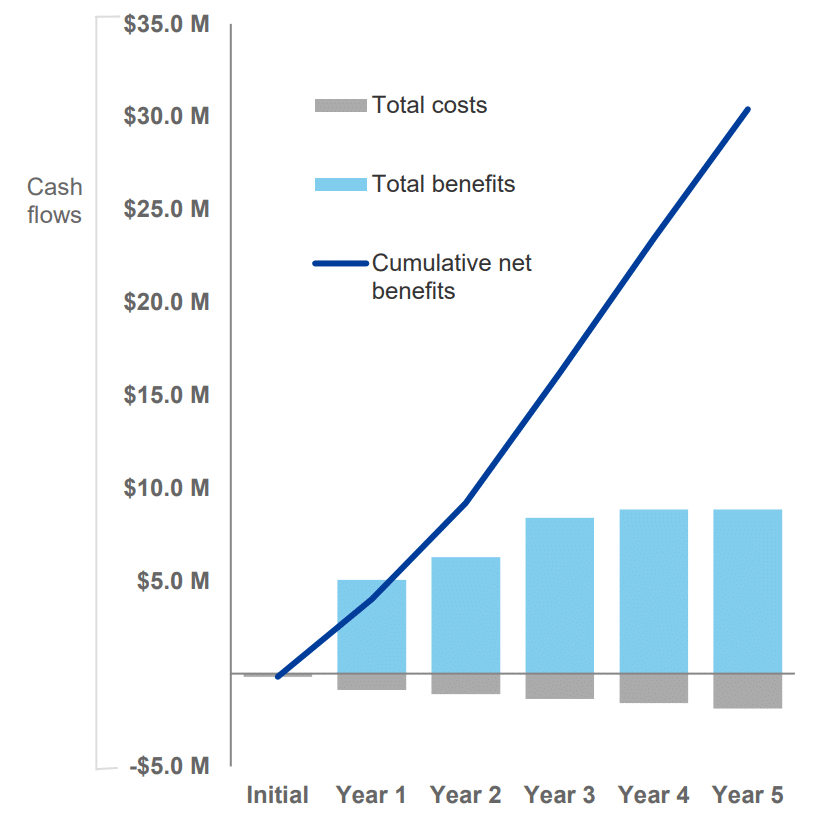
Dynamics 365 Commerce provides a seamless shopping experience across physical and digital channels. Customers using a network of disparate and inflexible legacy solutions stand to save significant time and money by moving to an integrated omni-channel solution like Commerce. Forrester’s Total Economic Impact study of Dynamics 365 Commerce found:

Gartner has named Microsoft Security a Leader in five Magic Quadrants. This is exciting news that we believe speaks to the breadth and depth of our security offerings. Microsoft was identified as a Leader in the following five security areas:
Microsoft commissioned Forrester Consulting to conduct a study to examine the potential return on investment (ROI) enterprises may realize by shifting some or all their management and operations from on-premises, hosted, and outsourced implementations to Azure’s infrastructure-as-a-service (IaaS) offering. Benefits included:
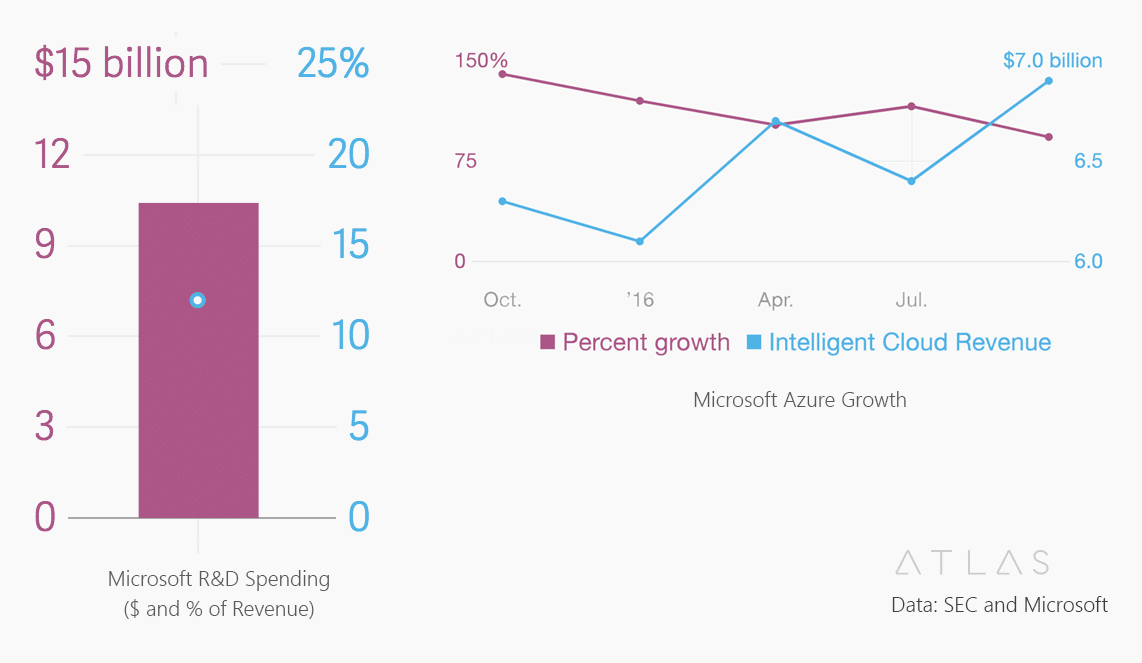
Microsoft offers a complete platform at a tremendous value. When you consider the billions of dollars invested in research and development, cloud growth, and long term viability, an investment in Microsoft makes long term sense.

Are they ever a good idea for inventory management and fulfillment?
As the SVP of Global Business Development for Sunrise Technologies, Cem Item serves as a trusted advisor to C-level executives running large global enterprises. He conducts corporate business strategy engagements and digital transformation workshops around the world. With over 20 years of consulting experience, Cem specializes in the textile, apparel, footwear, home furnishings, consumer goods manufacturing, and retail industries.
Data tells a story about how a company runs its business. The warehouse table in particular — this core entity reveals so much about how a company manages its inventory. We’re fascinated by the creativity we see and how customers utilize their inventory data in so many ways.
Soft allocation is the way to go. By keeping inventory transparent, you keep the supply chain moving quickly. Solutions can give you the flexibility to hard allocate once you’re ready to ship, but up until that point, you’ll want to be able to move orders around fast, without unnecessary data entry or manual processes.
We don’t consider virtual warehouses a best practice. For one thing, there is nothing fast about virtual warehouses. Once you start messing around with virtual transfers and virtual overages and shortages, you’ve moved too far away from reality, and your users are going to waste a lot of time trying to make your imaginary warehouse look right. At Sunrise, we advocate for having what’s in your system match your physical inventory, sticking as close to reality as possible.
Theoretically, yes, although it’s possible to put systems in place to prevent that. Even with extra business logic, though, solving one problem for virtual warehouses won’t fix everything that’s wrong with using them in the first place. Soft allocation prevents negative inventory from ever being an issue.
If your brand sells across multiple channels like retail, eCommerce, and wholesale, or they sell in multiple regions or countries, soft allocation is the way to go. The more complex an organization, the smarter it is to keep all the inventory in one big pool. It seems counterintuitive at first, but when done correctly, soft allocation ensures you can meet fulfillment demand and have an accurate, real-world view of your inventory across all your channels.
Are you interested in learning more inventory best practices? Would you like to a see a modern, streamlined allocation solution that gives you both flexibility and accuracy? Contact Sunrise today!

Follow these best practices to straighten out hard and soft product attributes in your next ERP deployment
As the SVP of Global Business Development for Sunrise Technologies, Cem Item serves as a trusted advisor to C-level executives running large global enterprises. He conducts corporate business strategy engagements and digital transformation workshops around the world. With over 20 years of consulting experience, Cem specializes in the textile, apparel, footwear, home furnishings, consumer goods manufacturing, and retail industries.
So, you’re embarking on a new ERP implementation. It’s a new beginning, a chance to reevaluate, reorganize, and revitalize your business processes. And for consumer brands and retailers, product management is the most important piece of the ERP puzzle.
When starting a new ERP implementation, it’s absolutely critical that you think about how you’ll handle product attribution in your new system. For many companies, it’s a mistake to bring over the old product data structure.
Instead, take this as an opportunity to clean up messy, disorganized data and define a product hierarchy that frees your team from unnecessary and confusing product management.
Product is the heart of a brand. Whether you sell jackets or handbags or table lamps (or all these things and more), you must define the type, colors, sizes, and many other dimensions for each product. A company’s product data structure is one of the most complex parts of an ERP system. Almost every area of your business will bring their own data and business logic to the product management party. It’s essential that you maintain clean and accurate data for your products to keep them moving through the system efficiently.
For those who don’t know: product attributes describe your brand’s, well, products. For those who are all too familiar: managing product attributes can be a pain, especially in a legacy system. Every time a brand debuts a new collection or starts selling a new category of goods, new attributes must be added to the ERP system.
During a new ERP implementation, you have a rare opportunity to clean up your messy data and streamline your product management. Whatever data structure you decide on, you’ll have to live with for the next several years (or decades). Here’s the process we recommend for cleaning up your product hierarchy:
Hard attributes are characteristics that span your entire organization – examples are Brand, Gender, and Product Type. These are used by the business to sort and filter products. Hard attributes show up in the main forms and reports of a business. You will end up with a few of them.
Soft attributes, on the other hand, are where you really slice and dice your product data. These are details that are specific to your product categories — think flammability for clothes, finish for furniture, material for handbags, etc.
…there will only be a few of these
…there will be a lot of these
We see this a lot with legacy systems: ALL the soft attributes, across every product category, are visible for every product. Business users then get confused — why is Finish showing up for a jacket? Why is Flammability listed in the Footwear section? Am I supposed to maintain the water-resistance attribute for my furnishings products? It gets confusing and messy, fast.
It’s usually not a company’s fault that their product masters get so jumbled. Legacy ERP systems don’t handle multiple product categories very well, and people develop customizations and workarounds to get the info they need. Plus, the retail and consumer brands landscape has changed so much – an apparel company that implemented an ERP system in 1999 couldn’t predict that someday, that same company would evolve into a lifestyle brand selling handbags, shoes, accessories, and home décor. Or that a company may acquire another brand that sells a completely different product, like furnishings, or cosmetics.
That’s where a modern, cloud-based ERP comes in: you need a system for handling many different categories, while minimizing confusion and extra work for product management. Adding a new product category should NOT require customizations to your ERP system.
The right ERP system can give you the correct product hierarchy to efficiently manage all your products. Microsoft Dynamics 365 makes it easy to define parent-child product relationships within categories. New soft attributes can be added quickly and attached to the relevant products in your hierarchy. Your users only see what they need to see, and their work is no longer crowded with irrelevant product data.
Are you ready to simplify your product data structure? Want to learn more about how Dynamics 365 can efficiently manage your supply chain and revitalize your company? Get in touch with us today!