

How modern ERP better manages complex operations

Give Your Business Something Better

How Modern ERP Better Manages Complex Organizations

As the SVP of Global Business Development for Sunrise Technologies, Cem Item brings nearly 20 years of experience in business systems experience in the textile, apparel, footwear, home furnishings, retail, and consumer goods industries. He offers a deep supply chain understanding in manufacturing, distribution, and retail operations with knowledge of ERP, CRM, POS, and BI systems. For Sunrise clients with operations across North America, Europe, and Asia, Cem provides thought leadership and guidance throughout the evaluation process of Microsoft Dynamics 365, business system strategy and a vision for digital transformation.

Over the years, we’ve had hundreds of successful go lives with consumer brands, manufacturers, and distributors. With that many implementations under our belt, we’ve been able to gain a different perspective on how modern, cloud-based, business applications better manage complex operations. Even though our clients have very different products and processes, we see the same industry challenges over and over. The good news is we’re able to solve them with modern ERP and CRM applications. We were inspired to share some of the common challenges we see (and fix) after our recent joint presentation with Ultra Consultants. You can watch the recording here to learn more and see a quick overview demo.

Complex Operations Are Cumbersome to Manage With Outdated Legacy Systems

So why do so many organizations try to battle the same challenges with outdated technology? Nearly all businesses have faced the same evolution of technology over the past few decades. Moving from no packaged software to point applications that couldn’t do it all, companies have ended up with a patchwork of integrations and homegrown solutions. As businesses became more complex and global, the Frankenstein infrastructures continued to get more custom, and more painful to manage. Most commonly, we see these legacy systems have a really hard time managing: 

  • Product Variations
    • Size, color, unit counts, packaging, etc…the list of combinations that cause complexity goes on and on
    • Older legacy systems don’t store these attributes well and the variations can cause a lot of headaches
    • Simple questions become difficult to answer because reporting, planning, and overall inventory management is extremely challenging in these older systems
  • Multiple Channels
    • Once items with a complex product structure begin moving through multiple channels, it becomes dynamic and even harder to track
    • In many cases, the lack of clear visibility into supply leaves organizations scrambling
    • Legacy systems struggle to support the unique aspects of each unique channel (dropship, eCommerce direct to consumer, B2B sales and wholesale, and retail stores)
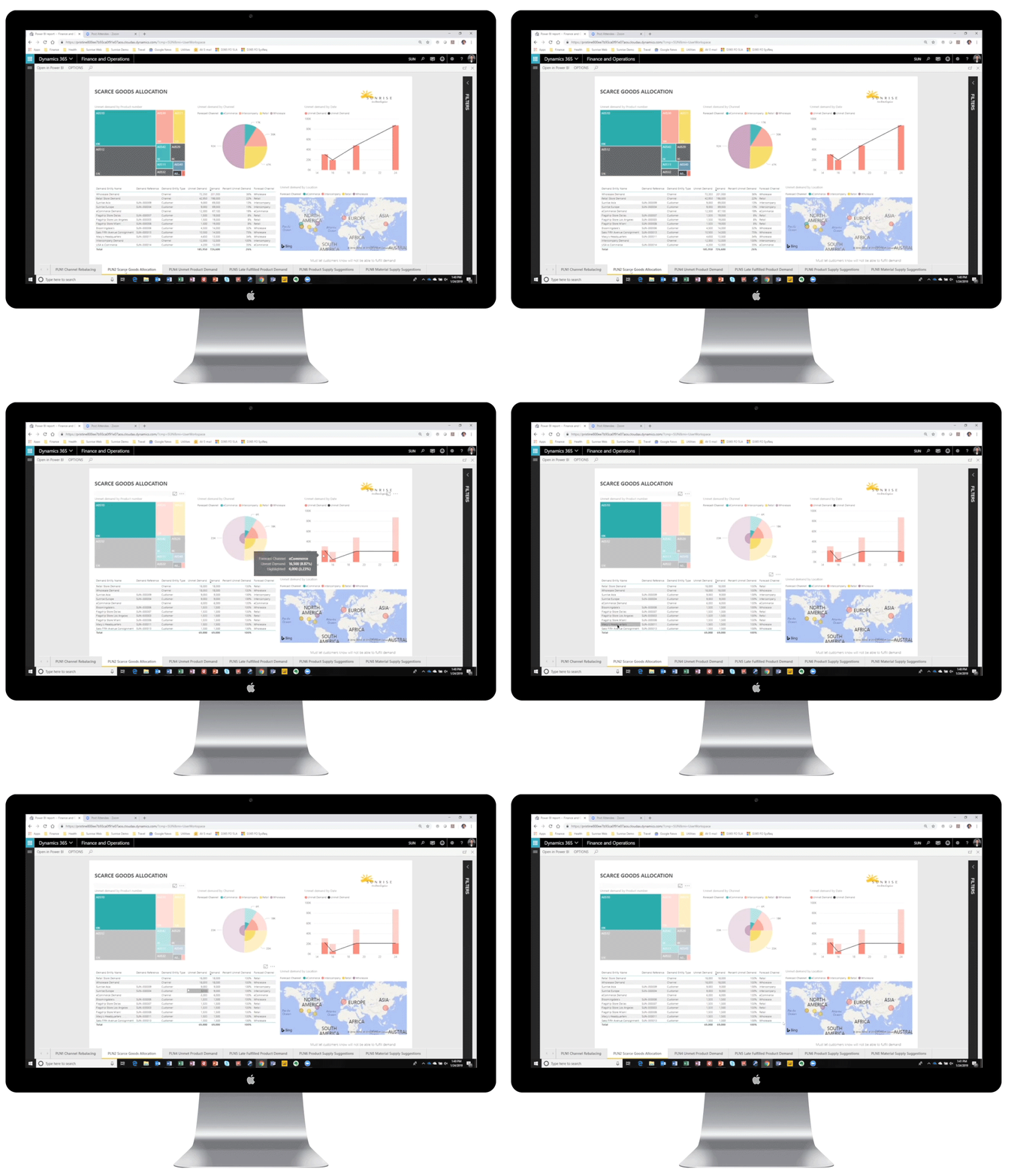
  • Prioritizing Scarce Goods Allocation
    • Older legacy systems take a first-in, first-out approach to orders
    • Often, consumer brands will want to fulfill important orders first (like to their big box store clients) over the eCommerce website, or smaller mom and pop stores
    • Legacy systems require creative workarounds like hiding inventory or virtual warehouses which are difficult to manage and lead to missed sales

Does Your Organization Currently Utilize Technology that Meets Your Operational Needs?
Poll results during the webinar found that 63% of organizations were dealing with friction created by legacy systems. Every organization will likely come to a digital transformation crossroads in which they will be forced to upgrade or implement new enterprise technology to better manage the organization’s complexities. More than 50% are considering the cloud because of the advantages it provides. Curious about how the cloud may benefit you? Check out our cloud eBook for more details.

If you’d like to see a demo of how Sunrise and Microsoft Dynamics 365 can solve some of the challenges outlined above, you can watch the webinar recording here.

Start Your Journey with Sunrise Today!

 Whether you’re exploring your options for new business platforms, or ready to get started, we are trusted business partners for some of the world’s most well-known brands. With over 25 years of experience with the Microsoft stack, we can help you understand all the capabilities Microsoft has to offer.


11 ERP tips for retailers

ERP for Retail in 2022

Get started on the right path with these 11 tips for retailers

Before joining Sunrise Technologies, Annie Graziani spent 15 years working in the NYC apparel industry with a primary focus in organizational management and operations. Her ability to manage at the most senior level as a COO and at a detailed level overseeing day to day operational objectives to meet company-wide initiatives is one of the reasons she is such an asset to the Sunrise team. Additionally, Annie has had experience implementing Microsoft Dynamics as both a partner and a client, giving her a unique perspective and understanding of the rewards and challenges of modern business applications.

The past few years have been rough on consumer brands and retailers, but it isn’t all doom and gloom! If your company has survived to see 2019 with a fan base that loves your apparel, footwear, accessories, cosmetics, or whatever it may be, you’ve got to be doing something right. However, industry trends suggest that you’ve still got to fight to thrive in the coming years. This means working smarter, savvier, and more strategically than your competitors.

What does it take for a brand to survive?

So, how do you make sure that 2019 is a great year? Brand leaders know what it takes to grow and thrive for the long term:

  • Deliver on your brand promise to customers (better value, quality, service, and deliver on time)
  • Expand into new product lines, brands, channels, and global regions
  • Continuously drive operational efficiencies and revenue-building initiatives

It’ll be even easier if you’re not fighting an uphill battle with continuous friction created by legacy systems, stagnant business behaviors, and short-sighted thinking. This is a great time of year to look inward, reignite the excitement and highlight continuous improvement efforts to make sure you’re able to build value and grow with your employees, vendors, and customers on board. You’ll especially want to watch out for these common roadblocks we see that can make it challenging to meet your goals:

1. Don’t let dying technology create friction in your operations.

Now that technology has leapfrogged ahead, there is really no excuse to maintain a Frankenstein legacy environment. The time to tackle your legacy technical debt is now. And chances are, you’re probably already aware that any organization still using a combination of disparate, on-premise, or outdated systems is basically operating on borrowed time. These systems can create a huge risk — both in terms of a system failure, exposure to malware attacks, as well as reduced revenue resulting from unreliable data, time spent on manipulating reports needed to make informed decisions, and broad operational inefficiencies. It can also make it harder to implement necessary improvements to deploy omnichannel retail initiatives.

2. Find a solution that respects your data

Data is the backbone of an organization. How do you expect to make decisions about what products to sell, at what price, and to whom, without reliable information? Retailers are making huge investments into technology and infrastructure to support their brands. Using systems and reliable data to facilitate fast decision making is critical in remaining competitive. If you can’t deliver on your brand’s promise while others are relying more heavily on technology to steer the ship, it’s likely your brand is going to fall behind.

3. Keep yourself in the mainstream

Sunrise’s founder and former CIO of a major consumer brand always says:

Think of technology as the mainstream with little side streams that come and go. Microsoft is always going to be the mainstream.

Any CIO that chooses to deviate from the mainstream is taking a risk that the vendor will not be around to innovate and support the product long term. Microsoft will always be relevant as smaller competitors continue to be acquired or go out of business. And with a budget of over $1B annually dedicated to R&D, Microsoft’s focus on continuously improving its business applications

4. Eliminate segregating inventory by channel

You know that delivering the right inventory to everyone, everywhere is critical. In order to do that effectively, we’ve found it’s best to keep your inventory as close to a single pool as possible; channel-less. The more inventory is segregated for wholesale, ecommerce, brick-and-mortar, and pop-up events, the more challenges you’re likely to have ensuring that the right product is at the right place at the right time. Make it easier for your organization and drive to eliminate the room for error.

5. Embrace a platform for the long term

Good news! You no longer need separate order management, point of sale (POS), warehouse, and retail replenishment systems now that a single, intelligent platform is a viable alternative. One example is Dynamics 365 Finance and Supply Chain integrating seamlessly with Dynamics 365 Commerce. It’s time, now more than ever, to consolidate the number of solutions, minimize the dependency and expense on point-applications, and truly plan for the future by enabling unified commerce and all the benefits available in a long-term platform approach.

6. Implement a single business application for multiple legal entities and global footprint

You know your business best, so don’t let your business applications dictate how you run your legal entities. While it sometimes makes sense to approach your business as separate entities, it should be your decision – not your software’s. With more and more companies viewing global expansion as increasingly critical for long term survival, you’ve got to have a solution that can handle the complexities of multi-legal entity structures, multi-currency, multi-language business, as well as adapting to the various regulations found in other countries. Your systems should enable and support your growth, no matter how far you plan to expand – not inhibit it.

7. Take control of your supply chain

There are very few companies that manage a fully integrated supply chain within the bounds of the company ownership. But just because you’re working with OEM suppliers or contract parties, doesn’t mean you shouldn’t model your full supply chain. You can add value and gain insight by having a global view of your entire supply chain. The companies that set out to add more value and help suppliers cut costs are the ones that win in the end. Leaving it up to a third party to give you the best value doesn’t cut it anymore. Gain the visibility you need to remain competitive and relevant to your supply chain and, ultimately, your customers.

8. Be smart about reporting and business intelligence

To get the most value from your IT department, free them from being at your managers’ beck and call to create and run reports so they can focus on building your business infrastructure for growth. By allowing your users to create and view reliable reports that enable better quality and faster decision-making helps to democratize the ability to run useful reports, at your users’ fingertips. This frees your IT department so they can keep their eyes on the ever-changing, cutting edge of technology and bring even more value to the business users.  Today, it’s easier than ever to manage and access big data, dashboards, and machine learning at every level including real-time business reporting. You’re leaving money on the table if you don’t start taking advantage of these advances. In fact, in his recap of NRF 2019, Forrester Vice President and Principal Analyst, Brendan Witcher, said “Data is the 2019 competitive weapon for retail — if you don’t have a data strategy, you won’t have a successful digital strategy. You cannot create great experiences for customers whom you don’t understand or manage a business that you can’t properly evaluate.”

9. All clouds are not equal

It’s easy to assume that all clouds are equal and therefore the deciding factor is price. However, this isn’t the case. When choosing a cloud-based business solution, it’s important to consider things that may incur ‘hidden’ costs, like the flexibility to fit your industry requirements vs the increased cost and time to custom-build a solution. It’s also important to think about how your users will adjust to a new system. By combining Office 365 with Dynamics 365 ERP and CRM, users can see serious productivity gains while using a familiar interface. While those factors will never be in a price comparison chart, they are just as important as licensing and usage fees.

10. Start planning early

It never hurts to start discussions and gather information about estimates, resources, and timing as early as possible. Even if you’ve got a plan and a platform in mind, you’ve still got to get your manager, your peers, and your team members on board. And they will all have opinions, varying by seniority, role, and past experiences with different software solutions. Not to mention, the range of emotions from excitement to fear need to be carefully managed. Everyone has a different opinion about what the path forward should look like, so your best bet is to start the process early. Also, if you’re expecting to have something in place by the next holiday season, you’ve got to start now.

11. Lock in a third party consultant that knows your industry

Third party consultants and vendors have their time and place and in some cases can be extremely helpful, but selecting the right one for your business is key. You can easily get steered in the wrong direction by a software expert who doesn’t know your industry. They can lead you to solutions that are actually not actually applicable to your unique style of business, don’t really solve the problems of the industry, and/or require excessive customizations to get the system to work for you.

Growing your brand is hard enough– you don’t need your systems working against you. To keep pace with your competitors, let alone the sheer pace of change, you need a solution that can keep up. Yet, studies show that companies only change their business systems every 7-10 years. If you’re in that camp, and you’re thinking about making a move in the coming year, be smart about it. Point applications strung together with costly interfaces used to be your only choice, but not anymore. Following our tips is a great start, but to get the most out of your investment, make sure you pick a totally integrated solution that allows you to scale and grow as needed while fulfilling your brand promise to your customers.

Start Your Journey with Sunrise Today!

 Whether you’re exploring your options for new business platforms, or ready to get started, we are trusted business partners for some of the world’s most well-known brands. With over 25 years of experience with the Microsoft stack, we can help you understand all the capabilities Microsoft has to offer.
How home furnishings brands can grow and flourish in 2019

How Home Furnishings Brands Can Flourish in 2019

With all the challenges facing furniture makers today, how can companies stay committed to craftsmanship while growing their brand?

Since Sunrise is headquartered in North Carolina, we are surrounded with reminders of the home furnishings industry. We even have the world’s largest chair. Everyone knows that mid-April and mid-October are terrible times to host out-of-town guests, as every hotel, restaurant, and highway is packed with the 80,000 people attending the High Point Furniture Market (or just “Market” to the locals). And yet, even though the home furnishings industry has such a big role in the economy, both locally and nationally, it is facing increasingly tough challenges.

There are the historical issues, like rising costs, and the ever-present desire to cut costs and increase profitability, but new concerns are working their way into the mix. The effort to keep costs low and profits high has led to increasingly complex, global supply chains.

Changing buyer behavior means potentially expanding into new channels, providing value-added service to brick-and-mortar locations, and an emphasis on exceptional customer service. These challenges are all part of the everyday conversation for furnishings executives – and it’s a lot to keep up with! This is especially true if the organization’s foundational technology is outdated or no longer a good fit for this more complex operational environment.

We’ve compiled nine of these common challenges (and their solutions!) into a new, interactive eBook. Each page addresses an issue that can put a strain on business operations, the underlying technological infrastructure, and ways to address them – before they impact the bottom line. Get your free copy today!

Start Your Journey with Sunrise Today!

 Whether you’re exploring your options for new business platforms, or ready to get started, we are trusted business partners for some of the world’s most well-known brands. With over 25 years of experience with the Microsoft stack, we can help you understand all the capabilities Microsoft has to offer.

Don’t go chasing waterfalls: Comparing ERP deployment strategies

Don't Go Chasing Waterfalls

When it comes time to deploy a new ERP solution, which is best? Waterfall, agile, or something in between?

We all know that ERP implementations are tricky things. From 2012 to 2016, 55% of implementations exceeded their planned budgets and 66% took longer than planned. But…why? ERP isn’t exactly a new concept and you’d think, by now, there’d be a consensus on the best, easiest, and cheapest way to implement. Clearly, that isn’t the case. While there are many possibilities for these troubling statistics, let’s consider one that shows up in nearly every result when you Google “why ERP implementations fail”: project management. And more specifically, how best to approach an implementation timeline. Should you go waterfall, agile, or something in between?

Why Waterfall?

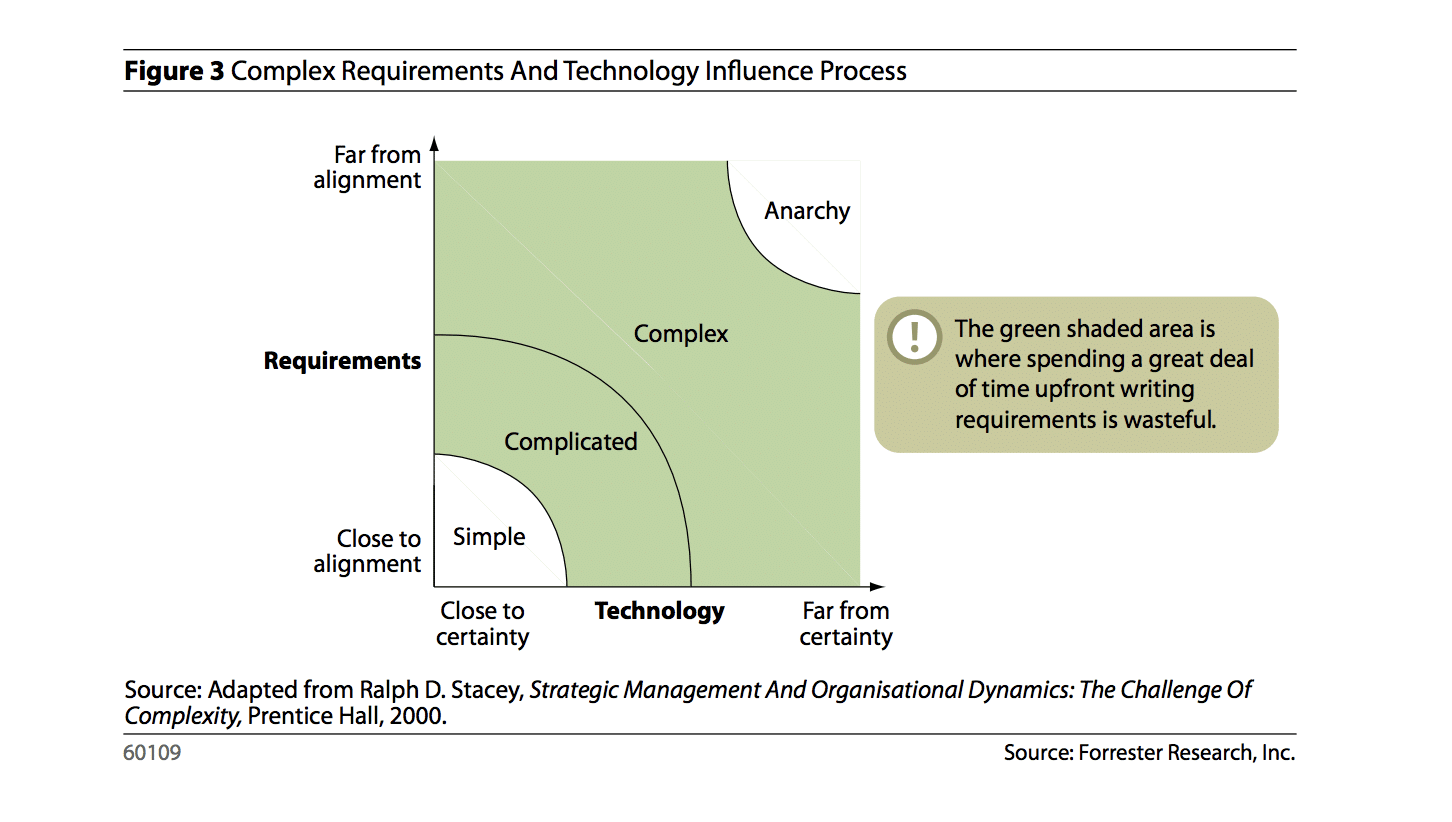
Waterfall approaches have traditionally been favored by companies with simpler, static business practices. It’s easy to see why this concept is alluring. Project owners have a strong belief that they understand how their business works, so why not just get all the planning for each process out of the way and get going already! But, as the name suggests, once you start going down a waterfall, there’s no going back up – at least not without extreme effort and pain. In fact, the more complex a technology project is, the more wasteful it is to write exhaustive requirements upfront.

A waterfall approach also doesn’t handle change very well and issues seem to most often appear at the very end. So, any expansion of scope, any process that didn’t make it into the initial planning, any deviation at all from the original plan is going to end up costing you. You also run the risk of finding out in the CRP (at which point go-live is imminent and most of the budget spent) that there are critical problems with the system that must be addressed. Finally, waterfall processes often assume that both a problem and its solution are contained in the same area. Well, you know what they say about assuming things… This operation-centric approach struggles to encompass multiple divisions involved in any given business process.

Waterfall deployments do have some positive aspects. For one thing, expectations are set early on regarding deliverables, making planning and designing more straightforward. Additionally, there are relatively clear benchmarks to measure progress. Finally, for businesses that don’t have many internal resources or stakeholders that are in different physical locations, after the requirements phase there is little need for input from the client until the very end of the project. But these benefits rarely outweigh the potential risks in moving forward with a waterfall approach.

Agile Deployments Suit More Complex Projects

On the other hand, a traditional agile implementation approaches each business process iteratively and considers how multiple business units may impact any given process. Instead of finding issues at the end, they can be addressed during multiple rounds of testing and design. For a more complex and dynamic business, an agile implementation gives the company more opportunities to ensure that the software accurately represents the business both at the outset of the project and at the end.

An agile approach isn’t without its own challenges. Although it is almost always better to have more input from the business at each stage, traditional agile deployments require a high degree of involvement, someone who is completely dedicated to the project, and teams that are in the same physical space. For many organizations, this is simply not possible for a wide variety of logistical, practical, and who-only-does-ONE-thing-in-their-role-anymore reasons. Additionally, because of the frequent reprioritization of a traditional agile deployment, it’s possible that not every sprint would be complete by go-live and it can be hard to track progress.

Hybrid Deployments = Best of Both Worlds

That leaves us with a hybrid approach that takes the best of both methods. A hybrid method defines the work upfront, borrowing defined phases of development and high-level requirement setting from the waterfall approach. Frequent iteration, testing, and cross-divisional engagement are added from the agile method. Combined, businesses can take advantage of a clear project roadmap with concrete, achievable phases where progress is easy to track, yet still flexible enough to accommodate any unforeseen challenges or changes to the business. All while exposing and engaging end users to the new solution for as long as possible (another well-documented key to implementation success) through frequent, but not all-consuming, check-ins.

This hybrid approach recognizes that any project with the scope and complexity of an ERP implementation is about more than just developing software. It’s about addressing broad operational concerns and transforming the business, so it can tackle challenges today, tomorrow, and years from now.

Ultimately, each method has its own pros and cons and it is up to the organization, along with a trusted partner, to determine which method is the best fit.

Start Your Journey with Sunrise Today!

 Whether you’re exploring your options for new business platforms, or ready to get started, we are trusted business partners for some of the world’s most well-known brands. With over 25 years of experience with the Microsoft stack, we can help you understand all the capabilities Microsoft has to offer.

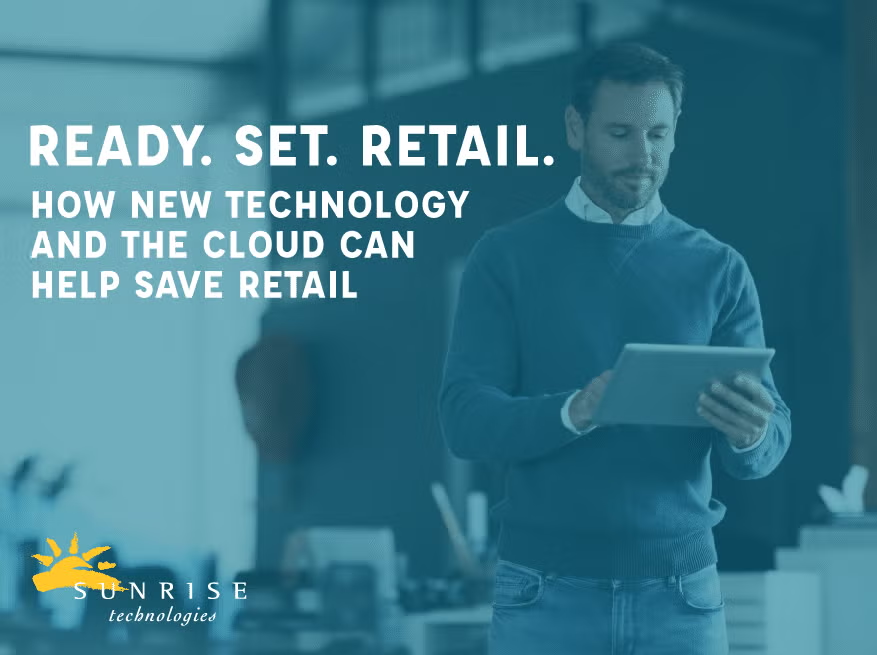
Ready. Set. Retail. How new technologies and the cloud can help save retail

Future-proof your retail business with the cloud

There are a lot of gloom and doom stories about retailers in the news recently. However, this is just a symptom of changing times and consumer expectations — not a death sentence for existing organizations. With the help of new technology and the cloud, retailers still have a chance to strengthen their brands, increase revenue, and optimize operational efficiency. In this eBook, we cover:


  • Delighting customers with the most unlikely of resources
  • Building brand loyalty with superior customer service (all from one application!)
  • Using effective merchandise management to help expand product lines
  • How embedded BI dashboards can increase speed, flexibility, and visibility

Sunrise Technologies

With the help of new technology and the cloud, retailers can strengthen their brands, increase revenue, and optimize operational efficiency. The cloud is the critical ingredient needed to build a competitive advantage to ensure your retail brand stands the test of time. Fill out the form above to gain access.

61 % of growth-oriented businesses are focused on moving from on-premise to cloud solutions to better engage customers, empower employees, and optimize operations. 

61 % of growth-oriented businesses are focused on moving from on-premise to cloud solutions to better engage customers, empower employees, and optimize operations. 

61 % of growth-oriented businesses are focused on moving from on-premise to cloud solutions to better engage customers, empower employees, and optimize operations. 

Select Retail Customer Stories

Chrome Hearts Store: Apparel and Accessories Trend Setter Grows with Microsoft ERP

Read More >>

FILA: Will Better Serve Apparel and Footwear Customers with Cloud ERP

Read More >>

Vera Bradley: Dynamics 365 at the Heart of Its Digital Transformation

Read More >>

Get Your Money's Worth

Save time and gain instant value when you deploy Microsoft Dynamics 365 with Sunrise industry extensions.

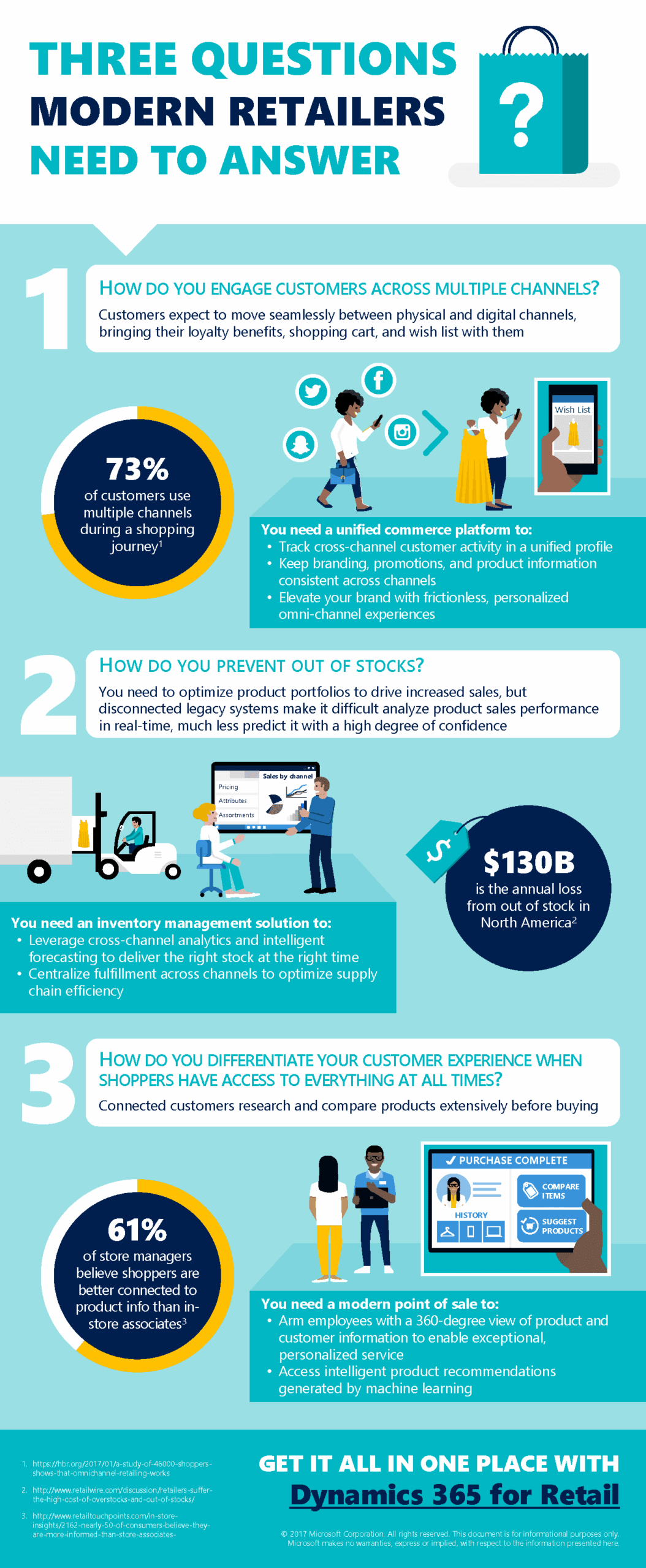
3 questions modern retailers need to answer

Get Your Money's Worth

Save time and gain instant value when you deploy Microsoft Dynamics 365 with Sunrise industry extensions.

How retail replenishment runs on Microsoft Dynamics 365

How Retail Replenishment Runs on Dynamics 365

Eliminate the hassle and expense of integrating to an external solution

Retail Replenishment is a Must

Let’s say you’re a typical brand – you’ve got retail stores, tens of thousands of inventory points to track, and multiple point of sale (POS) systems. You rely on nightly batch jobs to move your POS data into your retail, store inventory, as well as incoming transfers, many other data points into your replenishment engine, run some calculations, and push the data back into your ERP system or merchandising system. Unfortunately, these systems are all disconnected, held together by complex and fragile integrations that could break at any time. And not doing any of these steps is simply not an option — getting replenishment right is critical to sustaining any brand with retail. While there are many retail replenishment systems out there, most exist outside of your ERP/merchandising systems and require expensive integrations and ongoing maintenance. Which isn’t ideal, since the hard part of retail replenishment, the inventory management, is so intrinsically connected to those systems. But what if you could manage your retail replenishment directly in your core business application? This would eliminate much of the expense of implementing another solution and would significantly decrease the number of integrations. Well, if you have Microsoft Dynamics 365, you can!

SIMPLE. POWERFUL. ELEGANT.

As a retailer, it’s a given that you’re going to have some kind of retail replenishment plan. If you’ve already decided on Dynamics 365 as the solution for you (by the way — excellent choice) then why go through the hassle of implementing an expensive third-party retail replenishment system when you can do it all from within Dynamics 365? That’s where Sunrise 365® comes in.

Retail Replenishment Directly in Dynamics 365

We created the Sunrise 365® Retail Replenishment tool so brands could run their retail replenishment engine directly inside Dynamics 365. We were inspired to create this tool based on the experiences of our clients. After years of implementing Dynamics, a common problem our consultants repeatedly saw clients face was the extra cost and time spent integrating these tools into their ERP and merchandising systems. Implementing these systems, no matter how smoothly the project goes, is not a walk in the park and adding retail replenishment on to that was often challenging for organizations. We knew there had to be a better way. Our solution not only represents an incredible value (thanks to a very low price point) but also leads to a faster deployment of Dynamics 365.    

Minimize Integrations

Why implement more tools than you have to? Instead of choosing a costly, third-party system, Sunrise 365® Retail Replenishment lets you store all of your data in one place! It requires no integration with the built-in POS in Dynamics 365 – and only minimal integration if you want to keep an existing external POS solution.

Embedded Insights

Don’t let spreadsheets slow you down! Our retail replenishment solution uses Microsoft Power BI to serve up near real-time visual insights. Embedded throughout the solution across key workspaces, valuable, actionable information is always at your fingertips.

Tremendous Value

The beauty of Dynamics 365 is that all key functionality (ERP, CRM, BI, POS, and more!) can be found in a single solution – reducing overall complexity and total cost of ownership. Sunrise 365® Retail Replenishment builds on that foundation and makes it even easier for retailers to get the most out of their investment.

Sunrise 365® Retail Replenishment is part of our Sunrise 365® Supply Chain solution and cannot be implemented independently of that solution.

Replenish store inventory with an intelligent rules engine—without the hassle and cost of implementing an expensive third-party system.

Our solution is based on an engine that’s completely configurable inside Dynamics 365. Microsoft Power BI dashboards are embedded in the system for faster reporting and ensure that critical information is only a glance away. Built on years of retail deployment experience, our solution can:

  • Prioritize stores so flagship locations get scarce inventory first 
  • Enabling multiple fulfillment warehouses  
  • Manage replenishment parameters such as order frequency, minimal, multiples, frequency and more 
  • Import seasonality curves for seasonal lines, or other collections, managed down to the SKU level 
  • Be run in simulation mode for planning purposes 
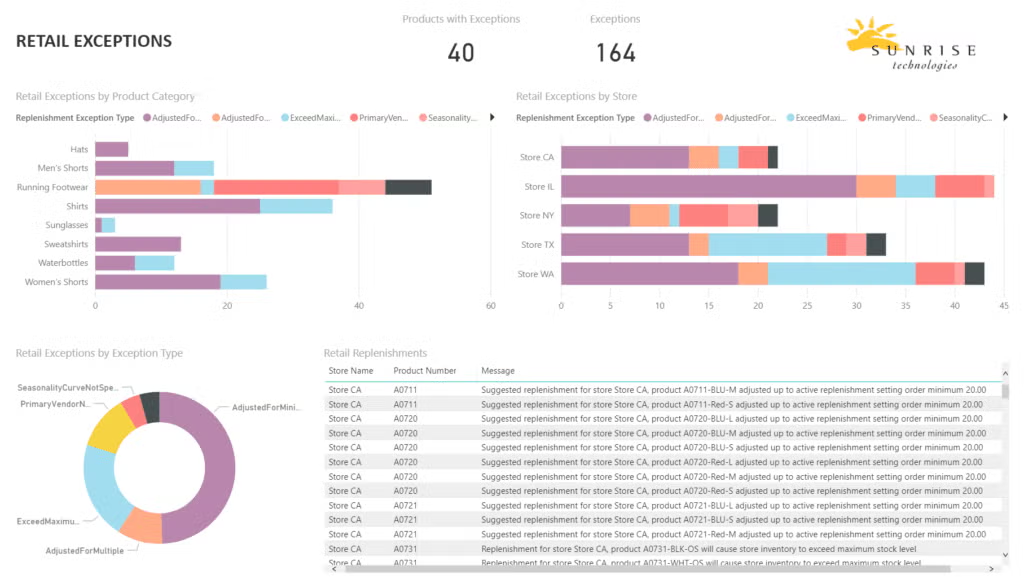
  • Show you where you’re hitting minimum or maximum stock quantities with full-blown, time-saving exception management
  • Eliminates the need to export and re-import data, since the results are already inside your ERP system 

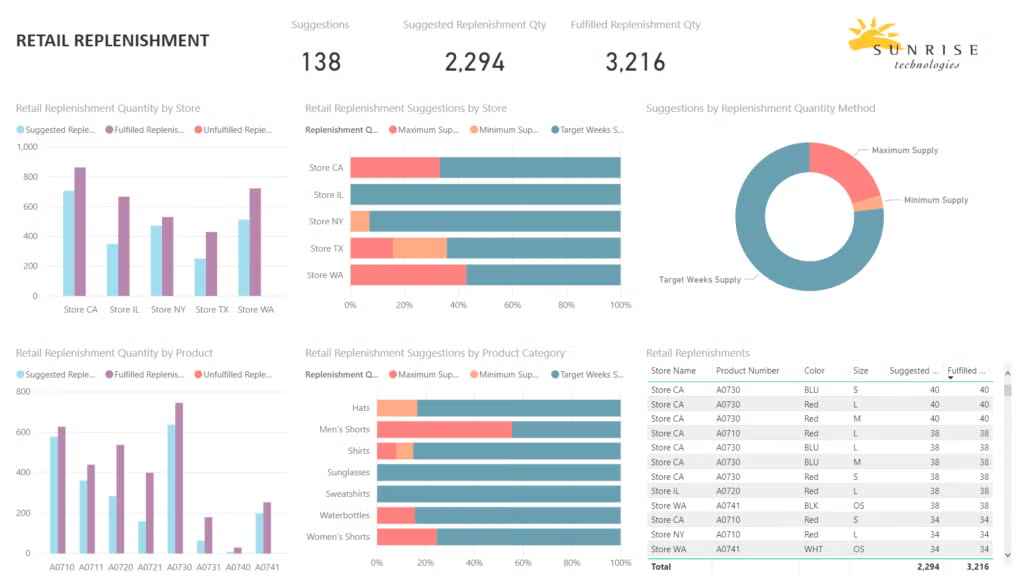
Best of all, the results of your replenishment calculations are published via Power BI dashboards.

Take a look at some of these examples.

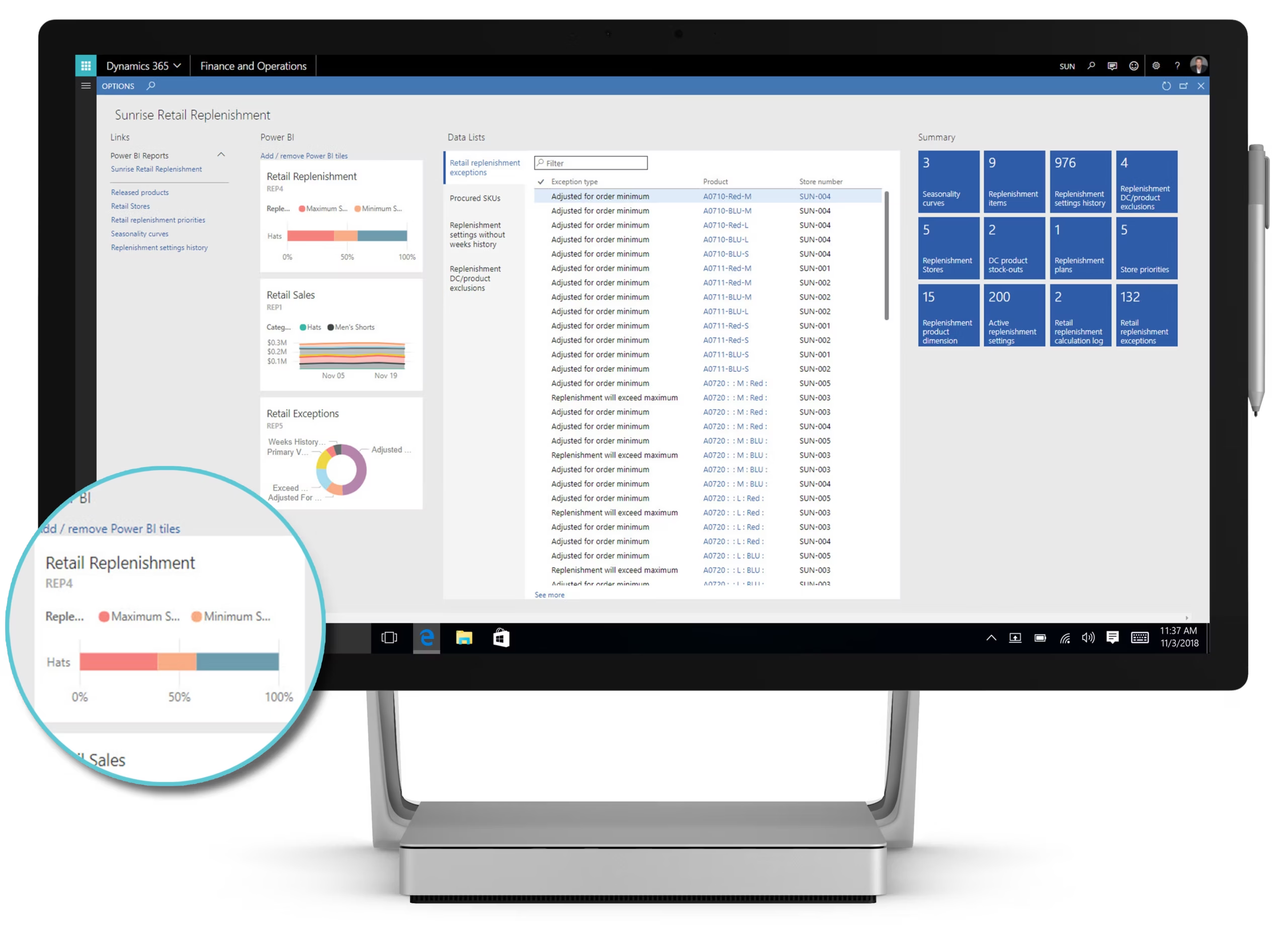
Replenishment Dashboard

The replenishment dashboard gives you a bird’s eye view of replenishment quantities by store and product. It can also offer replenishment suggestions by and offers suggestions for both as well.

Exceptions Dashboard

The exceptions dashboard tells you at a glance which product categories or which stores have the most exceptions and which categories those exceptions fall under.

Work Smarter (Not Harder)

As a retailer, it’s a given that you’re doing retail replenishment. Why go through the extra pain, effort, and expense of integrating a third-party system to Dynamics 365, when you can have everything you need built-in, at a fraction of the cost?  If you’re interested in seeing Sunrise 365 Retail Replenishment in action, you can sign up here to see a demo. Plus, check out these other resources especially for retailers.

ONE MORE THING...

As a Microsoft Retail Partner of the Year, we get it. Retail is its own beast, with unique challenges and requirements. Check out some of these other resources we’ve put together, just for retailers.

Start Your Journey with Sunrise Today!

 Whether you’re exploring your options for new business platforms, or ready to get started, we are trusted business partners for some of the world’s most well-known brands. With over 30 years of experience with the Microsoft stack, we can help you understand all the capabilities Microsoft has to offer.
Leading the way to the cloud

Sunrise Leads the Way to the Cloud with Dynamics 365 Upgrade

Sunrise completed a total move to the cloud, including an upgrade from Dynamics AX 2012 to Dynamics 365, and a migration to Azure and Office 365. While there were a number of benefits to making this move, the driving factor for each executive involved in the transition was setting an example for Sunrise’s customers and leading the charge to the cloud. Read the interactive case study to learn more!

The magic of matrices for apparel and footwear brands

Matrix Magic for Apparel and Footwear Business Systems

The must-have ERP requirement every brand needs for a perfect fit

STEP INTO THE MATRIX

If you work in the apparel/footwear industry, then you know the challenges of keeping up with multi-dimensional products — but what do you know about the solution?

If your organization is an apparel and/or footwear company, then it’s a given that you are dealing with multiple sizes, colors, and styles. While these kinds of product attributes can cause complexity (like managing products when you have thousands of SKUs), the solution, a matrix, is a bit harder to come by.

Apparel and footwear companies require a comprehensive, multi-dimensional product structure to accurately model product variants. However, this capability is somewhat of a rarity in both “vertical” fashion ERP software systems and most Tier 1 applications. We’ve often found that so-called vertical ERPs are little more than a glorified inventory management system that’s only tenuously (at best) connected to other business operations. Plus, niche players come with the added risk of questionable longevity – you never really know if they’re going to be around for the long haul.

And while Tier 1 systems certainly have the operational chops, many are too big and unwieldy to easily handle something like a matrix, so they end up requiring heavy customization. In over 20 years of ERP implementations, we’ve yet to meet anyone who was excited about tacking on thousands of extra development dollars just to handle the basic needs of their business.

If you want to really get crazy, think about trying to maintain data on products that are multi-dimensional and configurable in one of these systems. Driven by the consumer’s specific requirements, you’re talking about thousands of possible combinations that all must be intelligently managed to avoid excessive data maintenance on the product variants, their respective BOMs, and production routes.

To find a Tier 1 solution that can easily handle sophisticated, global operations as well as multi-dimensional, configurable items would be a bit like finding a unicorn in your backyard.

Well, meet your unicorn — Microsoft Dynamics 365.

Of the Tier 1 players, Microsoft Dynamics 365 has out-of-the-box style, color, size, configuration, and fit dimensions which can correctly model the inherent complexities of apparel and footwear products. While many other legacy systems have limitations in product hierarchies and multi-dimensional product management capabilities, Dynamics 365 is ready to tackle these challenges, head on, from day one.

Dynamics 365 is flexible enough to handle a matrix with ease while being powerful enough to tackle global, enterprise-level operations. And while this may seem rather magical, Dynamics 365 isn’t powered by fairy dust – it was built specifically for the intelligent cloud, and features deep integrations with other Microsoft tools (which you’re probably already using), along with other solutions like Power BI, Power Apps, and Microsoft Flow which all pull from a common data service.

It’s worth noting that while Dynamics 365 is pretty amazing, just like any other Tier 1 platform it starts out as a horizontal solution. Depending on your unique needs, it may need some industry-specific tweaks.

Now, you may be thinking, “what does Microsoft know about my business?” Well, the truth is, not a whole lot. That’s why they rely on industry partners, like Sunrise Technologies, who live and breathe specific industries to create these unique enhancements and industry-wide needs. For example, for apparel and footwear brands that are considering Dynamics 365 as their next cloud business solution, Sunrise offers a ready-to-go extension that not only gives you the industry functionality you need, but also saves a ton of time and hassle.

How does it work? So glad you asked!

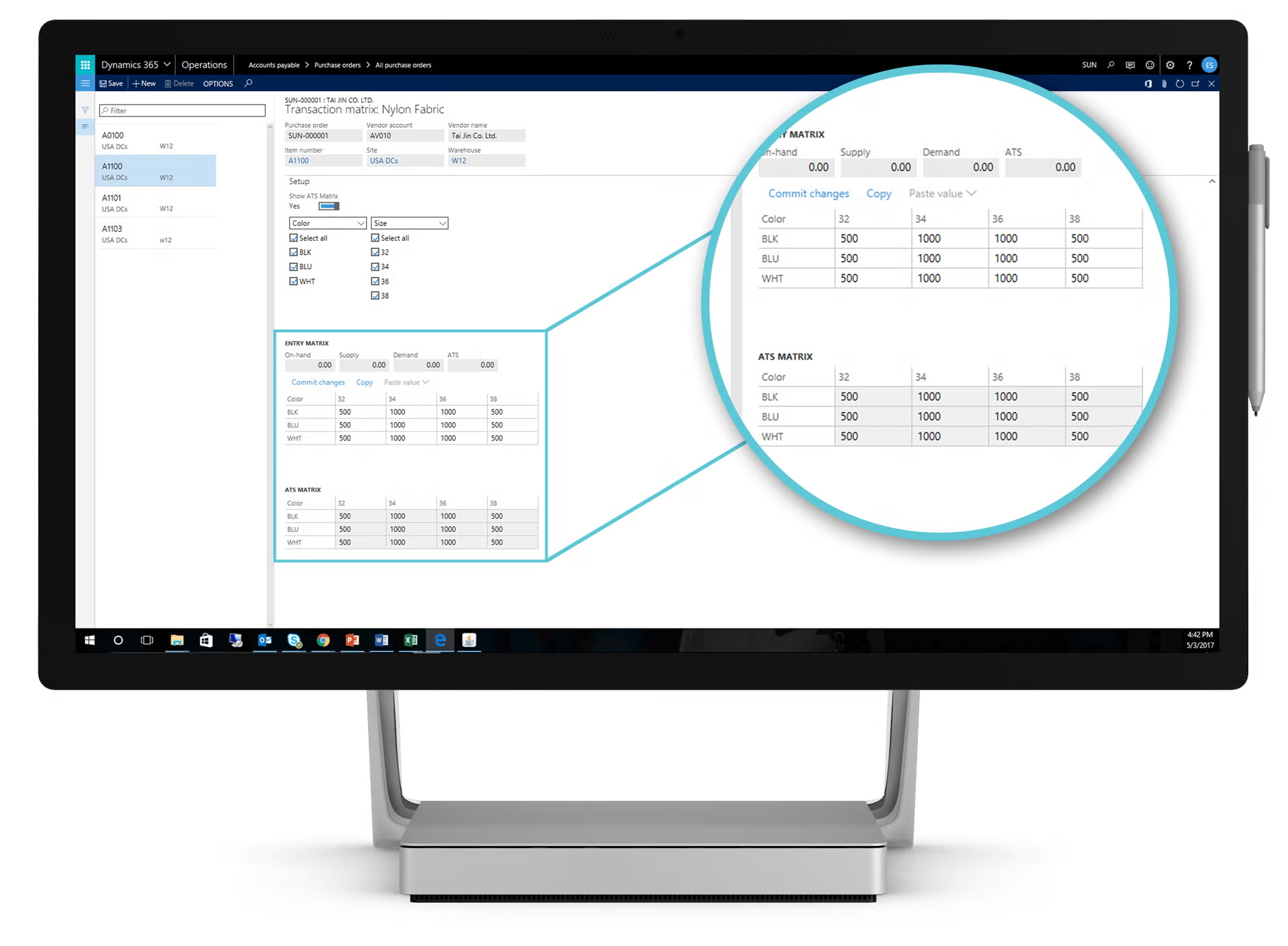
Improves speed of transaction entry with matrices
Improving the speed at which transactions are keyed reduces unnecessary hours that can be used to better the business elsewhere. Because apparel and footwear companies work with finished goods that require color, size, and fit characteristics, transactions of all types typically contain several lines for the same style, but different end SKUs. The transaction matrices for sales, purchase, and transfer orders allow for all lines of a given style/fit combination to be quickly keyed using a color/size matrix.

Improves customer service and order taking
Ensuring a positive experience for your customers is key during phone order entry or a customer service call. In these scenarios, customers will often request information regarding the availability of a given SKU. To ensure that the order taker can quickly access this information, inventory availability is displayed, using matrix entry functionality, while orders are being taken.

Enhances customer-facing documents
While every organization has its own flavor of customer facing documents, a common request from apparel and footwear companies is to provide order details in a concise matrix format by color and size. To help speed the process of refining sales order confirmations, packing slips, and invoices during an implementation, the option has been added to display a configurable matrix on each document.

Finding a Tier 1 business system that’s a perfect fit for apparel and footwear companies can be tough – until you realize Microsoft Dynamics 365 is perfect for the job (with a little help from Sunrise). Only Sunrise 365™ industry extensions improve the automation and usability of Dynamics 365 for apparel and footwear companies. This suite of add-ons and services extends the core functionality and ultimately saves time and costly customizations. And, only Sunrise is an award-winning and well-recognized industry partner crossing Consumer Packaged Goods, Manufacturing, and Retail industries.

Want to see the magic happen in real time? Sign up for one of our retail demos today!

ONE MORE THING...

If you’re wondering how else Dynamics 365 may help your business, then you’ll probably want to check out one of these additional resources.

Start Your Journey with Sunrise Today!

 Whether you’re exploring your options for new business platforms, or ready to get started, we are trusted business partners for some of the world’s most well-known brands. With over 25 years of experience with the Microsoft stack, we can help you understand all the capabilities Microsoft has to offer.

Spotlight on: Supply chain

Spotlight On: Supply Chain

Start Your Journey with Sunrise Today!

Whether you’re exploring your options for new business platforms, or ready to get started, we are trusted business partners for some of the world’s most well-known brands. With over 25 years of experience with the Microsoft stack, we can help you understand all the capabilities Microsoft has to offer.