8 reasons to get excited about Microsoft Dynamics 365

8 Reasons to Get Excited About Dynamics 365

Dynamics 365 is the game changer you’ve been waiting for

When we saw Sunrise founder, John Pence, quoted on a Microsoft blog post aimed at getting partners excited about Dynamics 365, we were inspired to share why we were excited for folks in apparel, footwear, home furnishings, consumer goods, retail, manufacturing, and distribution to see what was new in Dynamics 365.

First, it’s worth pointing out that if you hitched your wagon to Microsoft Dynamics AX and wonder what happened to it and why it’s now called Dynamics 365 – you’re not alone. The good news is there isn’t anything to worry about! The product you love hasn’t gone anywhere. In fact, it is the foundation behind the next generation of cloud business apps. You can read more about that transition here.

Now, on to the eight reasons you should be excited about Microsoft’s game-changing intelligent cloud platform.

“The powerful ability to combine the business process data from Dynamics 365 with Power BI, PowerApps, Flow, and Office 365 and deliver a creative solution that really delights the customer gets us all very excited. That’s what it is all about, creating something new that is truly better than anything our customers have ever experienced before!”

– John Pence, President and Founder of Sunrise Technologies, Inc.

1) Seamless Integrations with a Unified Platform

While many organizations are already excited about moving to the cloud, they forget that using multiple cloud solutions can lead to many of the same problems as traditional systems. Only Microsoft has all the pieces for an intelligent cloud, giving you access to a plethora of business applications and analytics tools to deliver you an affordable, value-driven, end-to-end solution on a single platform. You can run your business and make better decisions at cloud speed, and since it is all built on a common data model it’s easier to integrate, deploy, and manage for the long term.

2) Industry and Role Specific Extensions in AppSource

Microsoft AppSource is a new place to research, discover, and try apps built for Dynamics 365 at your own speed. You’ll find solutions like Sunrise’s Supply Chain 365 solution which was built to help improve forecast netting, apply industry best practices, provide advanced analytics, and streamline operations execution. This fast-growing marketplace was launched in July 2016 and there are currently more than 100 solutions available to support your journey to the cloud.

3) Added Value from Cloud Solution Providers (CSP)

Every customer wants one throat to choke and simplified billing. Working with a single vendor is just easier! And it’s possible to achieve this if you work with a Microsoft Cloud Solution Provider (CSP). As a Tier 1 CSP (in the top 3% of all partners), Sunrise can be your one-stop-shop for all Microsoft Cloud Solutions, Global Support, and billing. That means you have one vendor to call when you need something and you get one bill for all Microsoft and Sunrise add-on services. Plus, like any cloud platform, you have the flexibility to scale users up and down as needed.

4) Productivity Where You Need It

Dynamics 365 brings together the power of Microsoft’s productivity tools (Office 365, Yammer, Skype for Business, OneNote, etc.) with structured process and transaction driven applications like ERP and CRM. By marrying collaboration and productivity with business processes, users can see context where old siloed systems stopped short. For example, sales teams can easily see available-to-promise inventory on hand, while planners can forecast more easily based on open opportunities in the pipeline. What’s even more exciting is that Outlook is smart enough to recognize the context of email threads, automatically linking to referenced sales orders and highlighting KPIs right in the interface (no add-ons required!)

5) Start with What You Need

The new cloud model lets you start with the edition and applications you need so you don’t have to deploy a mammoth ERP and CRM project with a timeline that would make Methuselah feel faint. You can start with the financials-only capabilities of the Business Edition, and as you grow, you can move to the Enterprise edition to gain more power over managing an integrated supply chain, warehouse, ecommerce, and retail operations. The fact of the matter is you have a unified platform that has all the productivity, business process, and analytical tools at your disposal to turn on and off as needed.

6) Built-In Intelligence and Advanced Analytics

Dynamics 365 brings advanced analytics to your fingertips with Power BI, Cortana Intelligence, Azure Machine Learning, and IoT offerings. No other system provides more access to easy-to-use intelligence tools. As we like to say, “the more you know the faster you grow.” These tools make it possible to make smarter decisions faster by embedding intelligence into everyday work (Finally! One version of the truth for everyone.) At all levels of the organization, employees will have real time visibility into accurate data they can trust to help them do their job better.

7) Mobilize Any Business Process or Data

With the power of the common data model, Flow, Power BI, and PowerApps, you can create and extend any business process or data set on the go. Power BI dashboards and reports, and even the full Dynamics 365 interface, are available on any device and browser, making working from anywhere a breeze (and the perfect excuse to get out of awkward family dinners.) Even better is that when you combine the universal workflow engine of Microsoft Flow and the mobile app builder found in PowerApps, you’ve got the power to make some real magic. Make a tool for the shop floor, warehouse, retail floor, or field sales to simplify any task and mobilize processes.

8) Power to Differentiate Your Business

The cloud-based Dynamics 365 offering from Microsoft gives you the power to enable digital transformation faster than ever. Think of it this way: the difference between using Dynamics 365 and a more traditional system is like the difference between driving a sports car and a tank. The unified systems of intelligence found in Dynamics 365 let you easily pivot the business as new information or trends emerge. It’s easy to pick up so users feel empowered to perform to the best of their ability. It’s fast, flexible, and beautiful. You just won’t get the same responsiveness with a mammoth system and bolt-on ‘solutions’ that don’t talk to each other and take a fleet of people to maintain. With Dynamics 365 you can easily speed past your competition while they continue to plod along.

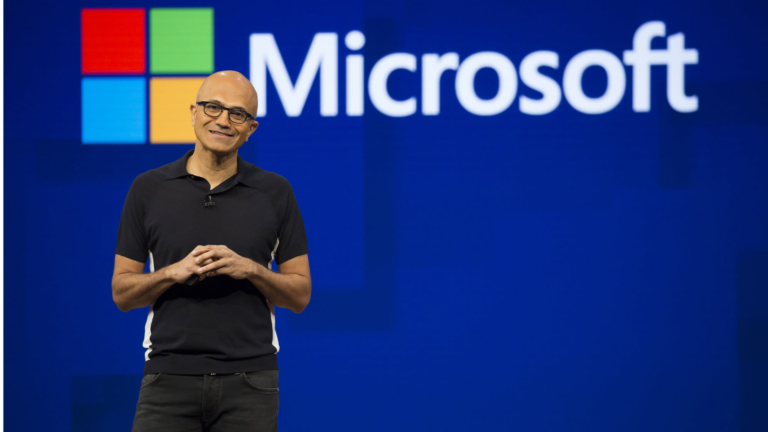
Dynamics 365 is light years ahead of any other Tier-1 solution and sets a high bar for any future of business applications that try to catch up. When Microsoft CEO Satya Nadella shared his vision for Dynamics 365, we couldn’t have been more excited about the opportunities it created – and we hope you’re just as excited too.

Start Your Journey with Sunrise Today!

 Whether you’re exploring your options for new business platforms, or ready to get started, we are trusted business partners for some of the world’s most well-known brands. With over 25 years of experience with the Microsoft stack, we can help you understand all the capabilities Microsoft has to offer.

5 reasons why our consumer brand customers choose Microsoft Dynamics 365

5 Reasons Why Our Consumer Brand Customers Choose Microsoft Dynamics 365

Our customers in apparelfootweartextileshome furnishings, and consumer goods manufacturing continue to face numerous industry challenges, especially as production becomes more decentralized and complex, and expanding global supply chains make it difficult to manage and maintain product control. While all of these issues are not going away, our customers are learning to embrace change and turn these challenges into opportunities.

One way they are doing this is by investing in ERP technology like Microsoft Dynamics 365, which is ideal for helping brands gain greater end-to-end control and the visibility with built in customer engagement (CRM) and business intelligence (BI) capabilities. This cloud solution puts the levers needed to drive greater profitability in the fingertips of users at all levels of the organization, on any device, anywhere.

Here are the top 5 reasons why our customers choose Microsoft Dynamics 365:

1. Multi-dimensional item management

With no customization required, Microsoft Dynamics 365 natively handles style, color, and size complexities. Sounds simple but anyone who has tried to fit this concept into the typical “part number” item technique of a traditional ERP solution knows this is a big deal. The system comes with item number (think style) and four additional dimensions.  This allows for multiple size scales, configuration dimensions like packaging, in addition to the standard color and size requirements.  This concept extends also to every type of item such as raw materials, roll goods, cut parts, and findings.  Each type of item can employ a different configuration of dimensions, which is exactly what this vertical needs in an ERP system. Plus, our exclusive Supply Chain 365TM extension adds transaction matrices across much of the system simplifying usability.

2. One Solution to Manage a Global Business

In today’s market, almost all consumer brand manufacturers are doing business in multiple countries and regions across the world.  Because of this, the supply chain has become much more difficult to manage while maintaining costs and customer service. One huge advantage of Microsoft Dynamics 365 is that it can support global business processes from a single cloud solution. Multiple currencies, time zones, languages, and compliance with multiple banking and reporting standards can all be managed from one solution, helping to provide consistency and standardization across various business entities around the world.

3. Unified Commerce Across Channels

Whether it’s through retail, wholesale or eCommerce, most brands today use multiple channels to sell their products. Due to this increased channel complexity, companies need to be able to manage and optimize the supply chain and inventory across these channels more effectively.   Microsoft Dynamics 365 integrates multi-channel selling directly into the ERP solution and even includes a built-in Point of Sale (POS) and eCommerce engine so our customers truly see a complete view of their customers and eliminating the channel silos of the past.  Wholesale, retail, and e-commerce live side-by-side within the application, intelligently sharing inventory, customer information, and supply chain visibility.  This concept provides a powerful platform to service the customer in an integrated manner that optimizes a company’s resources.

4. Supply Chain Visibility and Collaboration

The supply chains of brands are difficult to model.  Global in nature, with multiple levels of manufacturing required, they stress the capabilities of even the most robust ERP solutions.  Microsoft Dynamics 365 really shines by handling complex supply chains out of the box. From a sophisticated multi-site model that handles lead time variation, different vendor sourcing models, and multiple raw material suppliers, Microsoft Dynamics 365 can keep up with the demanding needs of our customers. And with our Supply Chain 365 extension, our customers also enjoy advanced forecasting, planning, allocation, execution, and analysis capabilities.

5. It works like a Microsoft product

Last but definitely not least, the product works like all of the other Microsoft products that are familiar to our customers.  This speeds up training, makes users comfortable with the system, and leverages the tools they already use in Office 365 like Excel, Word, Office, Skpye for Business, and Exchange.  In the end, this saves our customers money and insures a low total cost of ownership.

Interested in learning how Microsoft Dynamics 365 can help you? Contact our team or watch these videos to see a quick overview.

Start Your Journey with Sunrise Today!

 Whether you’re exploring your options for new business platforms, or ready to get started, we are trusted business partners for some of the world’s most well-known brands. With over 25 years of experience with the Microsoft stack, we can help you understand all the capabilities Microsoft has to offer.

Standardize your business with a single-instance ERP

Standardize Your Business With A Single Instance ERP

Globalization has obviously had a tremendous impact on the way we live, as well as the way we do business. The world is steadily becoming smaller and more interconnected, and this transformation has not been missed by the Consumer Packaged Goods (CPG) industry. In fact, it has probably been one of the most impacted industries given consumers’ never-ending appetite for the latest and greatest gadgets, apparel, footwear, cosmetics, and housewares.

With high volumes, low margins, evolving distribution networks, and high product turnover, CPG companies are realizing that there’s little room for error and all areas of their businesses need to be optimized and operating at the most efficient level possible. These challenges have forced CPG companies to adapt and change the way they do and manage their business, especially when it comes to enterprise technology solutions, like ERP and CRM. Many companies are realizing they can no longer operate successfully with disparate technology solutions and siloed data across eCommerce, Retail, Wholesale, Catalog, and Call Centers–and maybe even across global regions and legal entities with different currency and local regulation requirements.

CPG companies looking to compete on a global scale are standardizing business applications across the enterprise and doing so through a more robust unified cloud platform for ERP and CRM with built-in analytics like Microsoft Dynamics 365 that’s tailored for global manufacturing, retail, and distribution businesses. One huge advantage of the solution is that it can support global business processes and requirements from a single instance of the software. This means multiple currencies, time zones, languages, and compliance with multiple banking and reporting standards can all be managed from one solution, helping to provide consistency and standardization across various business entities around the world.

There is a lot to consider when evaluating solutions and not everyone requires a global ERP, but here are some compelling benefits for choosing a single instance ERP solution:

  • Financial data will live in one application and will originate from one source, eliminating consolidation errors and greatly reducing the time it takes to close the books.
     
  • Stronger supply chain visibility and ability to create new revenue opportunities while cutting costs (i.e. companies can run reports that show cross-promotion opportunities, places where they could redeploy inventory or leverage purchasing power).
     
  • Centralization of resources across organization improving efficiency and reducing duplication of efforts (i.e. centralizing procurement for the entire business vs. individual staffing in each location).
     
  • Reduction in information technology support costs including IT staff, infrastructure, applications, and elimination of legacy systems.
     
  • Ability to create a stronger organizational foundation for growth and scalability (i.e. acquire or scale new businesses quickly by leveraging standard ERP platform and processes).
     

Are you interested in learning more about what a global single-instance ERP solution can do for your business? Check out these additional resources:

Start Your Journey with Sunrise Today!

 Whether you’re exploring your options for new business platforms, or ready to get started, we are trusted business partners for some of the world’s most well-known brands. With over 25 years of experience with the Microsoft stack, we can help you understand all the capabilities Microsoft has to offer.

Microsoft Dynamics 365 demystified

Dynamics 365
Demystified

First look at how erp and crm are now on one beautiful platform in the cloud

Prior to the 2016 Worldwide Partner Conference, Microsoft surprised everyone with the announcement that Dynamics AX, Dynamics CRM, and Project Madeira would be rebranded under one new title: Dynamics 365.

While the announcement was a surprise, it wasn’t exactly a shock. The cloud version of Microsoft Dynamics AX (code name AX7) was released in March 2016, with Project Madeira, a cloud-based financial solution for the SMB sector, introduced as a beta program shortly thereafter. Dynamics 365 is simply the latest step in Microsoft CEO Satya Nadella’s long-term plan to change the face of business.

When Dynamics 365 launches later this fall there will be two versions for organizations to pick from — Enterprise and Business. Dynamics 365: Enterprise is a combination of Microsoft Dynamics AX and Dynamics CRM/OL, while the Business edition draws from the new features of Project Madeira, and a lite version of CRM Sales and Marketing. Microsoft is making a clear distinction that the Business edition is “optimized for 10-250 employees” and actually maxes out at 300 seats. The Enterprise edition on the other hand, is “optimized for 250+ employees” and with Dynamics AX as its operational and financial backbone, it is clearly better suited for more complex business models. 

Currently, both editions are set to debut during the Dynamics Summit this October and go on sale starting November 1st. However, it is worth noting that while Dynamics 365: Enterprise will be a full release, only the financial portion of the Business Edition will be live at that time. The additional sales and marketing functionality for Dynamics 365: Business is slated for release in the Spring of 2017.

Dynamics 365 brings together Microsoft’s CRM and ERP cloud offerings into one cohesive service with specific, purpose-built apps for business functions like Finance, Sales, Customer Service, and Supply Chain Operations — with built-in insights, intelligence, and workflows. The apps are designed so they can be easily and independently deployed, which means you can start with the business area you need and scale as the business demands. All Dynamics 365 apps, plus the larger portfolio of cloud solutions like Office 365, will ultimately share a common data model so it will be a breeze to adopt additional capabilities.

While this is an innovative approach to business applications the best news is that Dynamics 365 is simply taking products we already know and love (Dynamics AX and Dynamics CRM) and reconfiguring them into something even better. Additionally, modules in Dynamics 365 will continue to be available for individual purchase and implementation. For more information, you can also check out our FAQ.

Microsoft’s vision for Dynamics 365 is revolutionary, and we’re on board with all the changes. In fact, as one of the earliest partners Gold Certified as a Cloud Services Provider, we’ve been hard at work over the past year ensuring that our solutions and our consultants were ready for the next evolution in Microsoft’s offerings.

Start Your Journey with Sunrise Today!

 Whether you’re exploring your options for new business platforms, or ready to get started, we are trusted business partners for some of the world’s most well-known brands. With over 25 years of experience with the Microsoft stack, we can help you understand all the capabilities Microsoft has to offer.

Dynamics 365 FAQs

Dynamics 365 FAQs

What is Dynamics 365?

Dynamics 365 will bring together the best of Microsoft’s CRM and ERP cloud offerings into one cloud service with specific, purpose-built apps for business functions like Finance, Sales, Customer Service, and Supply Chain Operations—with built-in insights, intelligence, and workflow. The apps are designed so they can be easily and independently deployed, which means you can start with the business area you need and scale as the business demands. All Dynamics 365 apps, plus the larger portfolio of cloud solutions like Office 365, will share a common data model so it will be a breeze to adopt additional capabilities.

Why the name change?

Dynamics 365 is Microsoft’s next generation of business apps in the cloud that bring together the full power of Microsoft productivity, advanced analytics, Power BI, Azure IoT, and a new common data model platform. As such, two worlds are coming together: structured business processes and unstructured productivity. The move is quite significant and warranted a name that reflects this completely fresh approach to business applications in the cloud. Dynamics 365 Enterprise Edition combines the products formerly known as Dynamics AX and Dynamics CRM along with PowerApps, Power BI and Flow into one common platform that you can mix and match or purchase as a plan with significant cost savings.

How does Dynamics 365 benefit customers?

It can’t be understated how gorgeous, modern, and familiar the user experience will be for employees — just like Office 365 — and here are 4 reasons why you’ll love it.

  • Start with what you need. Dynamics 365 business apps fit specific roles so you can start with what you need (like finance and then supply chain operations or customer service) and grow at your own pace. Traditionally you’d have to purchase the entire ERP or CRM together but with this decoupled approach, you can start where you want, and pay only for what you need.
  • Productivity where you need it. By connecting the structured workflow of business applications and processes with the unstructured work of collaboration and productivity, employees will be empowered with a merged world that reduces task/screen switching. The common data model makes it easier to surface context across Office 365, Dynamics 365, Power BI and more.
  • Gain insights from built-in intelligence. Everyone wants dashboards and dreams of predictive and prescriptive analytics. By infusing business applications and processes with big data, advanced analytics, and IoT out-of-the-box, the tools can proactively guide employees and customers to optimal decision making and outcomes. With the power of the cloud and machine learning, you can connect what matters and transform insights into action.
  • Be ready for growth. Organizations can reimagine their business models with a consistent, flexible, and extensible platform. These nimble applications will let them compose, modify and extend processes in real-time. You can deploy true unified commerce at a global scale and continue to grow and evolve the business software for a lifetime — all without the cost, complexity, and inflexibility of other solutions.

Do Dynamics 365 apps really work together seamlessly ?

With a common data model across Office 365, Power BI, Cortana Analytics, ERP (formerly Microsoft Dynamics AX), CRM and many other cloud business applications, it will be so much faster and easier than ever before to deploy and integrate solutions. Basically, all of Microsoft’s intelligent business apps will align to the new common data model, and an extensibility model, that combines existing tools with PowerApps (an app builder) and Flow (a trigger based workflow builder like Zapier and IFTTT). This evolution eliminates historical boundaries created by business applications like CRM and ERP.

What does it mean to have intelligence built-in?

All of the Microsoft Dynamics 365 applications have built-in insights, predictive intelligence, and workflow optimization, which will be delivered through simple, easy-to-use, mobile and web-based experiences with offline capabilities. Power BI and Cortana Intelligence will be natively embedded to help customers achieve their business goals with predictive insights, prescriptive advice, and actionable next steps. Dynamics 365 will also have connected experiences to Microsoft PowerApps and Microsoft Flow which provide application extensibility and share a common data model.

What is the common data model and what role does it play with Dynamics 365?

The common data model is a cloud-resident business database, built on years of experience with Microsoft enterprise customers. It will come with hundreds of standard business entities spanning both business process (Dynamics 365) and productivity (Office 365). The beauty of this approach means it will be far easier, faster, and cheaper to deploy and integrate apps than ever before with a consistent schema under the hood.

How many users can Dynamics 365 support?

There are two editions of Dynamics 365 – Enterprise and Business. Microsoft Dynamics 365 Enterprise Edition is optimized for large organizations over 250 employees. Microsoft Dynamics 365 Business Edition is designed for organizations up to 250 employees. Of course, the size of your organization does not necessarily dictate the version that is the best fit for you. The Enterprise version will include operations (ERP), customer service, marketing, sales, field service, and project service automation modules (basically all the decoupled pieces of CRM plus Dynamics AX for financials and supply chain). The Business version has Financials, Sales, and Marketing drawing from the new features of Project Madeira, NAV, and a lite version of CRM. It won’t have full global, omnichannel ERP capabilities like the Enterprise Edition so consumer brands and retailers (regardless of size) that are more multi-brand, multi-channel, multi-product, and multi-country should look to the Enterprise Edition (known today as Dynamics AX).

How much will Dynamics 365 cost?

The business application industry has traditionally presented customers with a range of siloed applications. With the Dynamics 365 launch, Microsoft has given customers new choices. While the traditional approach allows customers to license Dynamics 365 by application (Financials, Operations, Sales, Marketing, etc.), they will also be able to license heavy users using a “Plan” or light users as “Team Members”. Both options provide significant savings for an organization. The new plan-based approach will give customers the flexibility they need to support modern, agile, and diverse employee roles – enabling them to access full functionality across all applications within Dynamics 365 with full read/write capabilities. While Team Members are considered ‘light users’ the functionality granted to them is by no means light, with nearly the same range of capabilities as a Plan user. Tiered pricing options are also available for select plans and Team Member licenses. For more information on the different licensing options, please see our Licensing Page.

The full Enterprise Edition of Dynamics 365 will be available worldwide November 1, 2016. The Business Edition will be available on the same date, but will only launch with the Financials app. The Sales and Marketing applications, as well as plan-based licensing for the Business Edition, will be released Spring 2017.

How will Dynamics 365 be licensed?

Not only is the product strategy evolving, but Microsoft has also reinvented its approach to pricing and packaging – liberating customers from traditional business application licensing.

Dynamics 365 customers have a greater degree of flexibility in choosing the licensing approach that not only works for their organization, but achieves the highest use of the product for the lowest cost.

There are currently three licensing options available. Organizations have the capability to mix-and-match to achieve the perfect blend for their business’ needs and budget, and all licenses will be on a single monthly bill.

  • Application-Only: Available upon launch in both the Enterprise Edition and the Business Edition, licensing by application is a more traditional approach. Those with application specific licenses still have access to embedded business intelligence and app specific extensibility. While application licenses are competitively priced, the potential for cost-savings decreases steadily with each standalone license purchased. Those individuals who need access to multiple applications should consider available plans for their edition.
  • PlansAvailable upon launch of the Enterprise Edition, with a roll out planned for the Business Edition once the Sales and Marketing applications are released in 2017. Plans are one of the new ways Microsoft is offering greater accessibility and flexibility to businesses. Designed for heavy or “Full Users” plan licenses cross multiple applications, allow for full read/write permissions, and offer a greater level of extensibility. There are currently two plans available for the Enterprise Edition. Plan 1 covers every application previously found in Dynamics CRM while Plan 2 encompasses everything found in Plan 1 + the Operations app (which includes all the functionality previously found in Dynamics AX). Select plans will also be eligible for tiered pricing. For the Enterprise Edition, there must be a minimum of 20 named users on either Plan 1 or Plan 2.
  • Team Members: Available upon launch in both the Enterprise Edition and the Business Edition. Team Members (or ‘light users’) have significant functional capabilities at a significantly lower price point. The primary difference between Team Members and Full Users on a plan are read/write permissions, with Team Members having more limited capabilities. Organizations that select Dynamics 365 Enterprise Edition are eligible for tiered pricing for Team Member seats, and do not have a seat limit. Business Edition Team Member seats do not qualify for tiered pricing and have a limited number of seats available.

All licenses include embedded intelligence and extensibility (the extent of which is determined by license type). These exciting developments change the speed and affordability of business applications since you only pay for what you need, when you need it, with this new, flexible licensing approach.

Microsoft wants customers to have the choice to start where they want (whether that’s by business line or implementing the whole kit-and-caboodle). To date, the Dynamics AX and CRM solutions have been licensed by application, requiring cross-functional buying committees and large capital investments. But Gartner estimates that by 2017, 50% of all IT spending will be outside of the CIO’s control, shifting to line of business executives. Therefore, the market demands a new approach and this is where Microsoft is creating a unique advantage, giving line of business leaders the power to start with one business function and expand as the business demands. The new licensing model means growth and scale will be easy when all apps share a common business platform and data model.

What impact does Dynamics 365 have on ROI?

The flexible licensing of Dynamics 365 improves ROI as companies pay for access to the capabilities they need regardless of which application it resides in. This is unique in a market where most software vendors require customers to buy licenses for different applications and modules – resulting in 2-3x increased cost. And where other vendors fall short, Dynamics 365 Enterprise licensing includes built-in analytics with Power BI, and full usage rights to PowerApps and Microsoft Flow to compose new apps and easily extend, modify, and integrate with existing ones.

Will Dynamics 365 be available on-premises?

Yes. Dynamics 365 is a cloud service and Microsoft licensing allows for on-premise or private cloud deployments. Microsoft will continue to innovate Dynamics AX on-premise solutions and offer connectors for customers who wish to use a hybrid of on-premise and cloud solution. The on-premise version is Dynamics AX 2012 R3 and it is a completely different code base that will soon be called Dynamics 365 On Premise but be advised that it will not stay current with the latest feature releases. Our recommendation is to look to Dynamics 365 Enterprise or Business editions in the cloud as the last ERP you’ll ever need. You’ll always stay fresh and never need to invest in major upgrades down the road again.

Should customers invest in Dynamics AX today, or wait for Dynamics 365?

From our point of view, and based on the information provided by Microsoft, the Operations component of Dynamics 365 is really just a rebranding of the full Microsoft Dynamics AX product as we are implementing it today. If an organization would like to add on the additional applications (Customer Service, Sales, Field Services, etc.) once Dynamics 365 is released, Microsoft has already indicated that there will be a clear path to do that. So, why wait to leverage the power of Microsoft’s proven, cloud-based business applications when you can get started on the project today?

Where do you find industry extensions and apps for Dynamics 365?

As a business user, sourcing apps tailored to your role, your business, and your industry can be challenging. That’s where Microsoft AppSource will help you discover solutions and content packages from Microsoft-certified partners like Sunrise, including those built on top of Dynamics. Here you can find pre-built industry solutions like the Sunrise Supply Chain Solution for Apparel & Footwear industries so you can hit the ground running with best practices built on top of the Dynamics platform.

How is AppSource different from Microsoft’s other marketplaces and destinations for apps?

AppSourceLine of business SaaS apps
Office StoreExtensions to Office
Azure MarketplaceServices for building apps on Azure and IT solutions templates for Azure
Windows StoreWindows 10 apps and games

Does Microsoft AppSource support the purchase of apps?

No. Currently, you can only discover Microsoft-certified partner solutions. Some are small apps that can be tried independently, and others are so deeply embedded in ERP and CRM functionality that they require a demo. From AppSource you will be able to contact a partner to engage in next steps.

Does Dynamics 365 work for apparel, footwear, consumer goods, manufacturing, and retail companies?

Yes. Microsoft’s industry strategy has not changed. They have created a cloud platform on top of which partners like Sunrise can create added value specific to micro verticals. Sunrise has long been a leading, award-winning partner for these verticals and offers pre-built extensions and implementation accelerator toolkits that will meet your specific business needs and allow you to hit the ground running.

I’ve heard references to Dynamics 365 for Operations and Dynamics 365 for Financials — what’s the difference?

Dynamics 365 for Operations and Dynamics 365 for Financials are just another way to describe applications found in the different editions of Dynamics 365. Dynamics 365 for Operations falls under the Enterprise Edition and encompasses everything previously found in Dynamics AX – including financial functionality. Dynamics 365 for Financials is only found in the Business Edition and is based on Project Madeira – a new cloud-based financial solution which was modeled after Dynamics NAV.

Once you determine which edition is the best fit for your organization, you can trust that you’ll have robust financial functionality, no matter what.

Start Your Journey with Sunrise Today!

Whether you’re exploring your options for new business platforms, or ready to get started, we are trusted business partners for some of the world’s most well-known brands. With over 25 years of experience with the Microsoft stack, we can help you understand all the capabilities Microsoft has to offer.

Microsoft’s vision for the future of Cloud ERP

Microsoft's Vision For Cloud ERP

Ceo satya nadella explains

For consumer brands, manufacturers, and retailers keeping up with the pace of change is both critically important to survival and tremendously difficult to do with monolithic, outdated, siloed point applications.

Your future growth and survival depend on enabling expansion through acquisitions and organic growth through the addition of new product lines, channels, and global markets. The old way of deploying business applications isn’t going to cut it in the future. Your survival requires a fresh approach that promotes intelligence, productivity, collaboration, flexibility, and growth.

This is Microsoft’s dream…helping companies do and achieve more with an intelligent cloud of business apps.

With finite resources, productivity is critical for businesses to scale. According to the American Psychological Association, 40% of a worker’s productivity time is lost switching between tasks and screens. This costs the global economy $450B per year.

Companies aren’t looking to just automate their business processes with tools like ERP and CRM. They want to embed productivity tools directly into business processes to save time and get more productivity from employees.

Employees should be able to execute structured (ERP and CRM) and unstructured productivity and collaborative processes (Office 365 and Skype for Business) without switching screens.

In Microsoft CEO Satya Nadella’s own words:

Digital transformation won’t happen with another bolted-on cloud app or a giant implementation of monolithic and closed business application packages that take half a decade to customize and deploy, and another for employees to begrudgingly learn how to use.

Digital transformation requires systems of intelligence that are tailored to each industry, each company, each micro-task performed by each person. Systems that can learn, expand and evolve with agility as the world and business changes.

Each system of intelligence needs to be centered around a person and encompass anything that the person needs to do in the context of their role. This means removing the impedances that exist between the business solutions people work across today; breaking down barriers between productivity, collaboration and business processes; and creating a new customer-centric business model aligned to the realities of these roles today.

You can’t have this kind of uber-productivity without rethinking the entire platform and approach to business applications (which is why the announcement of Dynamics 365 changes everything).

Achieving this dream has been an incredibly important initiative for Nadella in this mobile-first, cloud-first world. Last year he made the decision to bring the Dynamics business into the mainstream engineering, marketing, and sales teams at Microsoft–ranking it as high in importance as Office 365 and Microsoft Azure.

Satya’s passion for this vision and reasons for making this strategic decision are abundantly clear:

The momentum Microsoft has gained toward this vision is incredible. As usual, the company is thinking differently than any other on the market–coming at the problem from the bottom up by developing a unified platform that pulls from a common data model (CDM). This is in direct contrast to ‘the other guys’ who continue to market Frankenstein systems disguised as a single interface. Although pretty on the outside, under the surface lies a mishmash of systems acquired over decades, pulling from a variety of databases. With Microsoft, a customer and a product exist in one database with one business logic.

It is clear that the days of piecemeal ‘solutions’ are numbered. As businesses continue to grow in complexity, they will no longer be able to justify being slowed down by clunky integrations. The expectation, like many of the tools we use today, will be for business applications to “just work”. And they will — with Dynamics 365.

Sunrise is ready for this new future. We were one of the first Microsoft Partners to be recognized as a Gold Certified Cloud Services Provider in addition to our Gold Certification in ERP. Additionally, our Supply Chain Solution was one of the first partner solutions that was accepted to be included in Microsoft’s new marketplace, AppSource, and is now a featured app. Frankly, we can’t wait to see all the possibilities that Dynamics 365 will bring!

Start Your Journey with Sunrise Today!

 Whether you’re exploring your options for new business platforms, or ready to get started, we are trusted business partners for some of the world’s most well-known brands. With over 25 years of experience with the Microsoft stack, we can help you understand all the capabilities Microsoft has to offer.

5 fast facts: Why Sunrise Technologies is the Microsoft partner for you

Why Partner With Sunrise?

5 reasons you can trust us to implement the last ERP and CRM with embedded BI you’ll ever need

Is a new ERP like Microsoft Dynamics 365 in your future? Consider this…your mother was right…picking the right partner is important. Basing your technology and implementation selection on budget or location alone, without considering industry experience and pre-built solutions, can have you headed straight towards an over budget, overly customized, headache of a deployment.

At Sunrise, we believe that every morning’s sunrise is an invitation for relentless improvement that will support a brand’s growth into new product lines, channels, and global markets. Challenging business as usual with a fresh approach to ERP, CRM, and business intelligence on a single platform requires us to go far beyond just making technology work.

It is critical that we deliver our clients real solutions that can help you:

  • Grow your business globally
  • Tighten the links of your supply chain
  • Expand across multiple channels
  • Lower your overall costs

Microsoft has recognized our achievements and ability to deliver real industry solutions with a number of awards. We have been Retail Partner of the Year, Distribution Partner of the Year and members of the Microsoft Dynamics Inner Circle and President’s Clubs that celebrate the top partners worldwide.

Beyond this proven track record of delivering real industry solutions, here are 5 reasons you can trust Sunrise as your partner for a lifetime.

1. We speak your language

No other partner knows your industry as well as Sunrise. With over 22 years of experience in ERP and BI, and hundreds of successful industry focused go-lives, it’s no wonder we have a reputation for knowing our stuff. You’ll have a more productive system evaluation, deployment, and ongoing support with our team of Microsoft certified specialists. This vertical focus on manufacturing, distribution, and retail offers deep expertise in consumer goods (textiles, apparel, footwear, accessories, home furnishings, furniture, cosmetics) and other discrete products has allowed us to streamline our implementations with our exclusive Sunrise 365TM solutions.

2. Hit the ground running

With an industry partner, you’ll get to value faster with less customizations. You’ll be able to start with a system that’s ready to go with industry solutions built for Dynamics 365. Our exclusive Sunrise 365 solutions immediately deliver industry best practices and speed up implementations with pre-configurations, a business process library, and advanced supply chain capabilities.

The Sunrise 365 solution family is consists of and supported by:

3. Ready for the cloud

Cloud is a strategy to minimize costs and speed up business agility. By 2020, only 10% of business applications will be on premise and our customers are quickly adopting the Microsoft cloud solutions. Many partners are resisting this change but Sunrise is far ahead of the pack and gaining more momentum every day. As a Microsoft Gold Certified Partner and a high performing Cloud Solution Provider with tons of cloud projects underway, we’re ready to handle the future and our industry solutions are ready too. Sunrise has never missed a product update from Microsoft, so we’re able to offer the latest and greatest on day one. In fact, since Dynamics AX moved to the cloud and became Dynamics 365, several version updates have been released from Microsoft and within a week, our solutions were updated as well.

4. Local (but global)

Headquartered in Winston-Salem, North Carolina, Sunrise has regional offices spanning North America, Europe, and Asia. No matter where you are in the world, count on Sunrise to bring industry expertise to the table, everywhere you do business. It’s important that we are a global company because it helps us better serve our global customers. Sunrise is headquartered Winston-Salem, North Carolina with regional offices located in Dallas, Texas; Salt Lake City, Utah; Xi’an, China and Lugano, Switzerland. Most of our team is remote and we even offer internally managed, offshore development services that pass lower costs onto our customers.

5. Pay-as-you-go support

Projects don’t end at go live. Information systems are living and breathing, constantly changing and evolving with the business direction. Why hire freelance consultants or expensive full time staff when you can leverage Sunrise Global Support? This is an a favorite service among our customers because they gain a cost-effective support umbrella with 24×7 coverage across North America, Europe, and Asia. Let our team maximize your investment in Dynamics 365 or Dynamics AX for a lifetime, freeing up your team for more business critical initiatives.

Other Resources
We aim to be your one stop shop for Microsoft cloud solutions with value-added services and products that help reduce the total cost of ownership of business applications. We have been partnered with Microsoft since the beginning because its solutions empower employees to embrace change and enable businesses to thrive with better decision making.

Download the PDF here.

Start Your Journey with Sunrise Today!

 Whether you’re exploring your options for new business platforms, or ready to get started, we are trusted business partners for some of the world’s most well-known brands. With over 25 years of experience with the Microsoft stack, we can help you understand all the capabilities Microsoft has to offer.

3 success factors in moving to a single global ERP instance for CPG companies

3 Critical Success Factors

When moving to a single global erp instance for consumer goods companies

Written by Cem Item, Vice President at Sunrise Technologies.

Managing multiple ERP instances is common for Consumer Packaged Goods (CPG) companies who inherit a system through business acquisition, or have customized legacy systems for each business unit, channel, location, and or department. As old technologies lose their effectiveness, customizations are made and patches are created to keep the systems working. This can lead to a growing mess.

Companies that are considering consolidating to a unified platform for ERP, CRM, and business intelligence know that the process will be time consuming and costly, but the benefits of global visibility and universal business processes throughout the organization will immediately show a ROI. For many, consolidating and moving to a single instance of a modern platform is key to their very survival and being able to support the solution for the long term and keep it up-to-date. (Want to dive deeper into the reasons? Check out the Top Benefits of Standardizing Global CPG Manufacturing with a Single Instance ERP Solution). 

There are three critical success factors to consider when planning to move to a single ERP instance:


1. Infrastructure Plan and Management
With any ERP implementation, you need to assess your existing infrastructure and make sure you have good plan in place. This should be your starting point. What does your existing infrastructure look like? How will the organization be accessing the solution – in the cloud or from a datacenter? You will need to examine the full range of your IT architecture, including data network equipment, telecommunications, servers and storage, data center efficiency, end-user technology, physical security, and support strategy. Will your current network be able to support the additional demands of the new modern unified platform so that you get the security, reliability, and cost savings you expect? Is it time to consider a cloud strategy that will allow you to always stay fresh on the latest version without the management of infrastructure?

2. Master Data Consolidation and Management
The master data which is spread across various business information systems will need to be consolidated and moved into a single data management hub. Take a look at the entities and processes and create consistency in the way the master data is managed or what is called Global Master Data Management. For example, look at how the company is going to define products, customers, and vendors across the organization and standardize that data up front. You will need to make the global design decisions early in the process and stick to it throughout implementation, as well as after you are up and running. The quality of this data will be a critical driver to the success of the implementation.

3. Process Standardization
You can realize significant cost savings by standardizing processes across the entire global supply chain, whether you own it or not. The goal is to integrate your processes and standardize them as much as possible which will lead to common parameters for comparison, reduction in costs and a single internal view of the organization. Such process standardization is the foundation for enabling shared services across the enterprise. For example, you can standardize key global procurement processes, which can ultimately provide greater transparency, and increased procurement speed and efficiency along the supply chain, by consolidating and managing procurement resources spread around the world under a centrally shared procurement center.

Selecting an ERP application and implementing a global single instance can be challenging, but the benefits and return on investment can be considerable. Be sure to keep these factors in mind as you go through your evaluation process and work with an experienced partner familiar with your industry who can carefully walk you through your options and alternatives.

Start Your Journey with Sunrise Today!

 Whether you’re exploring your options for new business platforms, or ready to get started, we are trusted business partners for some of the world’s most well-known brands. With over 25 years of experience with the Microsoft stack, we can help you understand all the capabilities Microsoft has to offer.

Invasive roots: Code overlays vs. extensions in Dynamics AX

Invasive Roots

Overlays vs extensions in Microsoft Dynamics 365

Anyone who has ever visited the American South has probably encountered kudzu…how can you not? It’s EVERYWHERE.

If you aren’t familiar (lucky you), kudzu is a species of climbing vine native to Asia. Locally, it is known as “the vine that ate the South.” When it was first introduced to the United States in the late 1870s, it was considered a miracle plant with a wide variety of uses — as long as it was managed properly. However, decades of neglect have left the South engulfed in kudzu, which is estimated to spread at a rate of about 150,000 acres per year. On average, Southern communities spend about $6 million per year to combat this killer weed.

At this point, you may be thinking, “That’s fascinating, but has nothing to do with Dynamics AX or Dynamics 365.” Not true! Dynamics AX had its own problem with invasive activity in the form of overlaid code (which can impact the move to Dynamics 365). And like kudzu, it was initially viewed as a good thing.

Until the introduction of Dynamics 365, overlaying code was the only way partners and customers were able to offer customizations for industry requirements due to AX’s 3-tier infrastructure. By the sheer nature of the software, some invasive overwriting was bound to occur. However, the degree of invasiveness really boiled down to a fundamental split in philosophy about Dynamics AX.

Some partners (like Sunrise) celebrated what Microsoft Dynamics AX is at its core. Solutions offered by these types of partners offered additional functionality to the software while minimizing customizations to what came out-of-the-box (because the long term maintenance and upgradability was just as important as the added industry capabilities).

Other partners were not as satisfied with the core functionality of Dynamics AX and tried to force a different structure onto the software. These partners’ add-ons, while providing legitimate benefits, often overwrote key features standard to AX. The more customization that occurred, the more deeply these ‘roots’ become entwined with the source code. When it came time to upgrade, untangling everything became just like trying to get rid of kudzu — frustrating, time-consuming, and expensive.

With the introduction of Dynamics 365, developers are required to create extensions that interact with, but don’t alter, Dynamics 365’s source code. This way customers and partners can still incorporate industry-specific tweaks and still take advantage of the regular platform and application updates released by Microsoft. Another great benefit is that code extensions don’t break after you run an update. Dynamics 365 simply searches for the existing extension and picks up right where it left off.

(If you’re interested in the nitty-gritty details, this is a great article that dives into what overlays and extensions can and can’t do.)

So what does this mean for you? It depends. If you are new to Dynamics 365, this is great news because you can rest easy knowing that you can always take advantage of the latest and greatest in Dynamics 365 without having to worry about any customizations interfering with an update.

If you are planning to migrate or upgrade from an older version of Dynamics AX to Dynamics 365 you’ll need to plan to do a little homework. First, take a hard look at your customizations and see if you still need all of them, since new functionality is being added regularly. For those customizations you decide to keep, you need to check with the ISV developer to ensure that they have been converted to code extensions. If they have, make sure to ask how the ISV has adapted/plans to adapt to keep up with more frequent Microsoft releases. Also, depending on how invasive previously implemented customizations were, you may also need to allot additional time to untangle your data to prepare it for migration.

Unlike the South’s on going war with kudzu, Microsoft has managed to get to the “root” of invasive code overlays and has found a permanent solution to the problem. While legacy Dynamics customers may see the repercussions of code overlays for a few more years, the end is in sight!

Start Your Journey with Sunrise Today!

 Whether you’re exploring your options for new business platforms, or ready to get started, we are trusted business partners for some of the world’s most well-known brands. With over 25 years of experience with the Microsoft stack, we can help you understand all the capabilities Microsoft has to offer.

When good orders go bad: Part 2

Part 2
How Did We Get Here?

When Good Orders Go Bad

In part 1 of our mini-series How Did We End Up Here? The Impact of Dysfunctional, Fragmented Systems on Customer Perception and Brand Reputation – and Ways to Fix It we explored a common scenario of a frustrated consumer trying to find out what happened to an order, how fragmented systems can be the primary inhibitor to good customer service (and higher revenue), and touched on the benefits of a Unified Commerce system. But we ended on an ominous note. There is still one major element that is keeping major retailers from making the switch to a Unified Commerce solution: fear.

The prospect of replacing an organization’s ERP, POS, CRM, BI, SCM, PLM, WMS, and productivity solutions is enough to make even the most prepared executive shudder. Not only does the prospect of failure loom over such a project, but it also typically involves coming face-to-face with less than ideal business practices. Not to mention fighting the inertia of “but we’ve always done it that way.”

These systems essentially represent an organization’s respiratory system and replacing them is suggesting multiple organ transplants. And, like true organ transplants, while there is potential for pain and risk, there is also the potential for innumerable positive outcomes. In fact, according to a report by IDC, organizations that replace outdated, disparate solutions stand to gain up to $3,700 in revenue annually per employee in increased productivity and agility.1

If you’re considering such a ‘transplant’ for your own organization, consider the following to ensure that the operation goes smoothly and your systems aren’t rejected:

Give yourself plenty of time.
Instead of waiting for a crisis (sun setting of current systems, angry customers reaching critical mass, etc.) start your search now. Having a clear, systematic, organized plan of action will make the transition all the easier.

Go unified or go home.
If you’re experiencing multiple system failures in your organization, then replacing them with more unintegrated systems is maybe not the wisest decision. Similarly, if you replace a damaged heart (ex: ERP) but still have lungs that are only working at 25% capacity (ex: WMS) then you will most likely still have problems. Look for a unified platform of business applications that were built to work as a team, but can stand on their own as well. Flexibility and mobility are a must across your entire organization.

Pick with the future in mind.
Make sure you don’t end up in a systems conundrum again. Choose a solution from a company with proven longevity and a strong forward vision. Companies like Microsoft aren’t going out of business anytime soon. Research product timelines and R&D budgets to be sure solutions are on the cutting edge.

Find the right partner.
This is directly related to giving yourself plenty of time. Just like you wouldn’t want Doogie Howser doing your heart transplant, you’ll want to spend time working with an experienced partner that knows your vertical like the back of their hand and has a history of successful implementations to draw from. Specific solutions for your industry are always a plus too.

If you’re wondering what happened to my order from part 1, it took over a month for all of my items to be delivered and in the end so much of my order had been refunded that my total spend was $1.15 — for a total discount of nearly 99.5%. At this point I feel pretty confident that I have cost this leading brand money because of how my order was handled. On top of that, although I loved this store previously, I never want to do business with them again. I’m not alone in this feeling either.

Don’t let these customers be your customers. Stop asking yourself, “How did we end up here?” and start telling yourself, “I know how we’re going to fix this.”

Sunrise Technologies has over 20 years of experience helping organizations tame unruly systems. As a preferred Microsoft implementation partner with hundreds of successful Dynamics AX implementations, we have unparalleled experience working with apparel, footwear, home furnishings and consumer products brands. If you’re ready to take the bandages off your business applications, reduce the number of interfaces you have to maintain, improve your customers’ experiences, and see increased revenue through increased productivity and agility, contact us today or head over to our resource library for customer success storieswhite papers, and factsheets.

Start Your Journey with Sunrise Today!

 Whether you’re exploring your options for new business platforms, or ready to get started, we are trusted business partners for some of the world’s most well-known brands. With over 25 years of experience with the Microsoft stack, we can help you understand all the capabilities Microsoft has to offer.